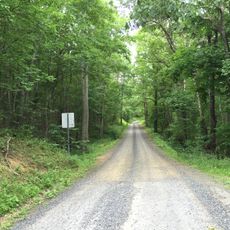
Keyser Formation, Limestone formation across Pennsylvania, Maryland, Virginia, and West Virginia, US.
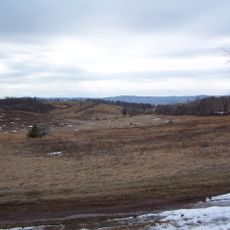
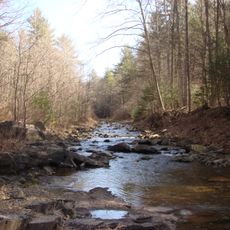
The Keyser Formation is a rock layer that extends across Pennsylvania, Maryland, Virginia, and West Virginia, made up of limestone and sedimentary rocks stacked in distinct bands. The thickness and composition of these layers change from place to place, showing how conditions shifted over time in the ancient seabed.
This rock formation developed during the Late Silurian and Early Devonian times, when shallow seas covered the Appalachian basin. It was first systematically documented and named in 1911, becoming an important record of how the region's geology came to be.
Many geology students and researchers visit the formation annually to study the abundant marine fossils, including crinoids, stromatoporoids, and brachiopods.
Spring and fall months offer the best conditions for visiting, with mild weather and easy trail access. Many observation points are found in quarries and along marked paths, reachable with proper footwear and basic hiking preparation.
The layers contain nodular formations and show repeating patterns that reveal shifting tidal and shallow water conditions. These cycling patterns help geologists understand how ancient ocean conditions changed over time in regular intervals.
The community of curious travelers
AroundUs brings together thousands of curated places, local tips, and hidden gems, enriched daily by 60,000 contributors worldwide.