Monfort Cemetery, cemetery in Port Washington, New York
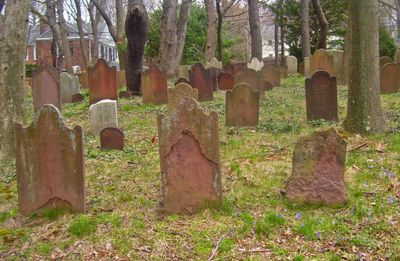
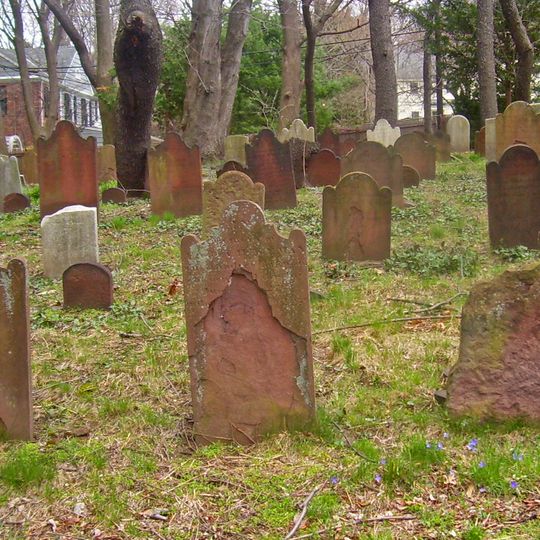
Monfort Cemetery is a small burial ground in Port Washington that has held graves since the 1730s and now contains around 150 burials surrounded by tall oak trees. The site spans less than one acre and features both sandstone and marble headstones arranged in rows, with most stones oriented to the west in keeping with historical burial customs.
The cemetery originated on land separated from the larger Rapelje farm in 1786 and sold to local families for burial purposes. The earliest known grave belongs to Andries Onderdonk, buried in 1731, and the site was added to the National Register of Historic Places in 1988 following its 1984 transfer to town ownership.
The cemetery takes its name from the Monfort family, who inherited the land in 1908 and later entrusted it to the town. The gravestones show how burial customs and stone carving styles changed over time, from early sandstone markers with facial carvings to later marble stones decorated with mourning symbols like willows and urns.
The cemetery is fenced and not open for visitors to walk inside, though it can be viewed from the surrounding area. Early morning or late afternoon visits offer the best lighting to see the gravestones and read the inscriptions in the quieter parts of the day.
Several signers of the 1775 Declaration of Independence for North Hempstead are buried here, including Adrian Onderdonck who later became the first town supervisor and Hendrick Onderdonck who owned New York State's first paper mill and hosted George Washington during a 1790 visit. This direct connection to key figures in the American Revolution and early state development makes the cemetery far more than an ordinary burial ground.
The community of curious travelers
AroundUs brings together thousands of curated places, local tips, and hidden gems, enriched daily by 90,778 contributors worldwide.