Rion Hall, human settlement in West Virginia, United States of America
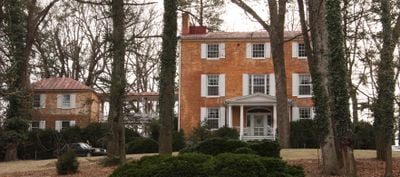
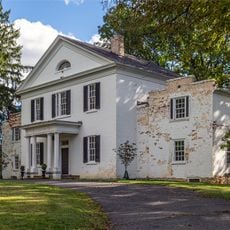
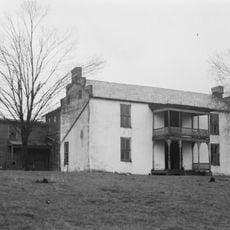
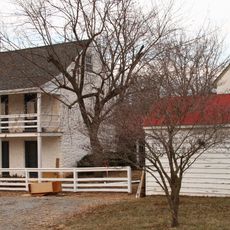
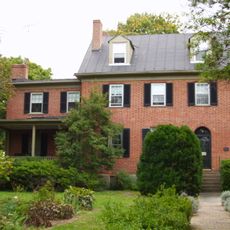
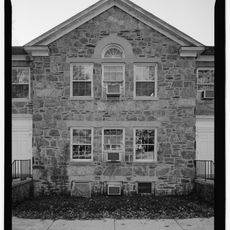
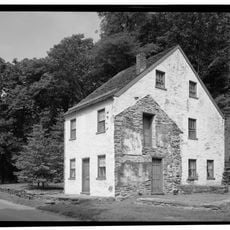
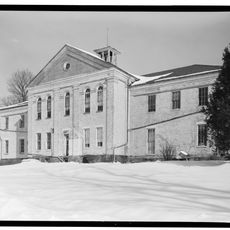
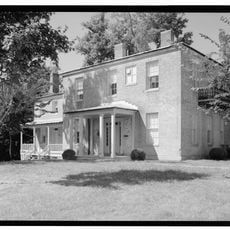
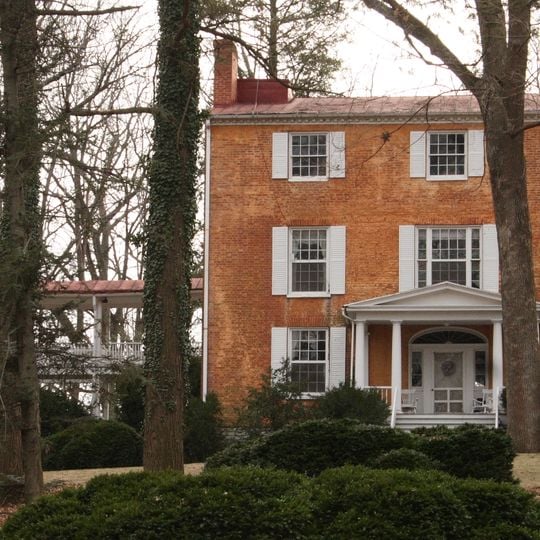
Rion Hall is a large brick house built between 1836 and 1840 that combines Federal style with Greek Revival elements, featuring a central hall and prominent entrance columns with a triangular pediment. The main residence connects to a separate two-story kitchen building via a covered wooden walkway, with interior spaces enlarged and formalized through later additions in the late 1800s.
William Lucas, a Virginia legislator and U.S. congressman, built Rion Hall in the 1830s on land originally granted to William Hall in 1764. During the Civil War in 1864, Union General Philip Sheridan occupied the house with his staff, leaving sabre marks visible on interior woodwork that survive today.
The exterior and interior layout can be explored to understand the separation between main living spaces and service areas. Close inspection of woodwork reveals evidence of damage and repairs from different periods, offering insight into the house's changing conditions over time.
William Lucas was a U.S. congressman who survived the explosion of the USS Princeton during a naval display in 1844, an event that killed several government officials. His son Daniel became known as a poet, and his daughter Virginia also wrote and published poetry, making the family a center of literary work in the region.
The community of curious travelers
AroundUs brings together thousands of curated places, local tips, and hidden gems, enriched daily by 91,344 contributors worldwide.