Rocket Engine Test Facility, Research facility in Cleveland, Ohio, US
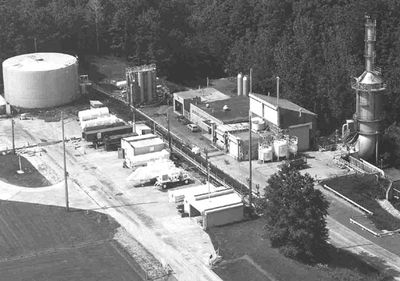
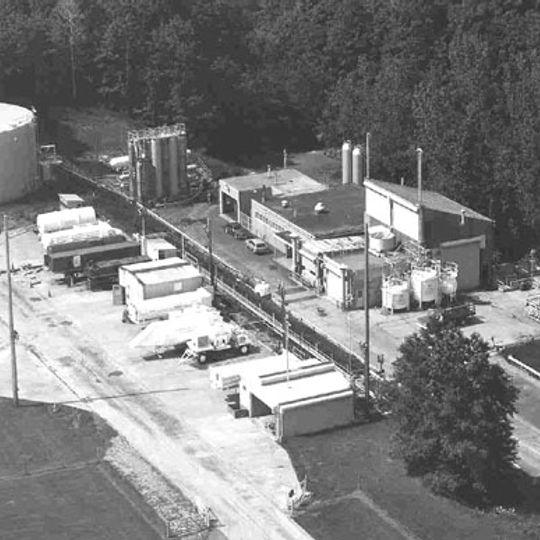
The Rocket Engine Test Facility was a research complex on a ten-acre site where high-energy propellant systems and full-scale thrust chambers underwent rigorous testing. Two main buildings provided the infrastructure needed for systematic evaluation and measurement of engine performance.
Operating from 1957 to 1995, this facility was initially managed by the National Advisory Committee for Aeronautics and later transitioned to NASA. It developed critical engines including the RL-10 for Centaur rockets and the J-2 for Saturn rockets, both central to American space programs.
Engineers and researchers here played a vital role in developing rocket engines that powered major space exploration missions during the Cold War era.
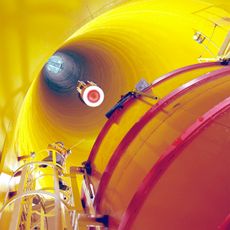
The facility was designed for testing under sea-level conditions and simulated high-altitude environments to evaluate engines across different atmospheric pressures. This was a working research site focused on technical operations rather than visitor access or tours.
The site conducted parallel testing in both sea-level and simulated high-altitude chambers, allowing engineers to gather performance data across the full range of conditions engines would face in space. This dual-chamber approach provided critical validation data unavailable from single-environment tests.
The community of curious travelers
AroundUs brings together thousands of curated places, local tips, and hidden gems, enriched daily by 92,123 contributors worldwide.