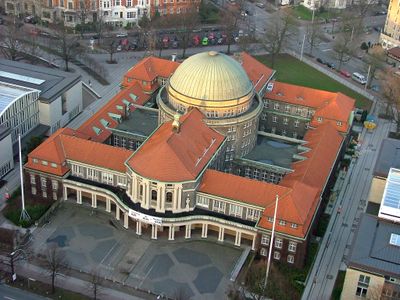
University of Hamburg, Public research university in Rotherbaum, Germany
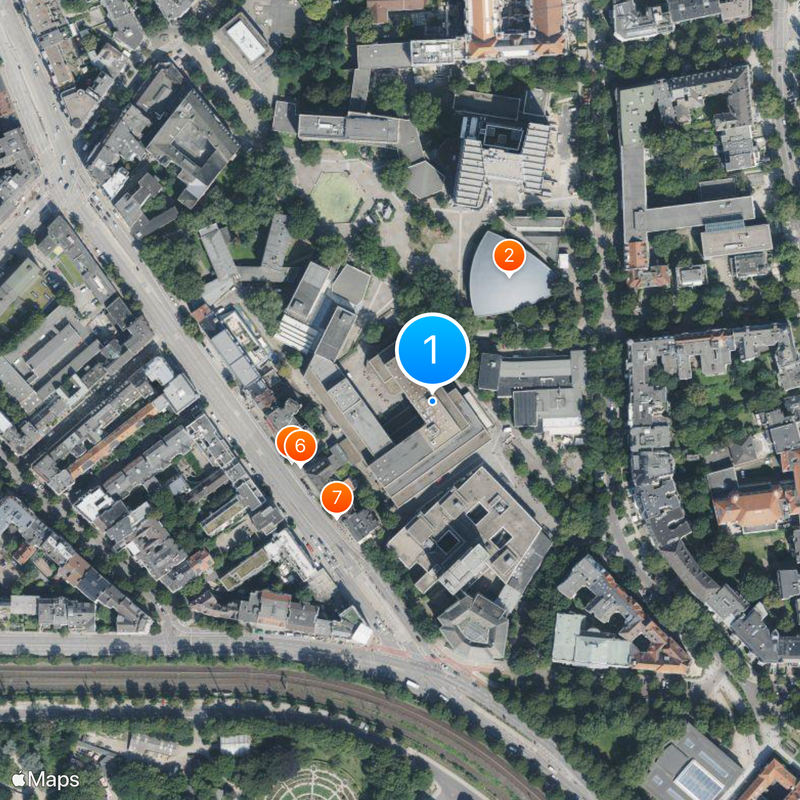
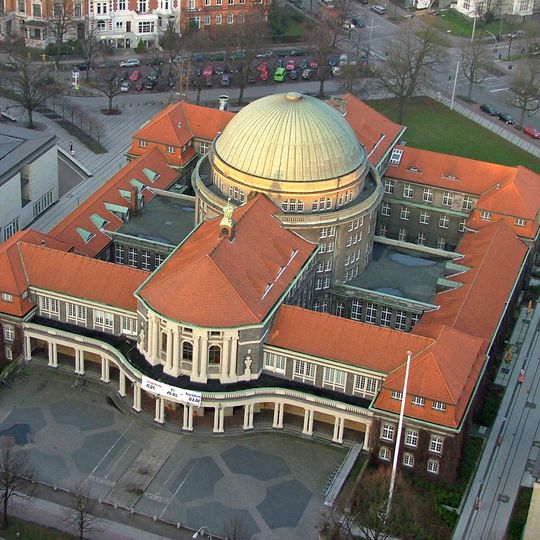
This institution is a public research university in the Rotherbaum district, spread over 180 properties across Hamburg. The main buildings stand near Hamburg Dammtor railway station and house six faculties offering 149 major programs.
The institution formed in 1919 by merging the General Lecture System, Hamburg Colonial Institute, and Academic College shortly after the First World War ended. This foundation set the starting point for the academic structure that exists today.
The campus reveals its presence through entrance halls where students move between lectures, often carrying books or meeting in small groups outside the institute doorways in Rotherbaum. Different faculties occupy separate buildings, each with its own entrance marked by stone plaques or metal signs.
Main locations lie within walking distance from Dammtor station, so visitors can reach the grounds without needing additional transport. Buildings remain open on weekdays during daytime hours, though individual institutes keep their own timetables.
Seven Nobel Prize recipients studied or worked here, including physicists and chemists from different decades. Four Clusters of Excellence focus on astrophysics, photon sciences, climate research, and written artifacts.
The community of curious travelers
AroundUs brings together thousands of curated places, local tips, and hidden gems, enriched daily by 91,816 contributors worldwide.