Königsegg, German noble family
Königsegg is a noble family from Germany with roots tracing back to the Middle Ages. The family crest displays a helmet with feathers and colors such as black and red, symbolizing constancy, military strength, and courage.
The Königsegg family emerged around 1192 as a lordship in what is now Baden-Württemberg and was elevated to a barony in the 15th century. The territory split in 1622 into two branches, Königsegg-Aulendorf and Königsegg-Rothenfels, with power eventually consolidating under the Königsegg-Aulendorf line.
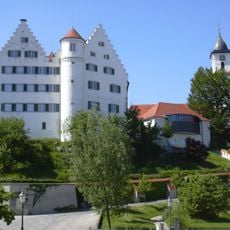
The name Königsegg refers to 'royal path,' reflecting the family's noble status and heritage. The family's presence shaped the region through castles and estates that still mark the landscape today.
The family inhabited several castles, including Königsegg Castle in Guggenhausen and later Königseggwald Castle and Halbturn Castle in Austria. Visitors interested in this history can explore these sites to experience the architecture and landscapes connected to the family.
The family was admitted in 1629 to the College of the Counts of Swabia at the Reichstag, granting them a formal place in the Holy Roman Empire's government system. Despite losing political power after 1806, the family preserved their titles and remains active in cultural and charitable work today.
The community of curious travelers
AroundUs brings together thousands of curated places, local tips, and hidden gems, enriched daily by 60,000 contributors worldwide.