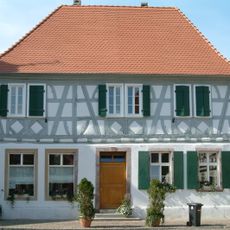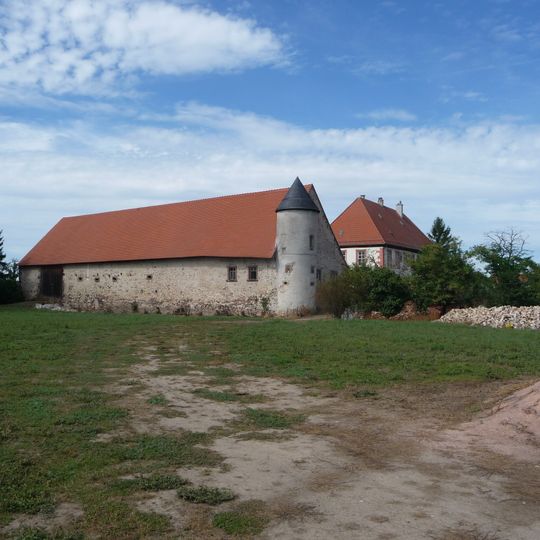
Bischöfliches Schloss, Episcopal château in Dirmstein, Germany
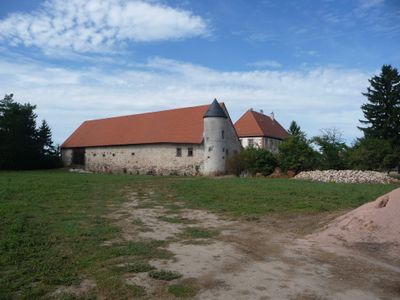
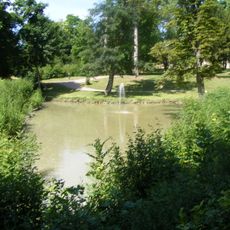
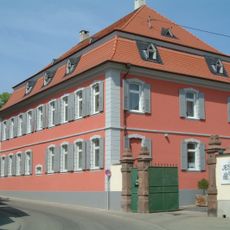
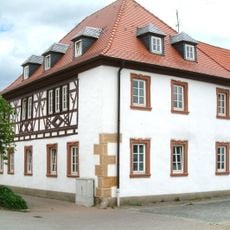
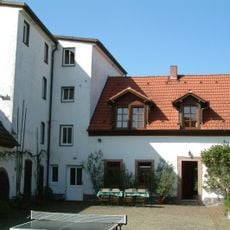
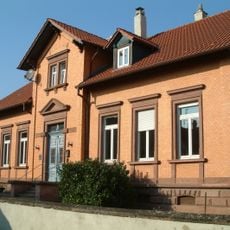
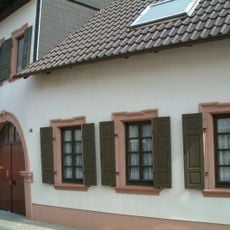
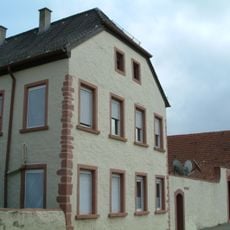
The château is a medieval fortress with a rectangular layout and four corner towers, surrounded by a water moat oriented toward cardinal directions. The complex shows traces of different building periods in its facades and stonework.
The castle was first documented in 1414 and served as a summer residence for the Prince-Bishops of Worms. Later it became the administrative seat of Worms Diocese, shaping spiritual and secular authority in the region for centuries.
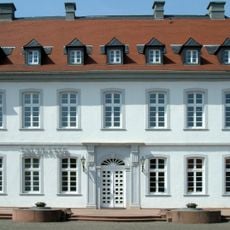
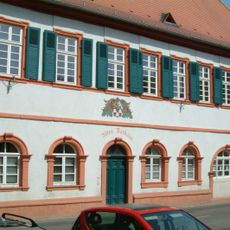
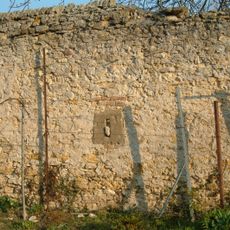
The east facade displays baroque details and a sandstone relief showing the coat of arms of Bishop Philipp I von Rodenstein, telling of the place's connection to religious authority. Visitors can observe these elements up close and notice the craftsmanship in the stonework.
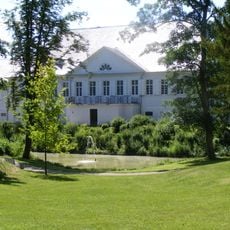
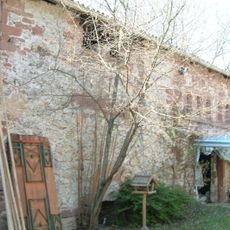
The property is privately owned and accessible only from the outside, though Renaissance wall paintings remain visible on fragments of the east facade. The best views of the complex come from walking around the grounds, where the moat and towers are clearly visible.
The underground cellars preserve original barrel vaults that show medieval building techniques and the structural expertise of its builders. These surviving cellar spaces reveal how solidly the castle's foundation was constructed.
The community of curious travelers
AroundUs brings together thousands of curated places, local tips, and hidden gems, enriched daily by 91,993 contributors worldwide.