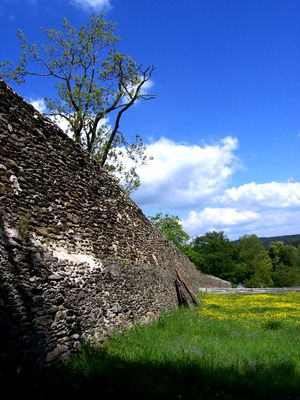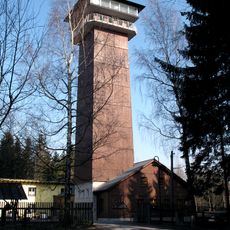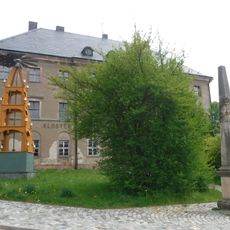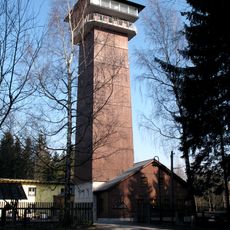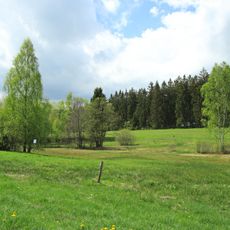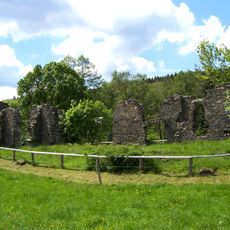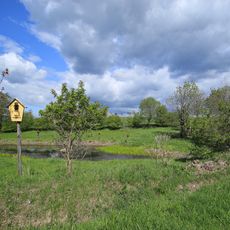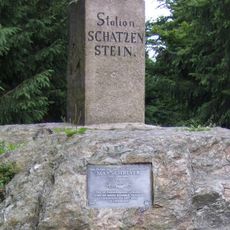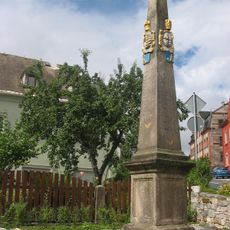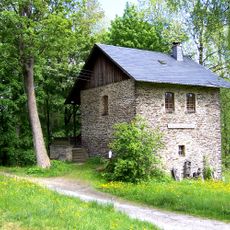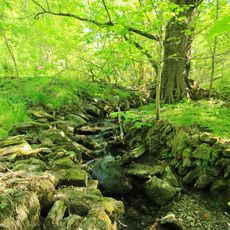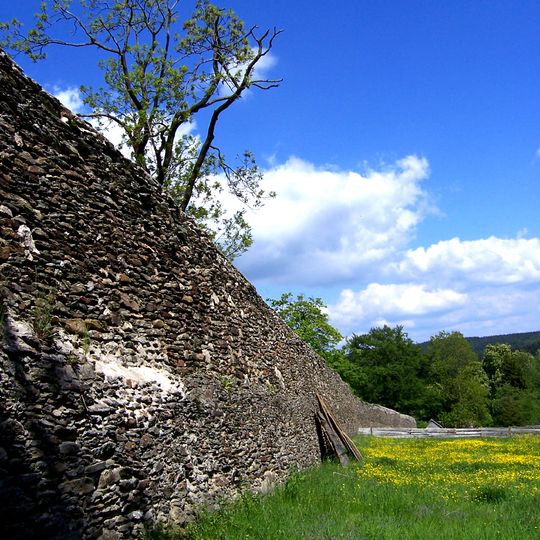
Grünhain Abbey, Cistercian monastery ruins in Grünhain-Beierfeld, Germany.
Grünhain Abbey is a monastery ruin with preserved stone foundations and wall fragments from the Middle Ages, including remains of the former church and the Fuchsturm washing house complex. The remaining structures show clearly how the different buildings were once arranged and what functions they served.
The monastery was founded in 1233 by Meinhard II of Wirbene and quickly grew into an influential estate controlling numerous villages and towns. It was dissolved in 1536 during the Reformation, when religious changes ended the Church's power in the region.
The name comes from the green meadow where it was built, and today exhibitions bring the monastic life to light through displays of daily routines and prayer practices. Visitors can sense how the community shaped its existence within these walls.
The grounds are located on Zwönitzer Straße in Grünhain-Beierfeld and are accessible to visitors who can read the information boards on site. It helps to allow time to study the layouts and understand how the different areas were positioned.
The monastery was strategically positioned along the salt trade route to Bohemia, which brought it economic wealth that transformed the region from purely agricultural land into a trading hub. This location made it more than a religious site, but also a key economic center of its time.
The community of curious travelers
AroundUs brings together thousands of curated places, local tips, and hidden gems, enriched daily by 90,758 contributors worldwide.