Münzenberg, Cultural heritage monument in Quedlinburg, Germany
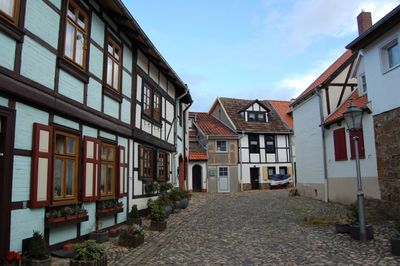
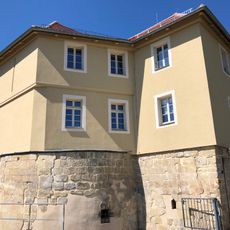
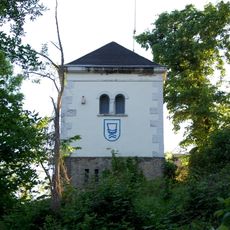
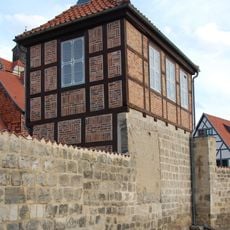
Münzenberg is a medieval castle ruin set on a hill at the edge of the old town of Quedlinburg, in the state of Saxony-Anhalt. Two round defensive towers and sections of the original stone walls still stand on the site today.
The fortress was built in the 12th century by Kuno I, a chamberlain to Emperor Frederick II, to control routes through the region. Over the following centuries it gradually lost its role and was left to fall into ruin.
The name Münzenberg is thought to refer to a medieval mint that once operated nearby. Visitors who walk up to the ruins today get an open view over the rooftops of Quedlinburg and the low hills surrounding it.
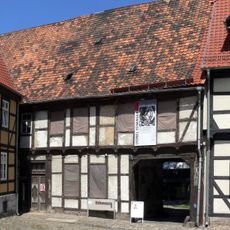
The ruin sits at the edge of Quedlinburg's old town and is reachable on foot by a short uphill walk. Information panels on site explain the history of the structure.
Round towers were rare in this part of Germany during the 12th century, when square towers were the standard choice for fortifications in the Harz region. Their round shape eliminated the blind spots that corners created, giving defenders a clearer line of sight in every direction.
The community of curious travelers
AroundUs brings together thousands of curated places, local tips, and hidden gems, enriched daily by 92,323 contributors worldwide.