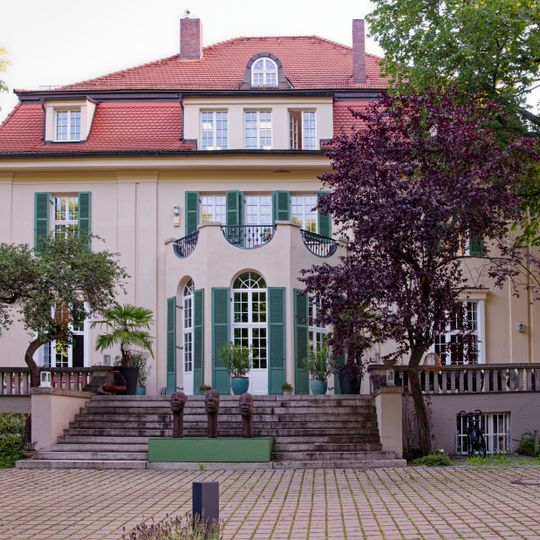
Villa Chillingworth, Neoclassical villa in Nuremberg, Germany.
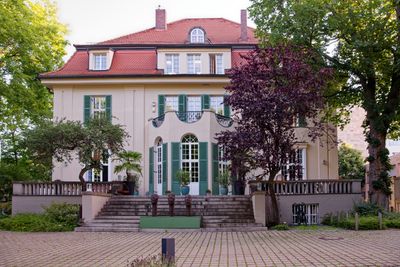
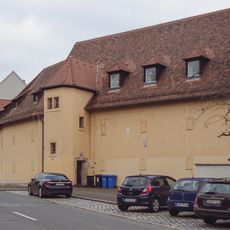
Villa Chillingworth is a two-story limestone building in Nuremberg featuring a mansard roof with dormer windows and green shutters throughout its facade. A columned entrance with a barrel-vaulted portico marks the main entry, and the interior has been carefully restored to balance modern needs with historical character.
The building was constructed between 1907 and 1909 for industrialist Rudolf Chillingworth, who commissioned architect Paul Ludwig Troost to design it. It represents the ambitious architectural vision of the industrial era and has served different functions over the decades.
The house once sheltered one of Germany's largest private art collections, featuring works by Rubens, Rembrandt, and Botticelli, before these pieces were sold at auction in 1922. This history reflects the refined taste and passion for art that defined the residence.
The building now operates as office space and is not open to the public, though the facade and grounds remain visible from the street. The 2019 renovations preserved historical details while adapting the interior for contemporary use.
The garden contains one of Nuremberg's oldest red horse chestnut trees along with a polygonal single-story pavilion surrounded by classical boundary walls. These features reveal how the property was designed as a complete retreat combining architecture with landscaping.
The community of curious travelers
AroundUs brings together thousands of curated places, local tips, and hidden gems, enriched daily by 90,814 contributors worldwide.