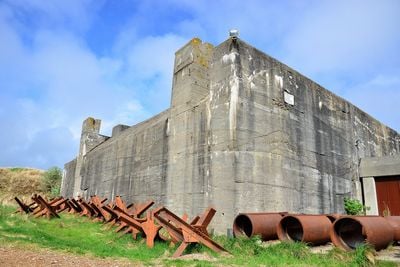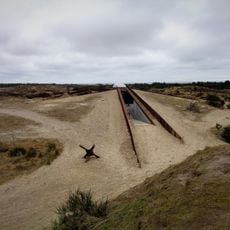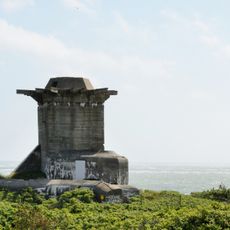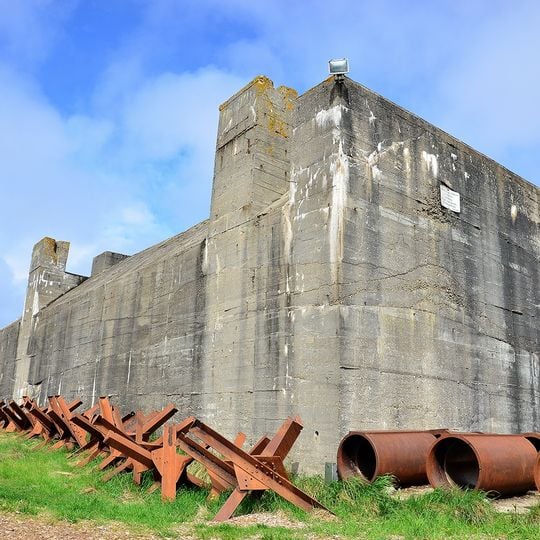
Tirpitz bunkers, World War II bunker complex in Blåvand, Denmark.
Tirpitz bunkers are two massive concrete fortifications along the North Sea coast that emerge from sand dunes and contain gun emplacements for heavy naval artillery. The complexes consist of several chambers and tunnels that are now accessible and house exhibition spaces with military equipment.
Construction of these defensive structures began in July 1944 as part of the Atlantic Wall to protect against Allied invasions during World War II. The structures were never fully completed and played no decisive role in the war events along the Danish coast.
The bunkers represent Denmark's occupation period and now function as an underground museum with wartime artifacts and personal stories from both sides of the conflict. Visitors can understand in the exhibition spaces how people lived and endured during those years.
The southern complex is accessible to visitors through guided tours, with multiple exhibition areas and pathways through the underground chambers. It helps to wear comfortable shoes and expect changing light conditions in the tunnels.
The bunkers were designed to house 38-centimeter ship cannons originally developed for Bismarck-class battleships, but these weapons were never installed. These imposing guns would have been among the largest ever positioned on the European coast.
The community of curious travelers
AroundUs brings together thousands of curated places, local tips, and hidden gems, enriched daily by 92,623 contributors worldwide.