Tirpitz museum, Modern bunker museum in Blåvand, Denmark
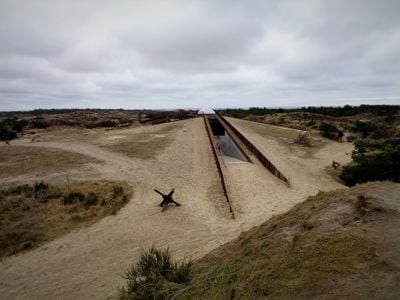
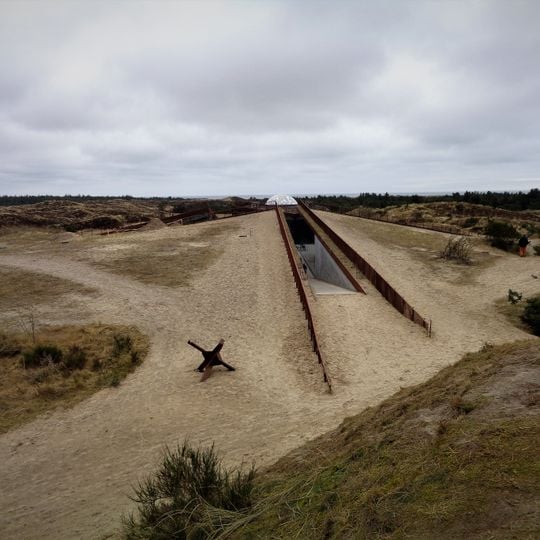
The Tirpitz Museum contains four exhibition spaces built into coastal dunes, with glass passages connecting underground galleries beneath the sandy landscape of western Jutland. The structure merges the building with its natural surroundings, creating a seamless transition between exterior and interior spaces.
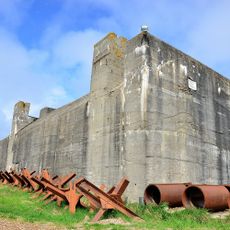
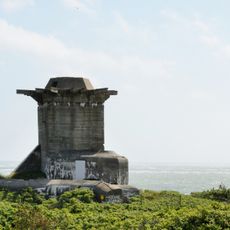
The original Tirpitz bunker began construction in 1944 as part of Germany's Atlantic Wall coastal fortification system, remaining incomplete when the war ended. The site was later transformed into a memorial space that opens this military past to visitors.
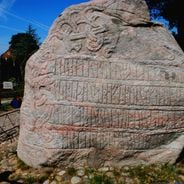
The exhibition spaces showcase regional amber finds, World War II objects, and archaeological discoveries that tell the story of 20,000 years of life along this coast. Visitors encounter traces from different periods that reveal how people lived in this area over time.
The museum operates with different seasonal hours, shorter in spring and fall and extended in summer, allowing time for thorough exploration. Visitors should wear comfortable shoes, as moving through underground galleries and dune pathways involves unpaved surfaces.
Visitors explore the exhibitions using flashlights and audio guides, which deepens the experience within the underground structures. This hands-on approach turns each journey through the bunker into a personal discovery adventure.
The community of curious travelers
AroundUs brings together thousands of curated places, local tips, and hidden gems, enriched daily by 92,247 contributors worldwide.