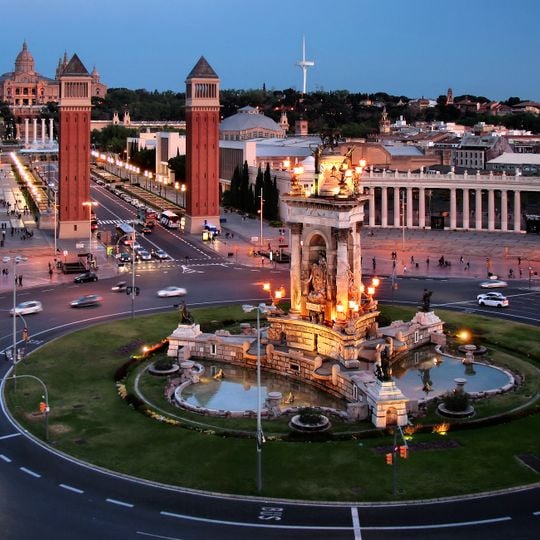
Fountain in Plaça d'Espanya, Monumental fountain in Plaça d'Espanya, Barcelona, Spain
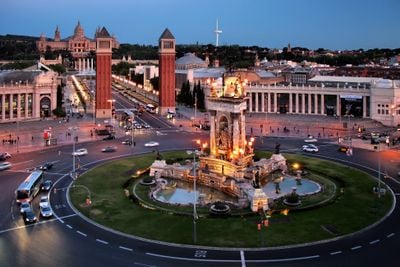
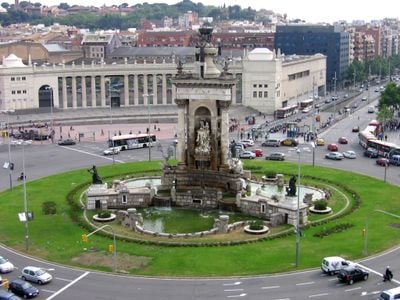
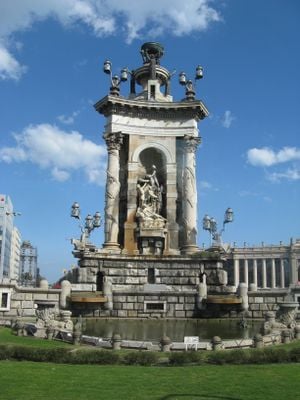
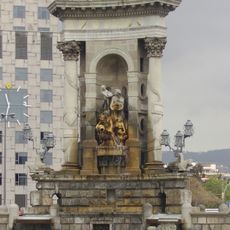
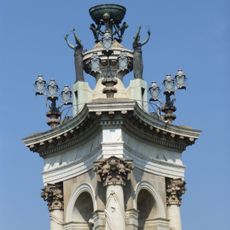
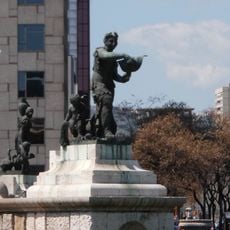
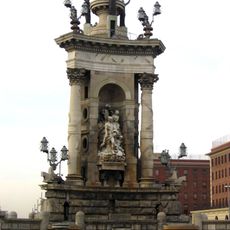
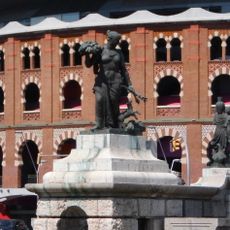
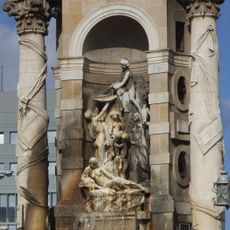
The Fountain in Plaça d'Espanya is a circular monument in the Hostafrancs neighborhood of Barcelona, standing about 25 m tall and around 45 m wide. Three large niches hold sculptural groups representing the rivers flowing into the Mediterranean Sea, the Atlantic Ocean, and the Cantabrian Sea, while three Corinthian columns support a central body topped with a fire vessel and three Victories.
The fountain was designed for the 1929 International Exhibition in Barcelona, as part of a large urban transformation of the area around Plaça d'Espanya. Architects Josep Maria Jujol and Miquel Blay, together with brothers Miquel and Llucià Oslé, led its creation, and it has since been listed as a Cultural Asset of Local Interest.
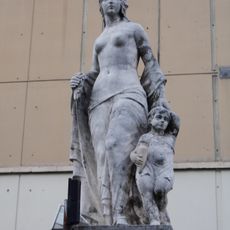
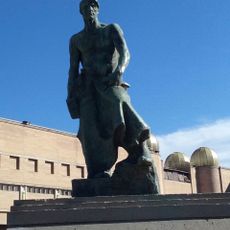
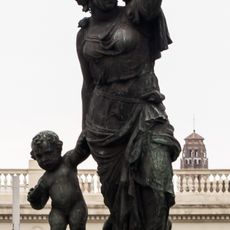
The fountain was built in the Noucentisme style, a Catalan artistic current of the early 1900s that drew on classical forms and Mediterranean references. Visitors who look closely can see this in the detailed relief work on the sculptural groups, each one dedicated to a sea surrounding the Iberian Peninsula.
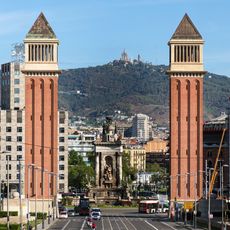
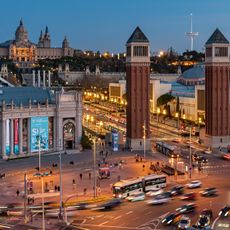
The fountain stands in the middle of a large traffic circle, so it is easy to see from the surrounding avenues. The best way to get close is on foot from the pedestrian areas nearby, as traffic around the square can be heavy.
The three Corinthian columns of the fountain each carry a specific meaning, representing Religion, Heroism, and Arts respectively. This symbolic layer was a deliberate choice by its creators, who wanted the structure to express the values they saw as central to society at the time.
The community of curious travelers
AroundUs brings together thousands of curated places, local tips, and hidden gems, enriched daily by 91,880 contributors worldwide.