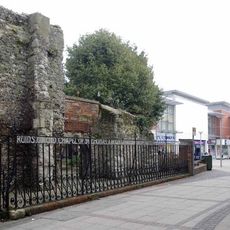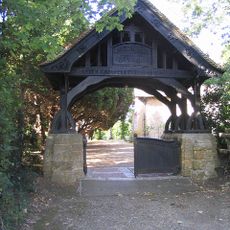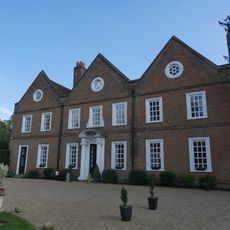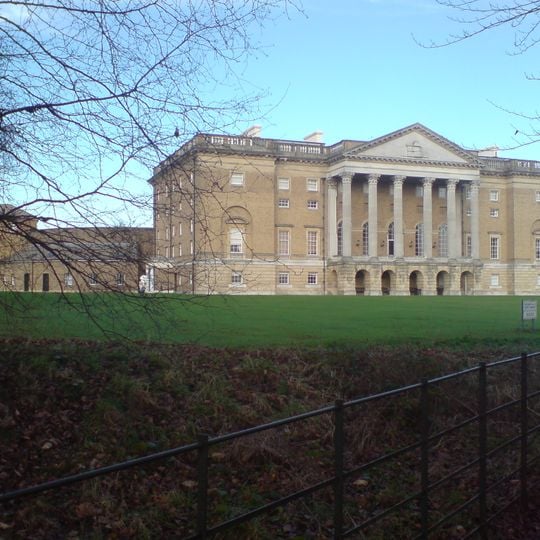
Thorndon Hall, Neoclassical country house in Herongate and Ingrave, England
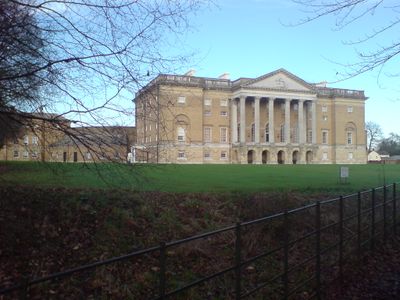
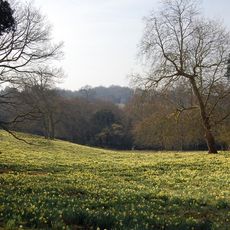
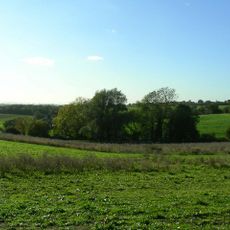
Thorndon Hall is a neoclassical country house in Herongate and Ingrave, standing within a 600-acre medieval deer park. The main building displays Georgian Palladian features with meadows and woodlands shaped by the landscape designer Capability Brown.
The estate appears in the 1086 Domesday Survey and received royal permission in 1414 from King Henry V to enclose 300 acres with defensive walls. The current structure was designed by architect James Paine in 1764, replacing an earlier building on the site.
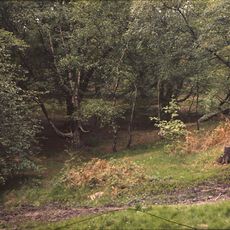
The name originates from Anglo-Saxon words meaning 'thornbush' and 'hill', reflecting the land's early character. Visitors walking the grounds today can sense this connection to the natural landscape through the carefully shaped gardens surrounding the main building.
The grounds are accessible for visitors to explore the maintained gardens and historic deer park on foot. The best time to visit is during warmer months when the gardens are in bloom and pathways are dry.
The property housed the first recorded camellia plant in Great Britain during the 1730s, a tropical specimen that later spread across many English estates. This botanical treasure made the site an early center of plant collecting during the age of exploration.
The community of curious travelers
AroundUs brings together thousands of curated places, local tips, and hidden gems, enriched daily by 91,793 contributors worldwide.