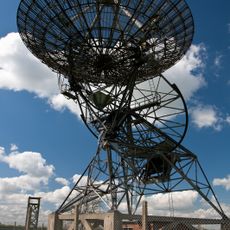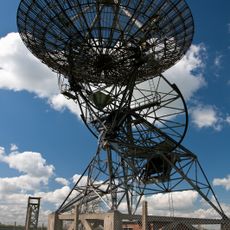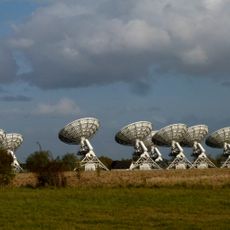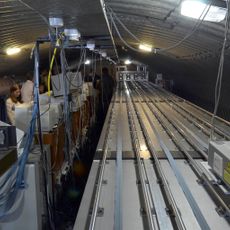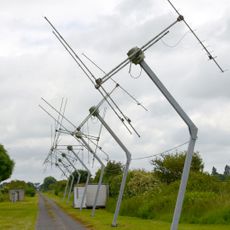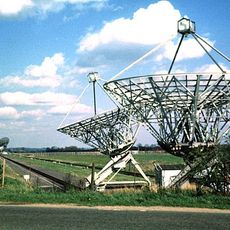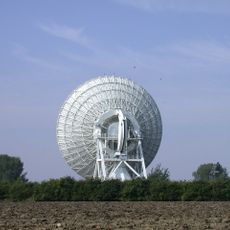
Interplanetary Scintillation Array, Radio telescope at Mullard Radio Astronomy Observatory, Cambridge, England.
The Interplanetary Scintillation Array is a radio telescope at the Mullard Radio Astronomy Observatory near Cambridge made of thousands of individual antennas spread across several acres of grassland. These antennas work together to capture radio waves from the sky and can map the northern sky anew each day.
The array was built in 1967 and immediately led to the discovery of the first pulsar, which transformed radio astronomy. This breakthrough result was so significant that it was later recognized with a Nobel Prize for the lead scientist.
The site is named after its sponsor Mullard and serves as a gathering place where astronomers from different countries collaborate on sky observations. Today it remains a destination where visitors can experience firsthand the scale and complexity of modern scientific research.
Visiting on clear days gives the best view of the entire array spread across the open landscape. Wear comfortable shoes since you will be walking across open ground with considerable distance between the different parts of the equipment.
A flock of sheep grazes regularly on the site and naturally maintains the grass where standard mowers cannot navigate through. This practical solution keeps the grass short and was a creative answer to the challenge of mowing in the densely packed antenna maze.
The community of curious travelers
AroundUs brings together thousands of curated places, local tips, and hidden gems, enriched daily by 92,642 contributors worldwide.