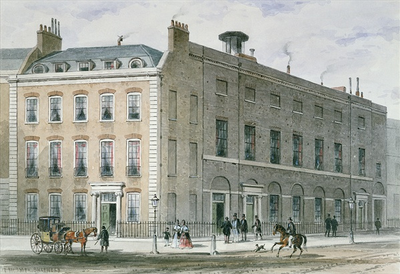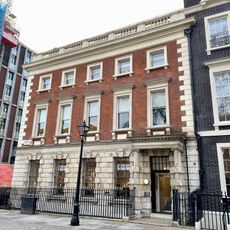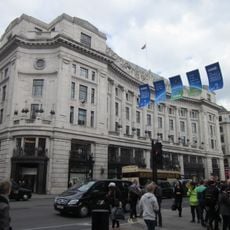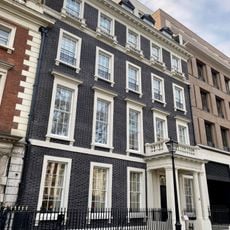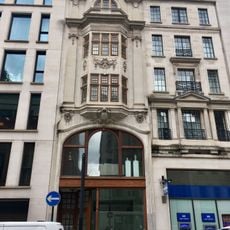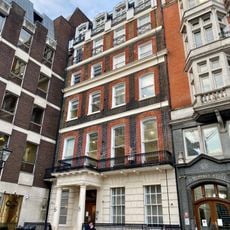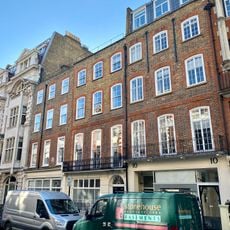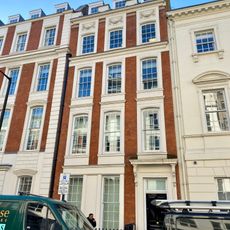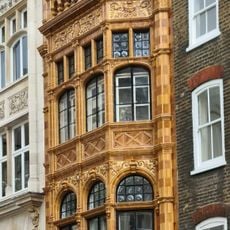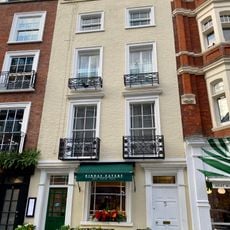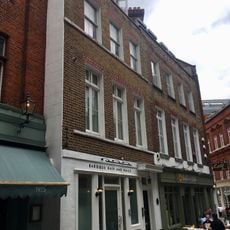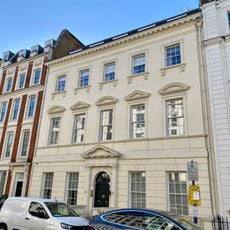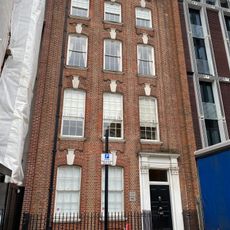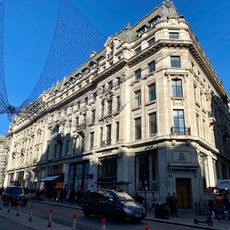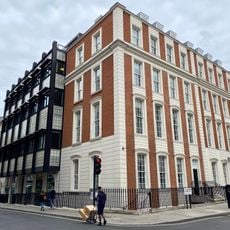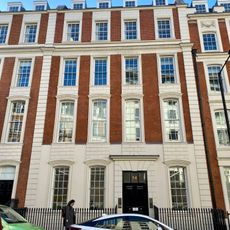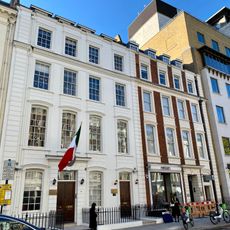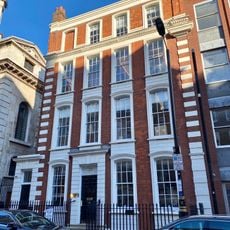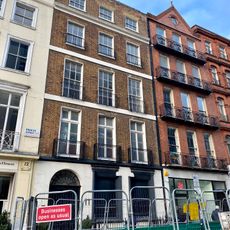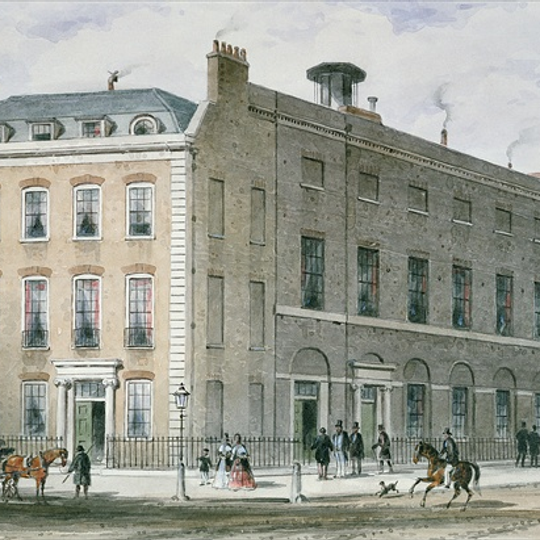
Hanover Square Rooms, Concert hall in Westminster, England
Hanover Square Rooms was a concert hall in London's financial district, fitted with a rectangular main space roughly 79 feet long and 32 feet wide. The interior featured vaulted ceilings decorated with paintings by Giovanni Cipriani, along with long mirrors that visually expanded the room.
The hall opened in 1774 when Sir John Gallini, Johann Christian Bach, and Carl Friedrich Abel joined together to create a world-class concert venue. It remained London's most important concert space for over a century until its closure in 1900.
The hall became inseparable from Handel's Messiah, performed here regularly for many years and drawing music lovers from across London. The Philharmonic Society made it their home starting in 1833, turning the space into a center for orchestral concerts that shaped the city's musical identity.
The venue could accommodate far more guests than its original design intended, with dedicated areas for orchestral performance and special seating for notable attendees. Visitors should know that the reflective interior surfaces shaped how sound moved through the space, something still noticeable when walking through today.
The hall lacked balconies and consisted mainly of its single large rectangular space, creating acoustic qualities that musicians and audiences immediately noticed. This straightforward room design meant sound bounced directly from the vaulted ceiling to all corners, shaping how music sounded throughout the evening.
The community of curious travelers
AroundUs brings together thousands of curated places, local tips, and hidden gems, enriched daily by 90,995 contributors worldwide.