Stewart Aqueduct, grade II listed aqueduct in the United kingdom
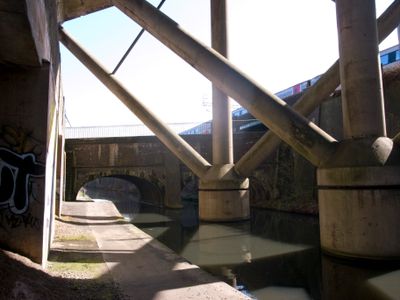
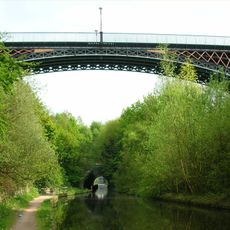
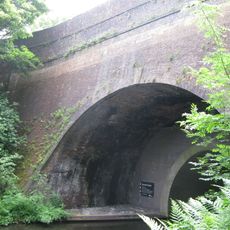
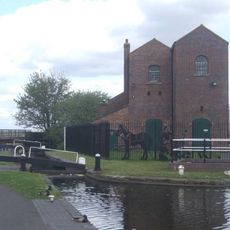
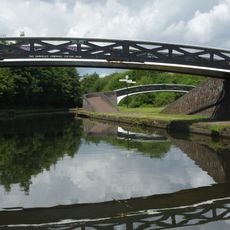
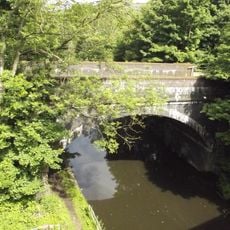
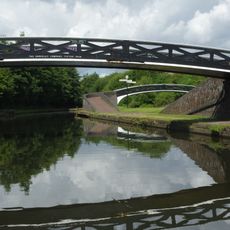
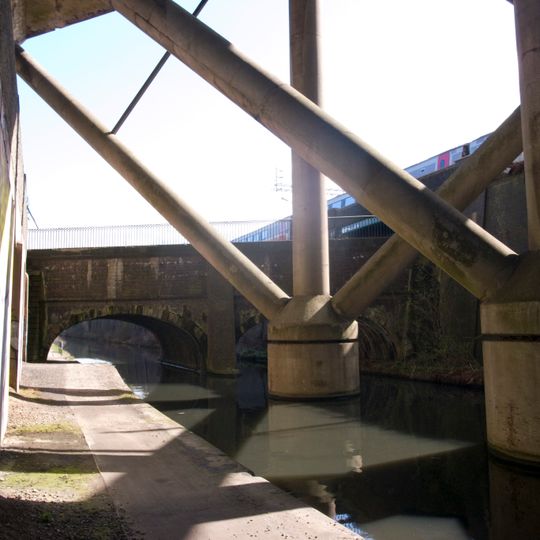
Stewart Aqueduct is a brick structure that carries a canal across a railway line and road, built in the early 1800s as part of a canal system improvement. It features two slightly skewed arches made from brick laid in English bond pattern, with sandstone capping and iron railings along its length.
Thomas Telford designed and completed the aqueduct in 1829 as part of improving the Birmingham Canal Navigations system to connect Birmingham to Wolverhampton. A railway line was later built alongside it in 1852 on an embankment, marking the area's evolution into a transportation hub.
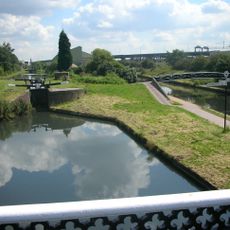
The aqueduct represents the legacy of canal transport that once shaped the working life of the area and connected industrial communities. You can still see boats using the waterway today, continuing a tradition that spans nearly two centuries of how people moved goods and resources.
The aqueduct is free to access and located along the Galton Valley Trail, making it easy to walk around and view from different angles in about ten minutes. It is reachable by train from Sandwell & Dudley station or by car with nearby parking, with clear walking directions available.
Brick was chosen over cast iron because the project needed to be completed before winter, a decision that proved remarkably durable over nearly two centuries. The slightly skewed arches are a deliberate design feature still visible today in their asymmetrical form.
The community of curious travelers
AroundUs brings together thousands of curated places, local tips, and hidden gems, enriched daily by 91,760 contributors worldwide.