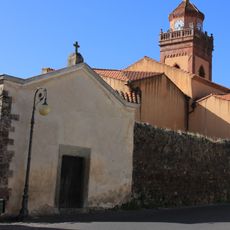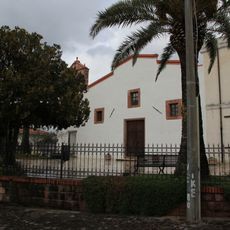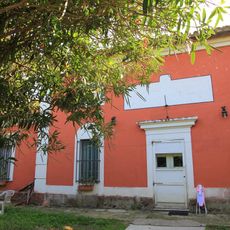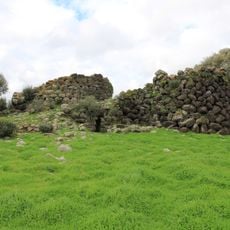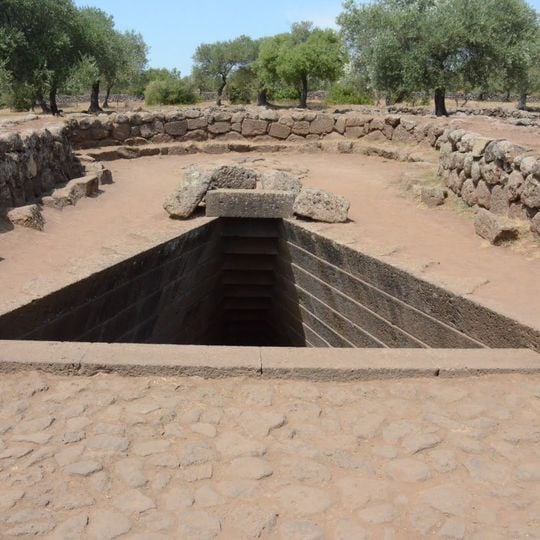
Santa Cristina nuragic site

Log in to your account

AroundUs is a community-driven map of interesting places, built by curious explorers like you. It grows with every review, story, and photo you share.
Connect to save your favorite spots, contribute locations, and create personalized routes.
By continuing, you accept our Terms and Conditions and our Privacy Policy
Add to collection
Map
Suggest a change
Share

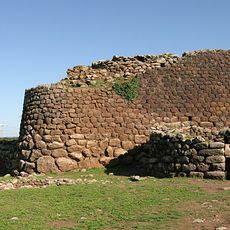
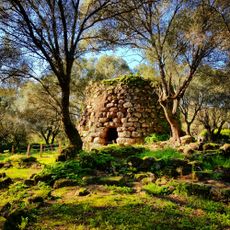
Santa Cristina nuragic site, Archaeological site in Paulilatino, Italy

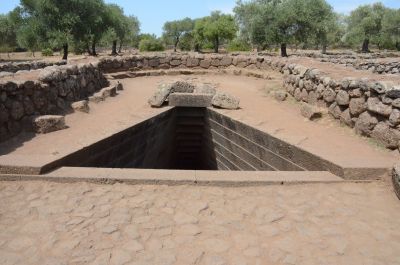
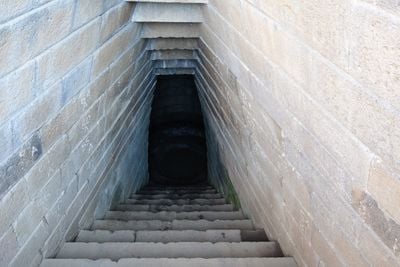
The sacred well features a vestibule with a staircase leading to an underground chamber, where a water source sits beneath a tholos vault of concentric rings. Precision-cut basalt blocks form walls that descend from daylight to the water level, demonstrating the architectural skills of Bronze Age builders.

Constructed around 1000 BC, the well served as a central gathering place for Nuragic people, who built it using large squared basalt blocks with exceptional engineering. Archaeological findings indicate the location remained in use for several centuries before gradually being abandoned during Punic and Roman periods.

The complex includes a trapezoidal stairwell of basalt steps descending 6.5 meters, reflecting the central importance of water sources in religious ceremonies of Nuragic societies. Gatherings and ritual practices focused on this sacred location, which served as a spiritual center for multiple communities across the region.

Located along SS 131 highway, the site offers guided tours every hour from 8:30 AM until sunset, with regular admission at 5 euros and reduced rates at 3.50 euros. A visitor center displays artifacts and explains astronomical alignments, while nearby parking and facilities ease access for most visitors.

During equinoxes, sunlight aligns with the stairway to illuminate the bottom of the well, while the Major Lunar Standstill creates perpendicular moonlight reflections every 18.6 years. These astronomical phenomena demonstrate the advanced understanding of celestial movements by Nuragic architects when designing sacred structures.

Location: Paulilatino

Accessibility: Wheelchair accessible

Address: SS131, Località, Via Santa Cristina, km 115, 09070 San Cristina OR, Italy

Opening Hours: 24/7

Phone: +39078555438

Email: archeotour@tiscali.it

Website: http://archeotour.net

GPS coordinates: 40.06114,8.73097

Latest update: December 2, 2025 08:26

Archaeological sites in Italy

Italy holds archaeological sites spanning several millennia, offering insights into Etruscan, Greek and Roman civilizations. These locations include necropolises with thousands of tombs, well-preserved Roman villas and ancient settlements along the Mediterranean coast. Many of these sites lie beyond the more familiar destinations and document different aspects of Italian history. The Necropolis of Pantalica near Sortino contains approximately 5,000 rock-cut tombs from the Sicilian Bronze Age, while the Villa of the Mysteries in Pompeii is known for its wall paintings from the first century BCE. Villa del Casale near Piazza Armerina displays Roman floor mosaics covering more than 37,500 square feet (3,500 square meters). Etruscan burial sites like the Tomb of the Orcus in Tarquinia preserve frescoes from the fourth century BCE. The Archaeological Park of Elea-Velia near Ascea includes remains of a Greek colony founded in the sixth century BCE.

Hidden locations across Sardinia

Sardinia preserves traces of human settlement across thousands of years. The island presents prehistoric cult sites including sacred wells and burial mounds that show ancient rituals. Nuraghe towers from the Bronze Age still rise above the landscape, while Roman theaters and Punic temples mark later civilizations. Underground tombs carved directly into rock lie hidden in the hills. Mountain villages carry modern wall murals that tell political and social history. The coastline offers small coves with turquoise water and white pebble beaches between limestone cliffs. Caves along the coast display stalactites and underground lakes. Inland, canyons with tall rock walls cut through remote areas. Natural springs emerge from bedrock, lighthouses stand on headlands overlooking the sea. Abandoned mining complexes document industrial history, while protected islands and coastal reserves provide habitat for marine life and seabirds.

Reviews

Visited this place? Tap the stars to rate it and share your experience / photos with the community! Try now! You can cancel it anytime.

« Santa Cristina nuragic site - Archaeological site in Paulilatino, Italy » is provided by Around Us (aroundus.com). Images and texts are derived from Wikimedia project under a Creative Commons license. You are allowed to copy, distribute, and modify copies of this page, under the conditions set by the license, as long as this note is clearly visible.

Discover hidden gems everywhere you go!

From secret cafés to breathtaking viewpoints, skip the crowded tourist spots and find places that match your style. Our app makes it easy with voice search, smart filtering, route optimization, and insider tips from travelers worldwide. Download now for the complete mobile experience.

Around Us App Screenshot

A unique approach to discovering new places

Le Figaro

All the places worth exploring

France Info

A tailor-made excursion in just a few clicks

20 Minutes