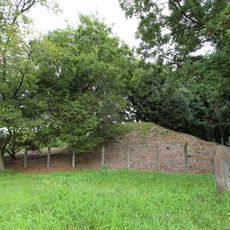
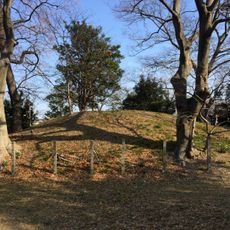
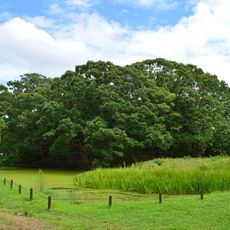
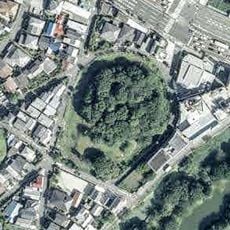
Daisen Kofun, Ancient imperial tomb in Sakai-ku, Japan.
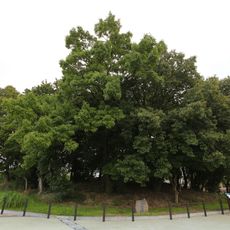
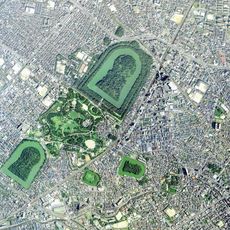
Daisen Kofun is an imperial mausoleum in Sakai-ku, Japan that forms part of a UNESCO World Heritage Site and represents an archaeological site with a characteristic keyhole shape. The structure measures 525 meters in length and reaches 39.8 meters in height, surrounded by three concentric water moats that frame the entire construction.
Built in the first half to mid-5th century, the mound is identified by the Imperial Household Agency as the mausoleum of Emperor Nintoku, though the actual occupant is unknown. The Kojiki and Nihon Shoki record Nintoku's burial at Mozu no Mimihara, and the Engishiki names the site Mozu no Mimihara no Naka no Misasagi. In 2019 it was inscribed as part of the Mozu-Furuichi Kofun Group UNESCO World Heritage Site.
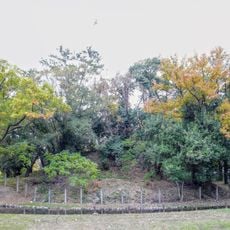
Locals call the mound "Nintoku-san", a name recorded as Nintoku's tomb in the 1684 Sakai Kagami, which notes Toyotomi Hideyoshi hunted here. The tree cover results from a three-year planting begun in Meiji 20, when bamboo was cleared and over 190,000 pine, cedar and oak saplings set out; the work later served as a model for the Meiji Shrine forest.
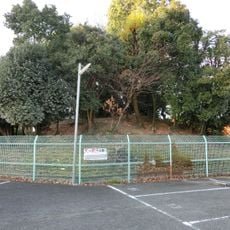
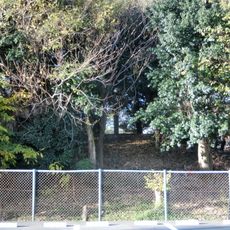
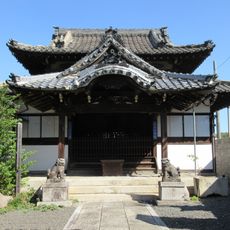
Visitors can view the outer areas of the mound from marked pathways, as the Imperial Household Agency strictly protects the inner zones. Walking around the outer moat offers different perspectives on the massive structure and takes about an hour on foot.
The mound's dense forest was planted in the 1880s, when over 190,000 pine, cedar and oak saplings were set out after bamboo was cleared over three years; the work later served as a model for the Meiji Shrine forest. The Imperial Household Agency has never opened the rear circular burial chamber, so its grave goods remain unknown.
The community of curious travelers
AroundUs brings together thousands of curated places, local tips, and hidden gems, enriched daily by 93,260 contributors worldwide.