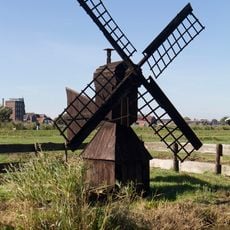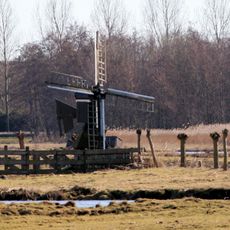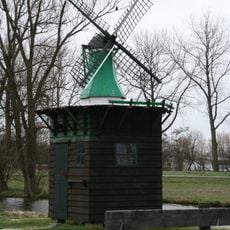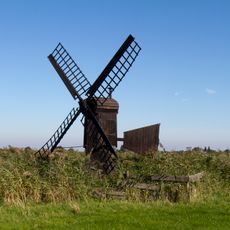
Herkules, windmill in Zaandam, Netherlands
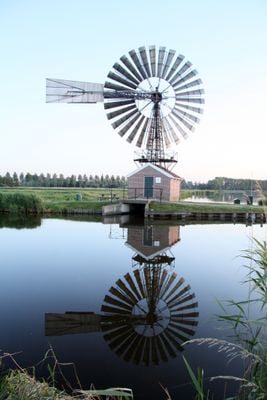
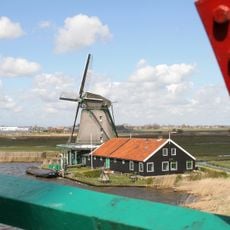
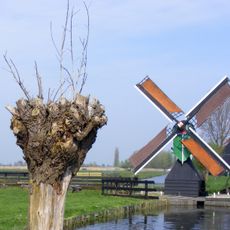
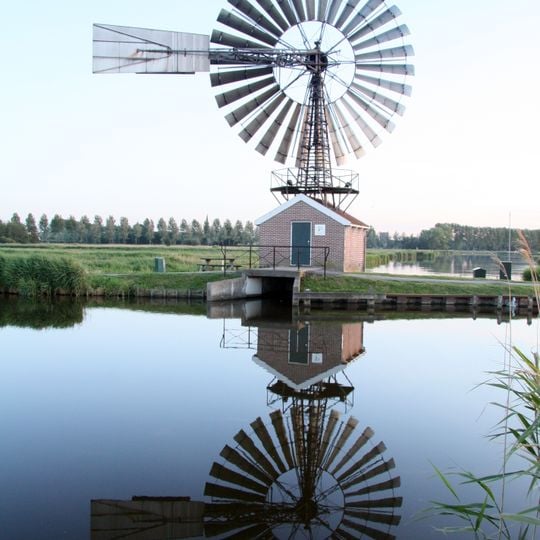
The Herkules is a wind-powered pumping station built in 1922 in Zaanstad to manage water levels in the Kalverpolder, standing about 16 meters tall. It features a large wind wheel with 30 wooden blades mounted in a sturdy steel frame, supported by four angled steel columns set on a concrete foundation.
An older watermill once stood at this site dating back to 1636, before the current wind-powered pumping station was built in 1922 using American engineering design. Community-led restoration efforts in the mid-1990s saved the structure from demolition, preserving an important piece of engineering heritage.
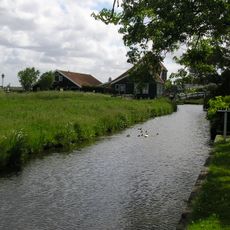
The windmill represents how communities worked together historically to manage water and shape their land. Its name conveys strength and durability, reflecting the importance this structure holds for local people and their relationship with the polder landscape.
The pumping station is easily accessible from the Ringdijk cycling path and visible from Leeghwaterweg road, making it convenient to visit while biking or walking. Being unmanned, you can view it from outside, and it is regularly visited by school groups and history enthusiasts exploring the surrounding polder area.
The American-designed wind wheel was unusual for a region dominated by traditional Dutch windmills, and the device could automatically rotate away from the wind to prevent damage during strong gusts. This self-regulating feature demonstrated advanced engineering thinking in the early 1900s.
The community of curious travelers
AroundUs brings together thousands of curated places, local tips, and hidden gems, enriched daily by 90,836 contributors worldwide.