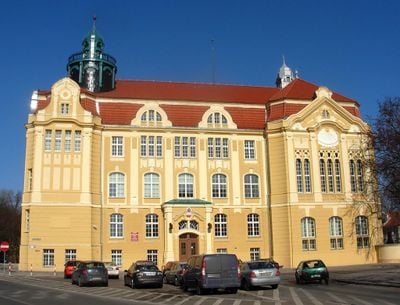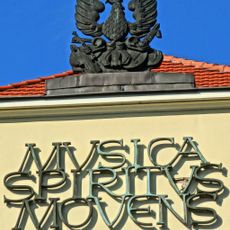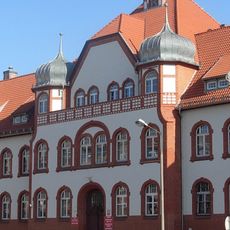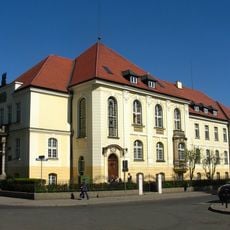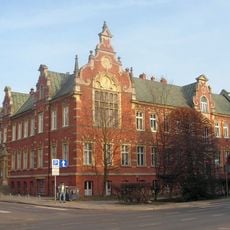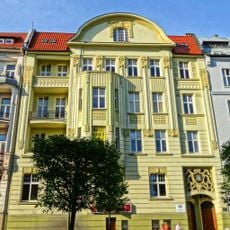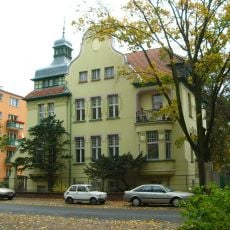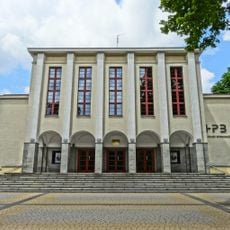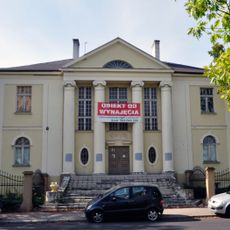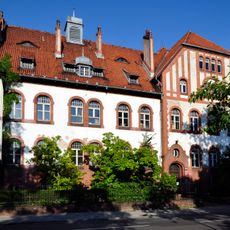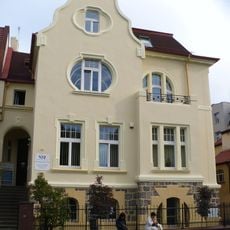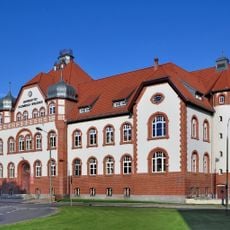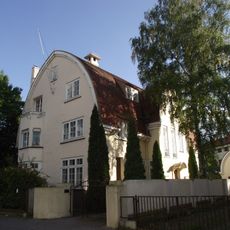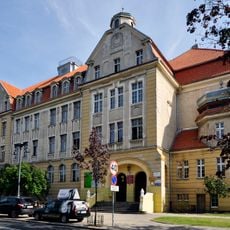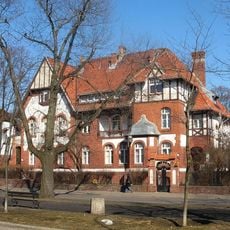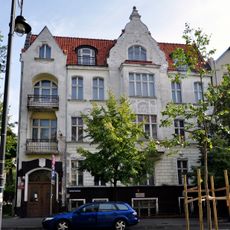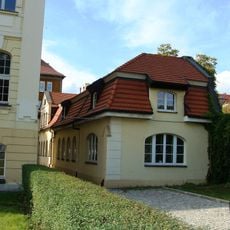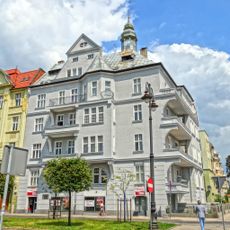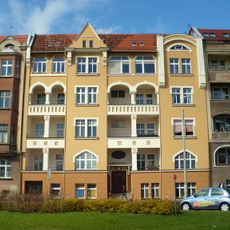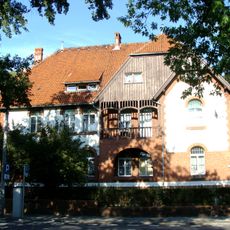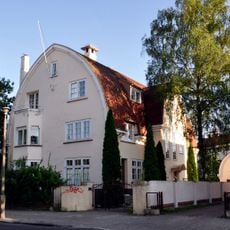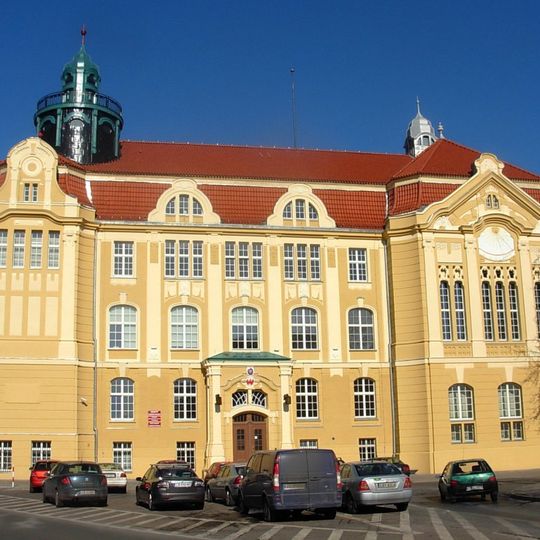
Copernicanum building in Bydgoszcz, Art Nouveau educational building in downtown Bydgoszcz, Poland.
Copernicanum is an Art Nouveau educational building from the early 1900s with an L-shaped layout, corner pavilions, and tall windows that flood the interior with light. Its facade displays a large sundial relief framed by two owl sculptures, creating a distinctive visual anchor on the street.
The building was designed in 1906 by architects Carl Zaar and Rudolf Vahl as an educational institution for the growing city. It survived World War II when it served as a military facility, later returning to academic use.
The building's name references the great astronomer and reflects the city's commitment to scientific education and Polish heritage. Walking through its spaces today, you see students and researchers moving between offices and laboratories, keeping the original educational purpose alive.
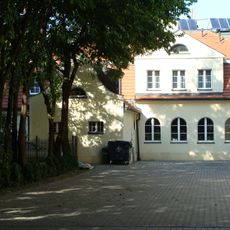
The building is located in central Bydgoszcz and is easily visible and accessible on foot from surrounding streets. The interior now houses research spaces, so exterior exploration is the best way to appreciate the architecture and the remarkable trees in the courtyard.
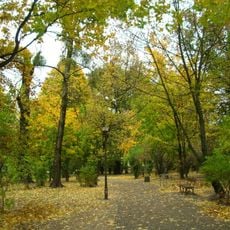
Two large silver maple trees grow in the courtyard and are officially protected as natural monuments of the city. These maples are older than the building itself and represent one of the most valuable botanical features on the grounds.
The community of curious travelers
AroundUs brings together thousands of curated places, local tips, and hidden gems, enriched daily by 92,036 contributors worldwide.