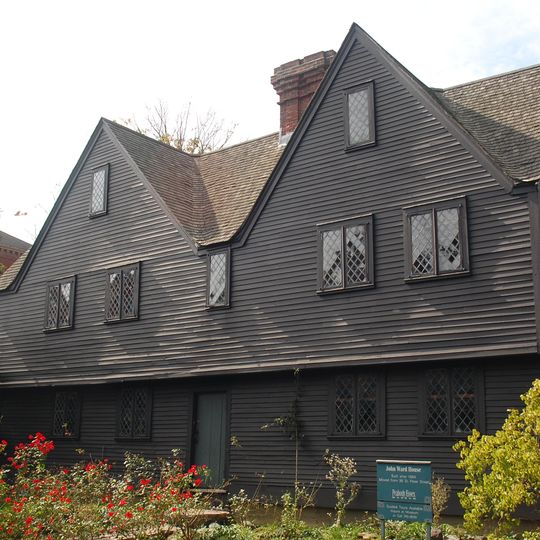
John Ward House, National Historic Landmark house in Salem, United States.
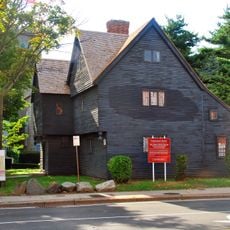
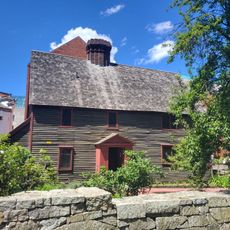
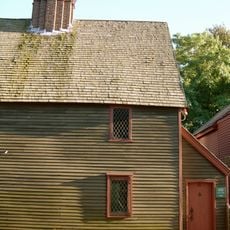
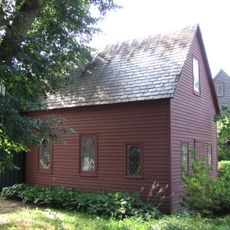
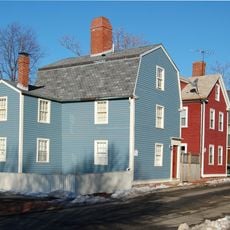
The John Ward House is a 17th-century colonial wooden house in Salem, Massachusetts, listed as a National Historic Landmark. It has a steeply pitched gabled roof, a large central chimney, small diamond-paned windows, and a pronounced overhang on the second floor that extends over the first.
John Ward, a leather worker, built the house in 1684, and it originally stood close to the jail used during the Salem Witch Trials of 1692. By the late 1800s, the building had fallen into disrepair and was at risk of being torn down before steps were taken to save it.
The rooms are furnished with everyday objects from the 1600s, giving a close look at how a working family in early Salem organized their home around practical needs. The large central chimney served as the heart of the house, used for cooking, heating, and light throughout the day.
The house is managed by the Peabody Essex Museum, which offers guided tours through both floors. The rooms are small and the ceilings low, so visitors should be ready to move through tight spaces typical of colonial construction.
In 1910, the house was saved by being cut into two sections and hauled on ox-drawn carts across three city blocks to its current location. The move was slow and complicated, but the structure survived the journey without major damage.
The community of curious travelers
AroundUs brings together thousands of curated places, local tips, and hidden gems, enriched daily by 91,570 contributors worldwide.