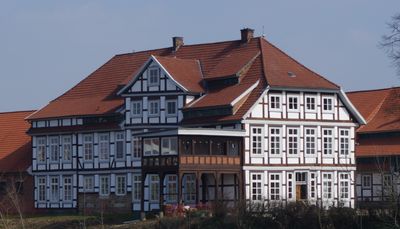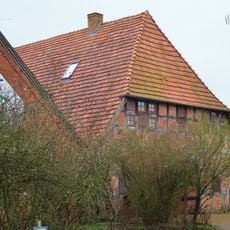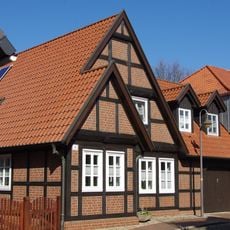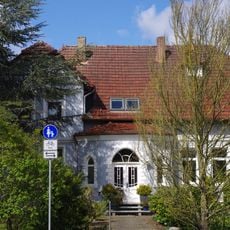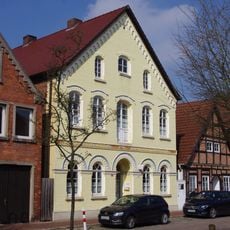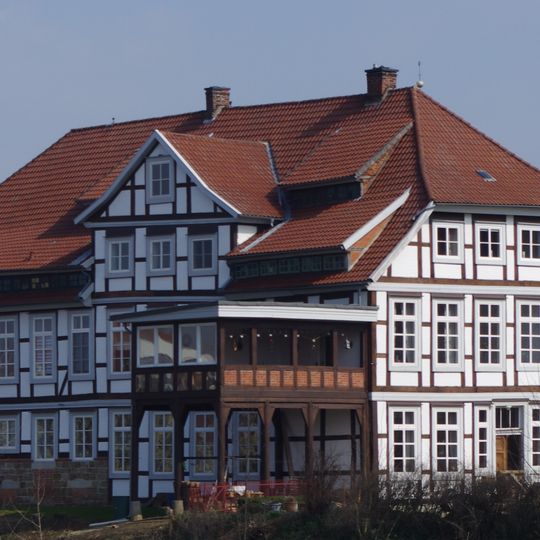
Rittergut von Behr, Manor estate in Hoya, Germany.
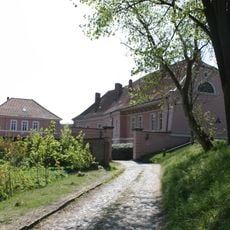
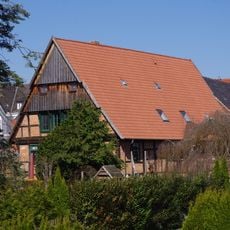
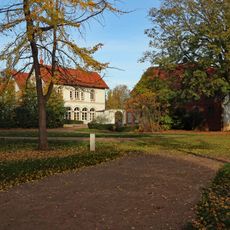
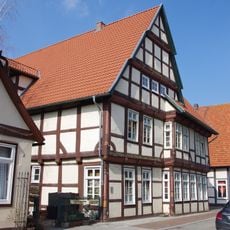
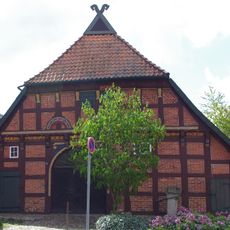
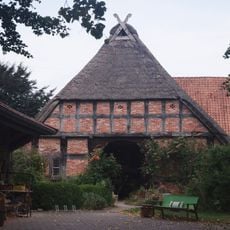
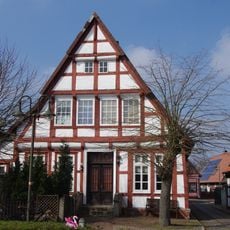
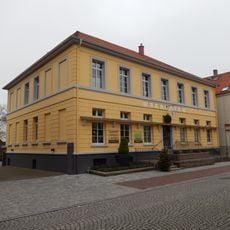
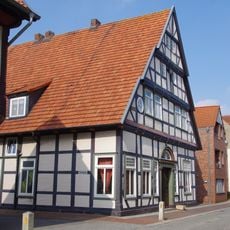
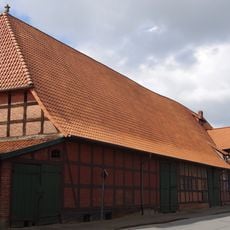
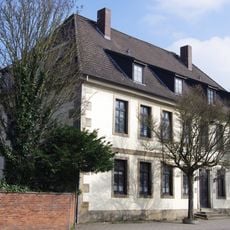
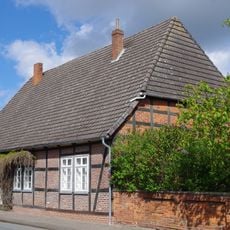
Rittergut von Behr is a two-story neoclassical manor house with half-timbered walls, plastered panels, and a jerkinhead roof with dormers situated near the Weser River. The complex includes the main residence, stables, four gate posts dating from 1733, brick wall sections, and a separate milking house with a matching jerkinhead roof.
First recorded in 1189, the estate was destroyed during the Thirty Years' War in 1625 and rebuilt in 1721, only to burn again in 1758. Following later restoration efforts, it stands today as an important cultural monument in the region.
The Knights' Hall added in 1829 displays panoramic wallpaper showing Alexander von Humboldt's arrival in Brazil, created by the renowned manufacturer Jean Zuber et Cie. This rare wall covering reflects how wealthy landowners of that era decorated their rooms with exotic imagery from distant lands.
The estate is best explored on foot, and visitors should allow time to examine the outbuildings and garden layout surrounding the main house. Plan enough time to see both the interior of the manor and the surrounding grounds, as the property includes several separate structures with distinct features.
British forces occupied the manor in 1945 and converted the Knights' Hall into a soldiers' casino where troops amused themselves by firing at the exotic animals depicted in the wallpaper. This unusual wartime episode reveals how the Second World War left unexpected marks even on the artistic elements of the house.
The community of curious travelers
AroundUs brings together thousands of curated places, local tips, and hidden gems, enriched daily by 60,000 contributors worldwide.