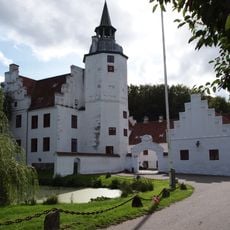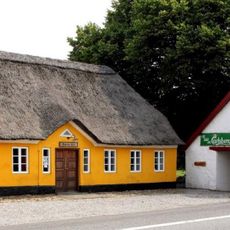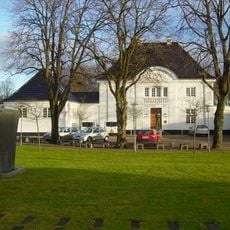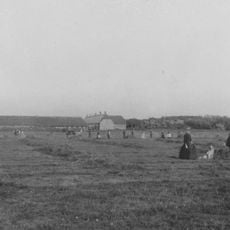
Stubber Priory, Monastery ruins in Holstebro Municipality, Denmark.
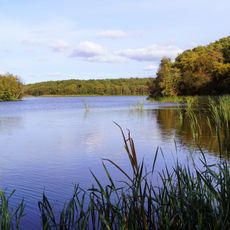
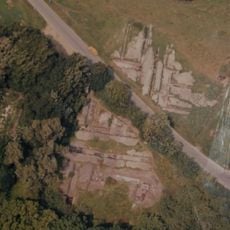
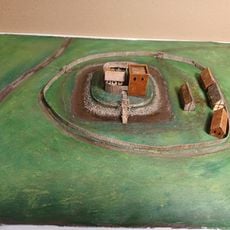
Stubber Priory consists of stone foundation remains of a former monastery situated on what was once an island within Stubber Lake, now reached by an earthen pathway from the mainland. The rectangular layout displays the typical structure of a nunnery, with the church positioned along the south range under episcopal oversight.
The nunnery was founded between 1190 and 1220 as a religious community for women and grew into a Benedictine monastery that operated for roughly four centuries. The Danish Reformation around 1547 ended monastic life here, after which the land became crown property and eventually passed into private hands.
The religious complex reflects medieval monastic layout with a rectangular design where the church occupied the south range. You can still see how the foundation arrangement reveals the daily spaces where nuns lived and worshipped together.
The ruins rest on private land but remain open to the public year-round, allowing you to walk the site and examine the stone foundations and structural remains. An earthen pathway connects the former island to the mainland, making access straightforward in any season.
A local landowner named Helm of Stubberthorp donated his farm between 1190 and 1220 to establish this religious community for women in western Jutland. This founding story reveals how individual landowners played a key role in establishing monasteries across Denmark.
The community of curious travelers
AroundUs brings together thousands of curated places, local tips, and hidden gems, enriched daily by 92,751 contributors worldwide.