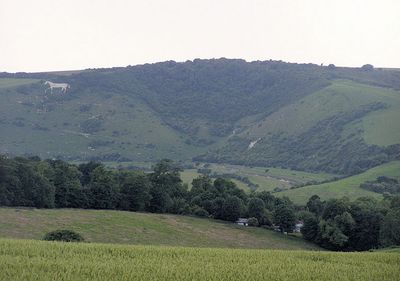
Litlington White Horse, Hill figure in Seaford, England.
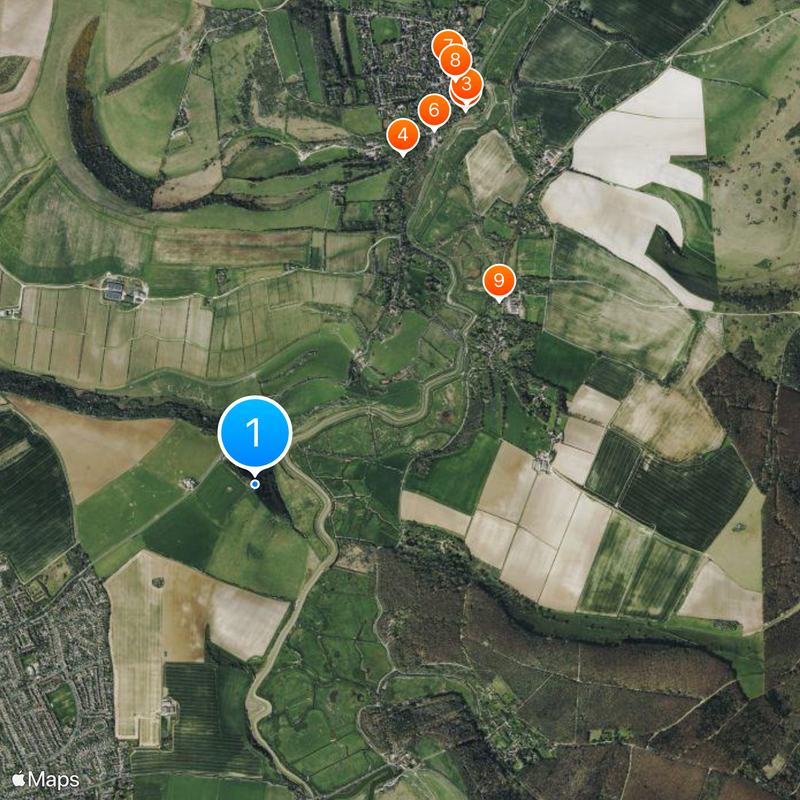
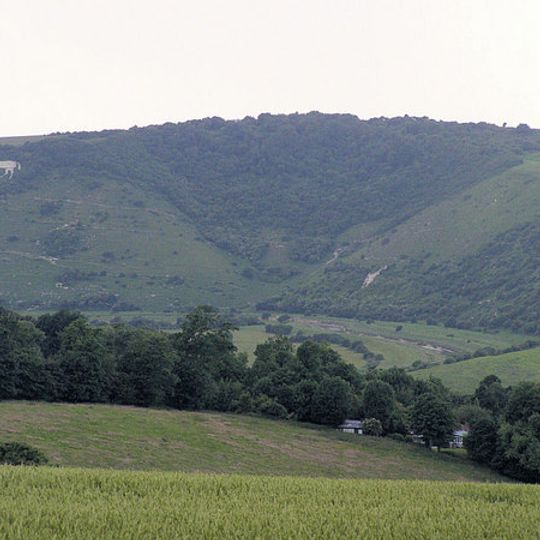
The Litlington White Horse is a chalk carving on Hindover Hill measuring roughly 93 feet (28 meters) long and 65 feet (20 meters) tall, overlooking the River Cuckmere valley in East Sussex. The figure shows a galloping horse shape rendered in bright white chalk against the green hillside.
The horse was created in 1836 by four local men and later reconstructed in 1924 by their descendants who completed the work in a single night. This restoration helped the figure survive to the present day.
The horse represents part of England's tradition of chalk carvings on hillsides, standing alongside the Long Man of Wilmington as a major work in East Sussex. Visitors come to see how the figure connects the landscape with human creativity and local pride.
The best views of the figure come from a distance along nearby walking paths or from the road below. Wet weather can temporarily obscure visibility, but the white chalk surface is generally clear most of the time.
During World War II, officials concealed the horse to prevent enemy aircraft from using it as a navigation landmark. After the conflict, the figure's appearance had changed due to this wartime alteration.
The community of curious travelers
AroundUs brings together thousands of curated places, local tips, and hidden gems, enriched daily by 91,447 contributors worldwide.