Yarmouth suspension bridge, Suspension bridge in Great Yarmouth, England.
The Yarmouth suspension bridge was a pedestrian crossing over the River Bure in Great Yarmouth with two towers and iron chains supporting a wooden deck. The construction connected both banks across a span of roughly 63 feet and allowed foot traffic to pass directly without relying on ferries.
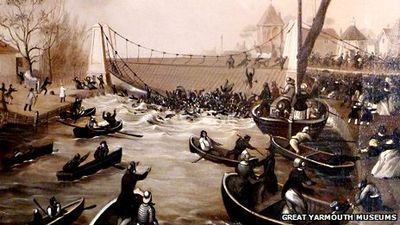
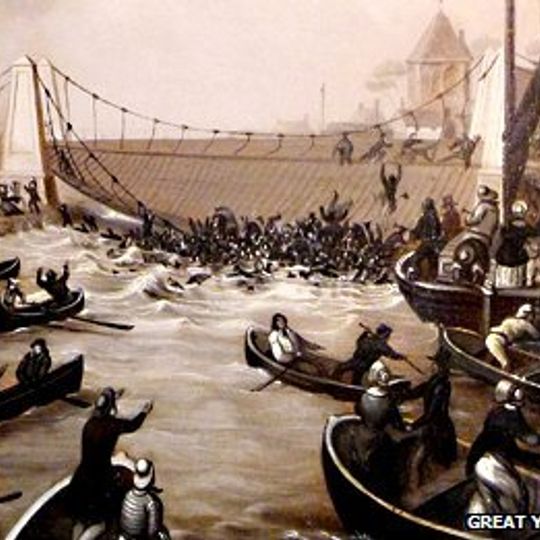
The Cory family funded completion of this crossing in 1829 to replace ferry service and improve connections between Great Yarmouth and Acle. The collapse in May 1845 killed 79 people and led to stricter inspection requirements for bridge structures across Britain.
The 1845 collapse changed how engineers understood crowd loads on bridges and influenced safety regulations across Europe. The disaster became a case study for sudden strain caused by gathered crowds and shaped public safety discussions for decades.
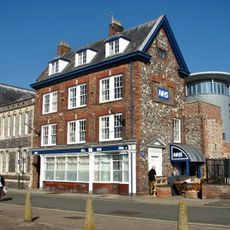
The crossing no longer exists today, but the area along the River Bure remains accessible and can be explored on foot. Information boards or local archives may provide context about the former location and role of the structure.
Hundreds of spectators gathered on the span to watch a clown in a washtub on the river below when the chains gave way. The sudden collapse sent people into the water and became one of the deadliest bridge disasters in 19th-century Britain.
The community of curious travelers
AroundUs brings together thousands of curated places, local tips, and hidden gems, enriched daily by 90,903 contributors worldwide.