Point Nemo

Log in to your account

AroundUs is a community-driven map of interesting places, built by curious explorers like you. It grows with every review, story, and photo you share.
Connect to save your favorite spots, contribute locations, and create personalized routes.
By continuing, you accept our Terms and Conditions and our Privacy Policy
Add to collection
Map
Suggest a change
Share

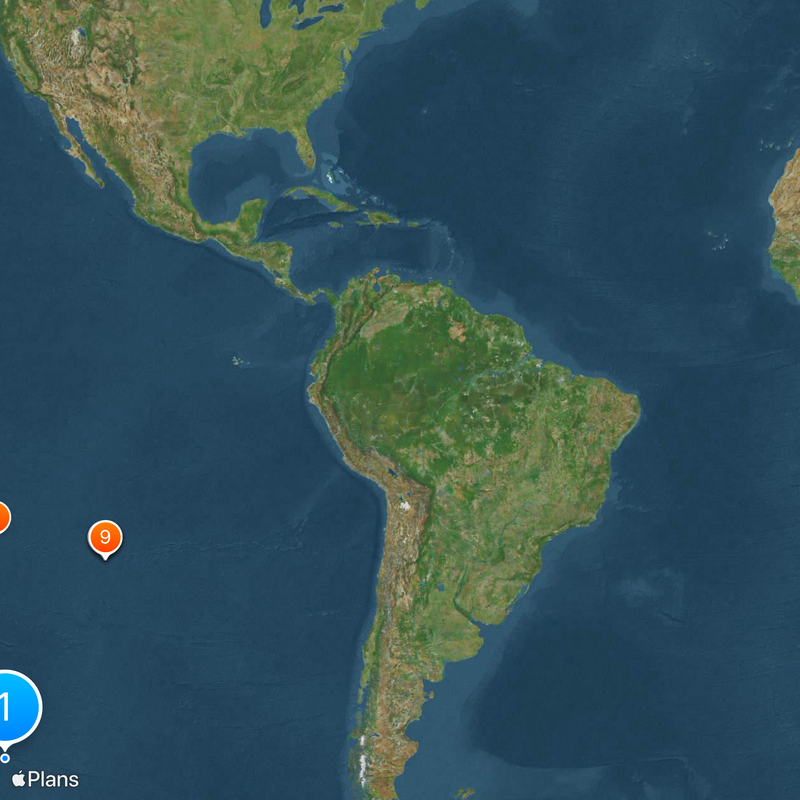
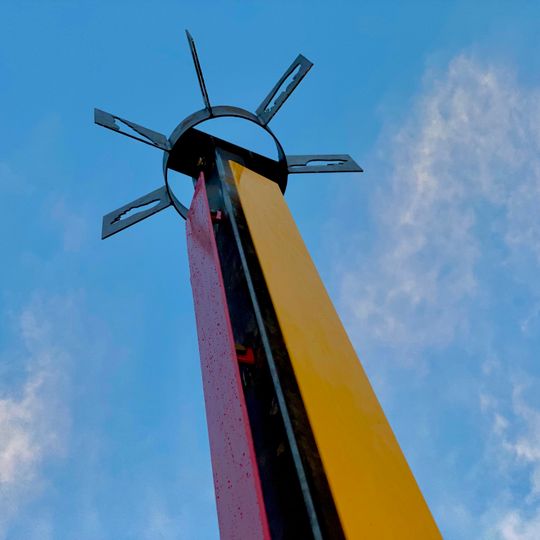
Point Nemo, Pole of inaccessibility in South Pacific Ocean, international waters.

Located at coordinates 48°52.6′S 123°23.6′W in the South Pacific Ocean, this point represents the most remote oceanic location on Earth, approximately 2,688 kilometers from the nearest land. The spot sits at the center of a vast expanse of open water, farther from any coast than any other place in the world's oceans. Astronauts aboard the International Space Station pass closer to this location than any human on solid ground.

Croatian-Canadian engineer Hrvoje Lukatela first calculated the precise coordinates of this oceanic pole of inaccessibility in 1992 using digital mapping software. The mathematical determination required analyzing distances from every known coastal point on Earth. Since the mid-1970s, space agencies have directed more than 260 deorbited spacecraft to this area, beginning with Soviet missions and continuing with vehicles from multiple nations.

Named after Captain Nemo from Jules Verne's novels, this maritime coordinate represents complete isolation from human civilization. Space agencies worldwide use this region as a graveyard for controlled spacecraft reentry, reflecting its role as the most remote disposal site on Earth.

This location remains inaccessible to ordinary travelers, situated several days' journey from any inhabited island by sea. No commercial shipping routes or flight paths cross this remote section of the South Pacific. Only scientific expeditions or private sailing teams attempting ocean crossings occasionally pass through these coordinates during their voyages.

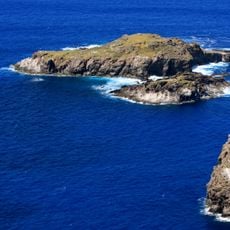
The three nearest land points are Ducie Island to the north, Motu Nui off Easter Island to the northeast, and Maher Island in Antarctica to the south, each roughly equidistant at about 2,688 kilometers. This region experiences some of the lowest biological productivity in any ocean due to minimal nutrient circulation. Over 100 tons of spacecraft debris now rest on the seafloor beneath these waters, including the Russian space station Mir.

Location: international waters

GPS coordinates: -49.02603,-123.43891

Latest update: December 1, 2025 09:35

Remote places: deserts, islands, research stations

This collection covers places in remote deserts, isolated islands, and inaccessible mountain regions where human settlement is limited to a minimum. They range from research stations in Antarctica such as McMurdo Station and the Amundsen-Scott South Pole Station to the French Kerguelen Islands in the southern Indian Ocean. The collection includes settlements without road access like the village of Supai deep in the Grand Canyon of Arizona, reachable only on foot, by helicopter, or by mule, as well as Ittoqqortoormiit on the eastern coast of Greenland. Other locations are Easter Island in the Pacific, located over 2300 miles (3700 kilometers) from mainland Chile, and Tristan da Cunha, an inhabited island group in the middle of the South Atlantic. Extreme locations include Alert in Nunavut, Canada, the northernmost permanently inhabited settlement in the world, the Siberian village of Oymyakon with its exceptionally low winter temperatures, and the Yemeni island of Socotra with its peculiar flora. The collection also includes the Siwa Oasis in the Egyptian desert, Motuo County in Tibet, and the Scottish island of Foula.

Reviews

Visited this place? Tap the stars to rate it and share your experience / photos with the community! Try now! You can cancel it anytime.

« Point Nemo: Pole of inaccessibility in South Pacific Ocean, international waters » is provided by Around Us (aroundus.com). Images and texts are derived from Wikimedia project under a Creative Commons license. You are allowed to copy, distribute, and modify copies of this page, under the conditions set by the license, as long as this note is clearly visible.

Discover hidden gems everywhere you go!

From secret cafés to breathtaking viewpoints, skip the crowded tourist spots and find places that match your style. Our app makes it easy with voice search, smart filtering, route optimization, and insider tips from travelers worldwide. Download now for the complete mobile experience.

Around Us App Screenshot

A unique approach to discovering new places

Le Figaro

All the places worth exploring

France Info

A tailor-made excursion in just a few clicks

20 Minutes