Chinese Fishing Nets
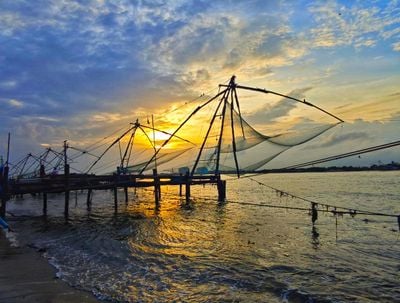
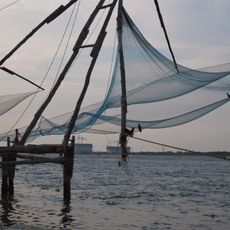
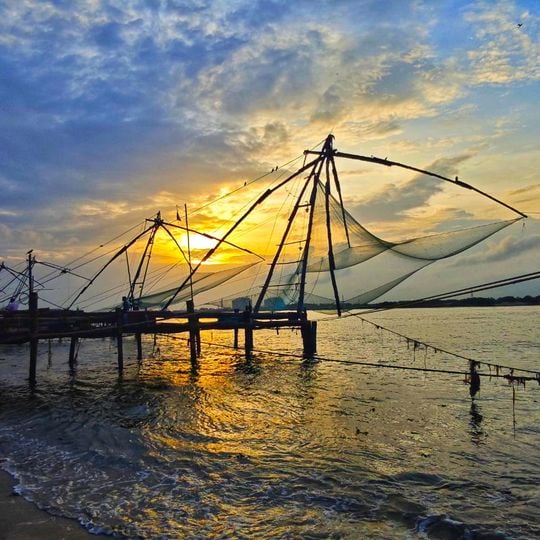
The Chinese Fishing Nets in Kochi are large cantilevered structures made from teak and bamboo poles that hang over the water and operate using wooden rollers and counterweights. Standing about 10 meters tall and spanning roughly 20 meters of water, they are manually operated by teams of fishermen who pull ropes to dip and lift the nets in rhythmic motions.
The nets were brought to Kochi between 1400 and 1450 and are attributed to Chinese Admiral Zheng He and the Ming treasure voyages across the Indian Ocean. They stand as one of the few physical connections to this era of trade exchange between China and India and have remained integrated into the local fishing economy for over 500 years.
The nets are locally known as "Cheena Vala," a name reflecting their Chinese origins. They represent a living connection to maritime trade and remain woven into the daily rhythm of the fishing community.
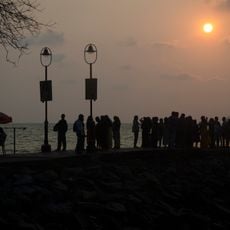
The best views are from Vasco da Gama Square early in the morning or at sunset, where a walkway runs along the beach for easy viewing. Plan to spend time standing quietly nearby to follow the fishermen's rhythmic work, especially when tides are favorable for their operations.
Some of the nets are over 500 years old and bear the marks of continuous use, emphasizing their enduring function despite their weathered appearance. The fact that fishing families have worked with these same nets for decades, passing down stories of change and daily struggles, makes each location a living piece of local history.
The community of curious travelers
AroundUs brings together thousands of curated places, local tips, and hidden gems, enriched daily by 90,816 contributors worldwide.