Aqueduc de l'Avre, 19th-century aqueduct in Montreuil, France
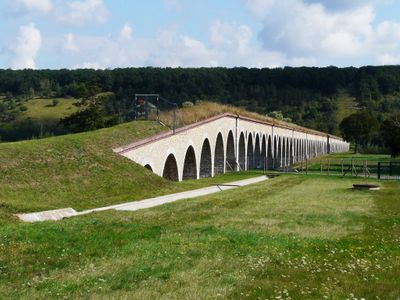
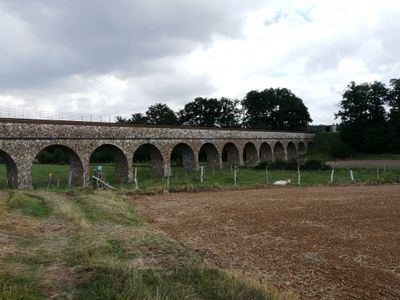
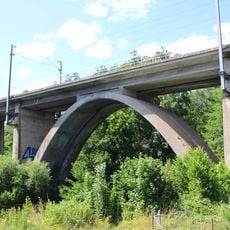
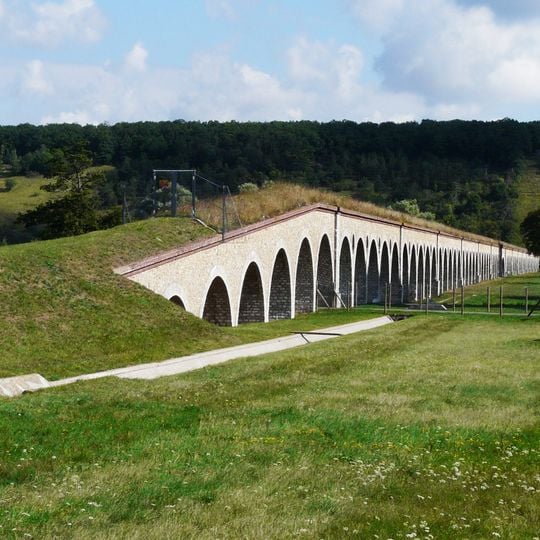
The Aqueduct of Avre is a stone water-carrying structure with numerous arches spanning the Eure Valley. Its construction combines multiple levels and enabled water transport across long distances.
The structure was built in the early 1890s to supply Paris with fresh water from distant sources. It was part of an ambitious plan to modernize the infrastructure of the growing capital.
The structure shows how France aimed to supply its cities with modern water systems in the 19th century. It remains a visible sign of those industrial ambitions and shapes the regional landscape today.
The aqueduct is visible from the outside and can be observed from various points along the valley. The best way to understand its full extent is to walk through the valley from north to south.
Water flows through the entire system without pumps, driven solely by the natural height difference between source and destination. This gravity-fed principle was a masterwork of engineering from that era.
The community of curious travelers
AroundUs brings together thousands of curated places, local tips, and hidden gems, enriched daily by 60,000 contributors worldwide.