Casas de Santana, Traditional triangular houses in Santana, Portugal
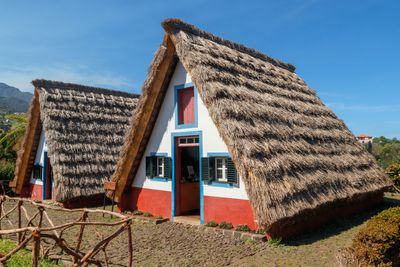
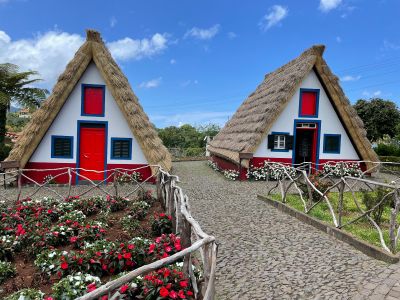
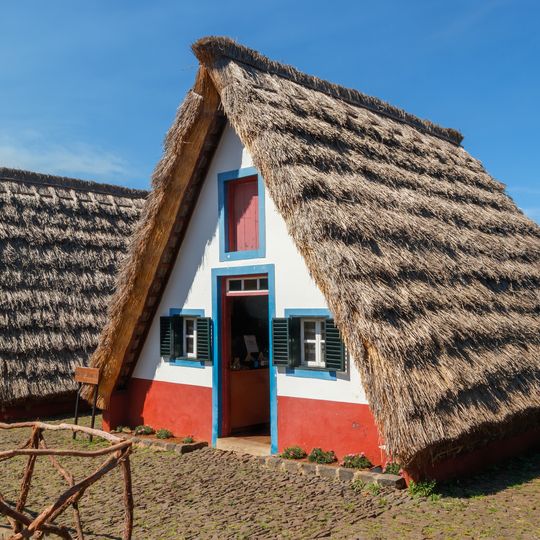
Casas de Santana are traditional dwellings in Santana, Madeira, Portugal, recognizable by their triangular shape with thatched roofs that slope down almost to the ground. The facades display bold colors such as blue, red, and white, with each house featuring individual patterns and wooden cladding that shield the structure from wind and rain.
Settlers built these houses starting in the 16th century using wood and cereal stalks, both readily available in the region and suited to the damp climate. Over time, many were demolished or rebuilt, but some survived and now serve as a museum to show building methods from the past.
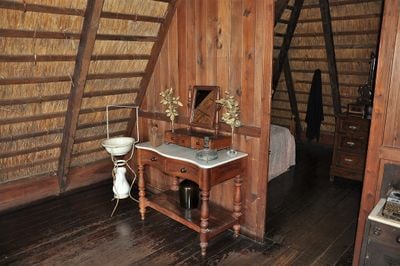
Families lived on the ground floor, using one room for cooking and another for sleeping, while storing grain and tools in the attic space above. The name Santana honors Saint Anne, patron of the area, whose devotion shaped many local customs and festivals still observed today.
The site is open during the day and allows visitors to walk through several restored buildings, with information panels offering insights into construction methods. The paths are mostly level, though visitors should watch their step in wet weather as grass can become slippery.
The triangular shape creates natural air circulation that cools in summer and retains warmth in winter without additional heating or cooling systems. The steep angle lets rainwater run off quickly, preventing the thatch from rotting or becoming heavy with moisture.
The community of curious travelers
AroundUs brings together thousands of curated places, local tips, and hidden gems, enriched daily by 92,140 contributors worldwide.