Sanghol Buddhist Stupa Site
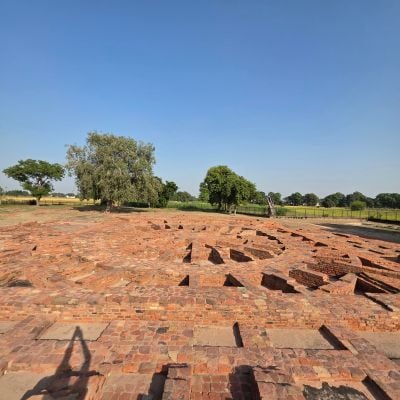
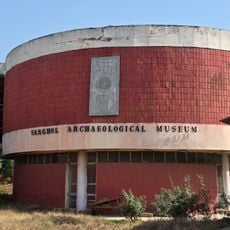
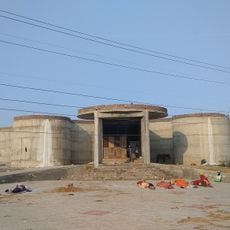
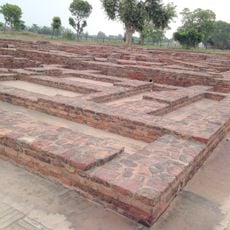
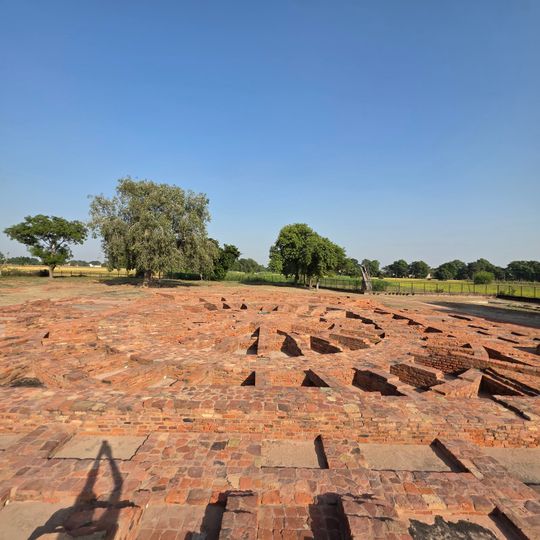
The Sanghol Buddhist Stupa Site is an archaeological site in Punjab's Khamanon Tahsil featuring the remains of an ancient stupa, monasteries, and scattered artifacts spanning many centuries. Excavations reveal layers of settlement from around 2000 BCE through the Kushana period roughly 2,000 years ago.
The site was inhabited from around 2000 BCE and flourished as a major trading hub and Buddhist center during the Kushana period roughly 2,000 years ago. The stupa is believed connected to Emperor Ashoka, who built many stupas across India in the 3rd century BCE.
The site served as a meeting point where different cultures and religions came together, visible in the variety of art and sculptures discovered here. The carvings and figurines from the Mathura art tradition show religious scenes and daily life of ancient people who lived in this region.
The site sits on a gentle hill with uneven ground and scattered ancient stones, so comfortable shoes are recommended for walking. It is located about 40 kilometers from Chandigarh in a quiet rural area and is easily accessible from the road connecting Chandigarh and Ludhiana.
Among the discoveries are seals and coins bearing ancient inscriptions that reveal this place was connected to other Indian regions through trade networks. A particularly interesting find is a large collection of stone sculptures showing scenes of women under trees and engaged in daily activities, demonstrating the skill of ancient craftspeople.
The community of curious travelers
AroundUs brings together thousands of curated places, local tips, and hidden gems, enriched daily by 92,778 contributors worldwide.