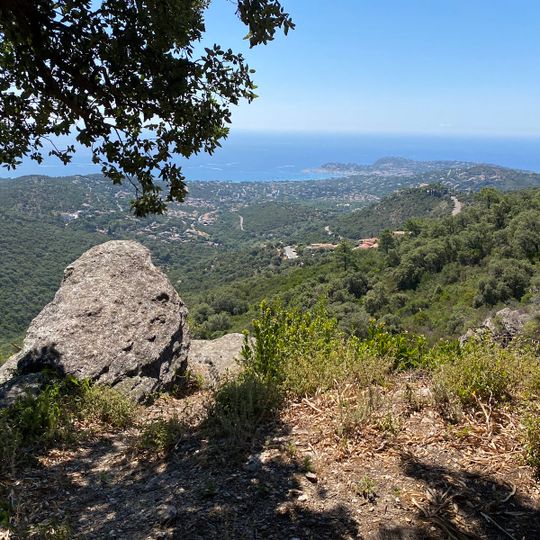
Oppidum de Montjean, Hill fort and archaeological site in La Môle, France
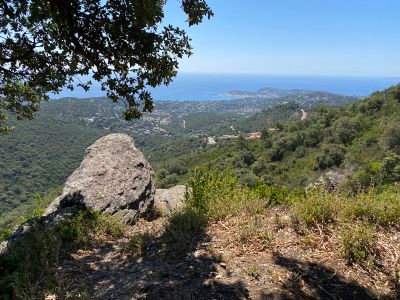
The Oppidum de Montjean is an Iron Age hill fort and archaeological site in La Môle, in the Var department of France, sitting at around 460 meters above sea level. The remains consist of dry-stone walls and structural traces spread across a wooded hilltop, and the site is listed as a historical monument.
The Oppidum de Montjean was built by the Ligurians, a people who lived in this region more than two thousand years ago, likely between the 6th and 4th centuries BCE. Excavations carried out between 1963 and 1979 uncovered both local pottery and imported pieces, pointing to trade contacts with the Greek world.
The dry-stone walls of the Oppidum de Montjean are still visible on the ground, giving a clear sense of how Ligurian settlements were built. Finds of imported Phocaean pottery suggest the site was part of a trade network that reached as far as the ancient Greek world.
The site sits on a wooded hilltop and is reached on foot, so sturdy footwear is recommended. Dense vegetation can hide some of the wall remains, so visiting during seasons with less foliage makes it easier to read the ruins.
Although the site was built by Ligurians, the finds show close contact with Greek traders from Phocaea, a city on what is now the Turkish coast. This connection suggests that this remote hilltop community was part of a trading network moving wine and goods across the western Mediterranean.
The community of curious travelers
AroundUs brings together thousands of curated places, local tips, and hidden gems, enriched daily by 91,094 contributors worldwide.