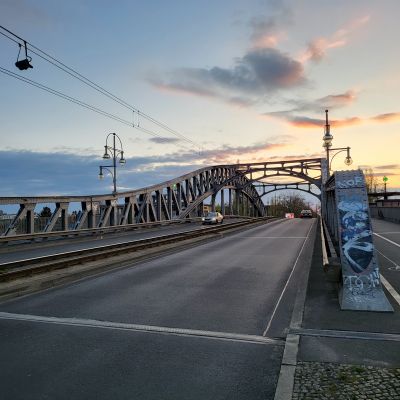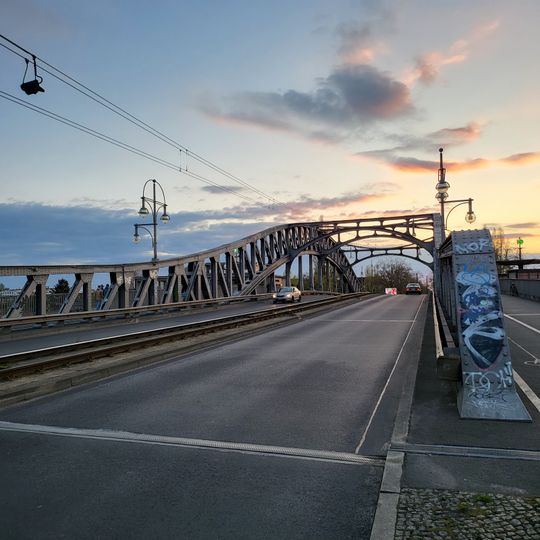
Bösebrücke, Truss bridge in Pankow, Berlin, Germany.
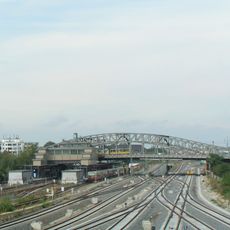
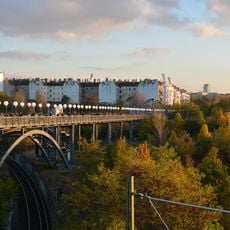
The Bösebrücke is a steel truss bridge that spans over main railway tracks and S-Bahn lines, connecting Prenzlauer Berg and Wedding neighborhoods. The structure is designed with a functional steel framework and sits within the urban landscape of northern Berlin.
The bridge was constructed in 1912 as Berlin's first nickel-steel structure and opened to traffic in 1916, representing significant technical innovation for its era. After World War II, it received its current name in 1948 as a gesture of remembrance for victims of the Nazi period.
The bridge has carried the name of Wilhelm Böse since 1948, an electrician who resisted Nazi rule and lost his life for it. Today the name serves as a reminder of his resistance and shapes how people understand the structure as a memorial to victims of oppression.
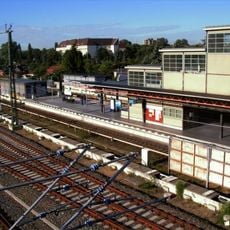
The bridge sits on Bornholmer Straße in Pankow and is easiest to reach on foot or by public transport that stops nearby regularly. The best views of the structure come from below, either from the railway platforms or from street level.
On November 9, 1989, this became the first border crossing between East and West Berlin to open after the fall of the Wall. Tens of thousands of people crossed the bridge in the first hours, making it a symbol of reunification.
The community of curious travelers
AroundUs brings together thousands of curated places, local tips, and hidden gems, enriched daily by 60,000 contributors worldwide.