See the monuments around you in AROpen chests in the app
Around Us is built for your phone — point your camera at the streets and discover the monuments and places around you in augmented reality.Around Us is built for your phone — chests unlock when you walk, explore and capture nearby places.
Berlin Wall history: remnants, memorials, walking routes, and sites to explore today
More than thirty years after its fall, the Berlin Wall still shapes the city. Between the districts of Mitte, Prenzlauer Berg, and Friedrichshain, fragments of concrete, watchtowers, and memorial plaques recall the division of a capital and its people. Some sections remain intact, others have been turned into memorials or works of art, like the East Side Gallery. Along the old border lines, museums and parks bring these historical traces back to life: Checkpoint Charlie, Bernauer Straße, the Topography of Terror, and Mauerpark. Each site holds a particular stillness, reflecting a time that Berlin does not erase but keeps present in memory.
These places invite visitors to understand, to feel, and sometimes simply to remember. At Bernauer Straße, the central memorial preserves original Wall sections alongside a documentation center. The East Side Gallery displays murals by artists from around the world along more than a kilometer of Wall. The border crossing at Bornholmer Straße was the first to open on November 9, 1989. Mauerpark, once a stretch of death strip and border zone, now fills with people gathering to celebrate and relax. Smaller traces like the former watchtower at Schlesischer Busch or the Wall fragment on Liesenstraße sit quietly among residential buildings, reminding passersby that the border once ran straight through daily life.
Berlin Wall history: remnants, memorials, walking routes, and sites to explore today
More than thirty years after its fall, the Berlin Wall still shapes the city. Between the districts of Mitte, Prenzlauer Berg, and Friedrichshain, fragments of concrete, watchtowers, and memorial plaques recall the division of a capital and its people. Some sections remain intact, others have been turned into memorials or works of art, like the East Side Gallery. Along the old border lines, museums and parks bring these historical traces back to life: Checkpoint Charlie, Bernauer Straße, the Topography of Terror, and Mauerpark. Each site holds a particular stillness, reflecting a time that Berlin does not erase but keeps present in memory.
These places invite visitors to understand, to feel, and sometimes simply to remember. At Bernauer Straße, the central memorial preserves original Wall sections alongside a documentation center. The East Side Gallery displays murals by artists from around the world along more than a kilometer of Wall. The border crossing at Bornholmer Straße was the first to open on November 9, 1989. Mauerpark, once a stretch of death strip and border zone, now fills with people gathering to celebrate and relax. Smaller traces like the former watchtower at Schlesischer Busch or the Wall fragment on Liesenstraße sit quietly among residential buildings, reminding passersby that the border once ran straight through daily life.
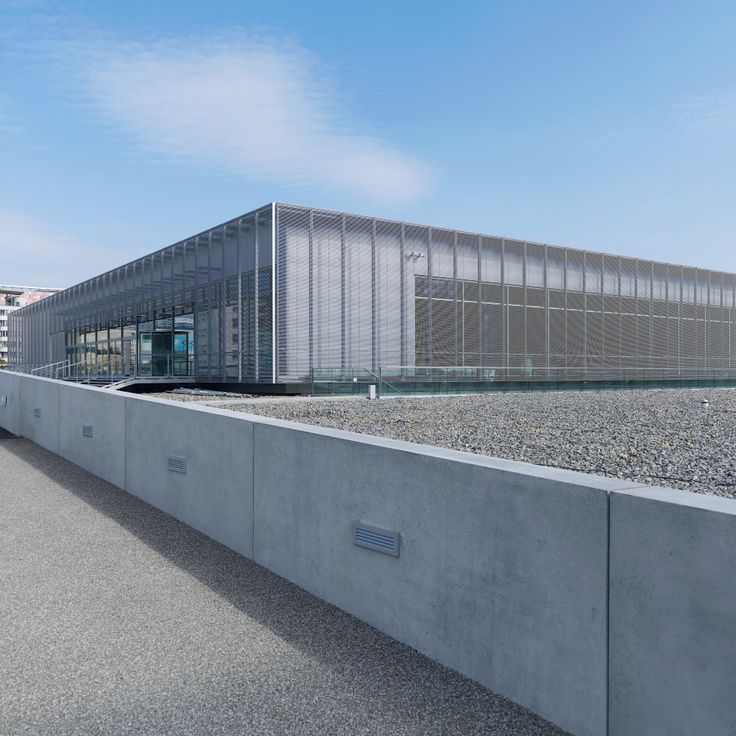
This memorial site stands on the grounds of the former Gestapo headquarters, where a section of the outer wall remains as a reminder. The place shows how the Nazi terror institutions operated and what role the wall played, later bordering these buildings. You walk between foundations and see historical documents mounted along the walls. The atmosphere stays sober, almost cool. Visitors move slowly, read the panels, look at the gray remnants. This section belongs to Berlin's history, which is not hidden but openly displayed.
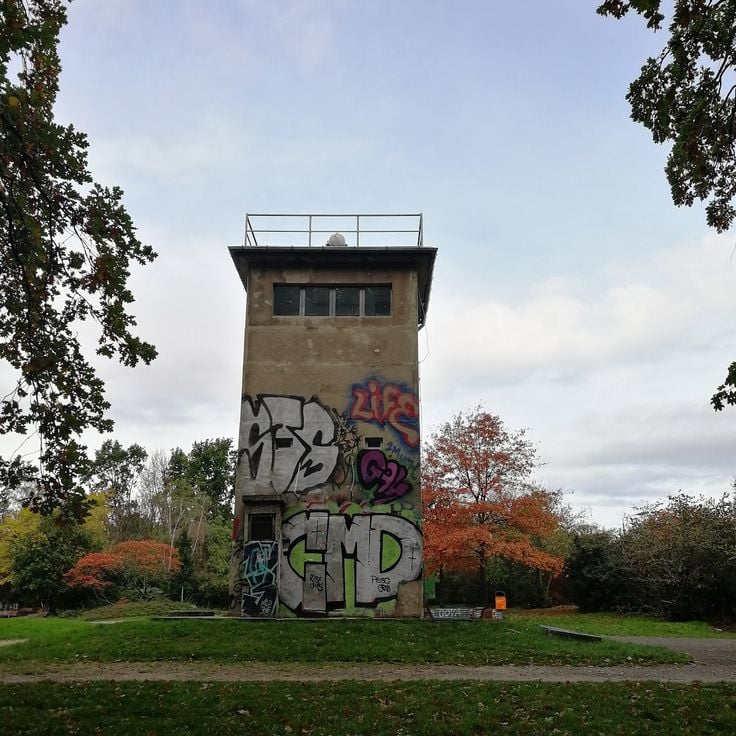
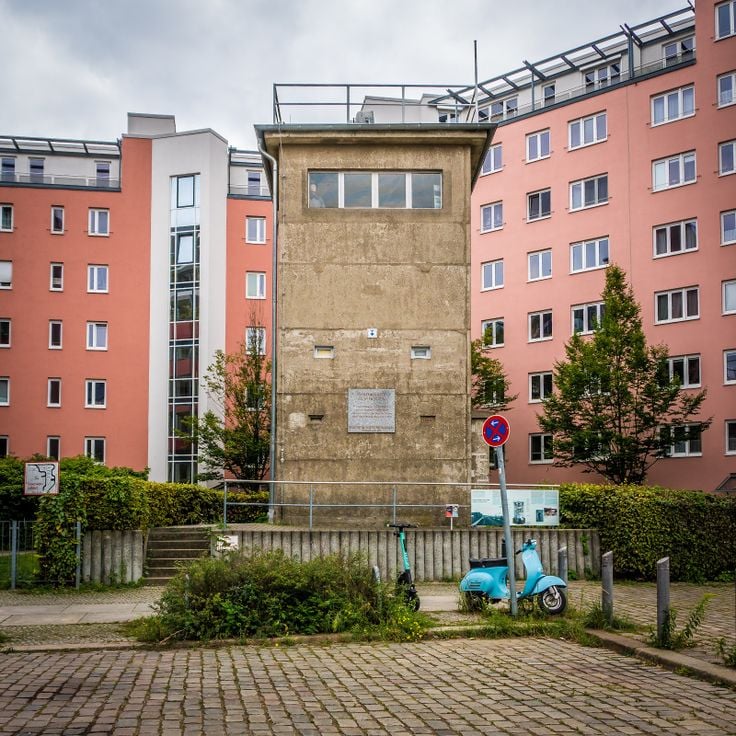
This former watchtower in Schlesischer Busch belongs to the few remaining border installations still standing. It was part of the security system along the Wall and served to monitor the border strip. Today it is listed as a historic monument and allows visitors to understand the architecture and function of these control structures. From here, border guards watched movements in the no-man's-land day and night. The tower shows how dense the network of observation posts was and how systematically the division was enforced. Unlike many other towers, this one was not demolished but preserved as a silent witness of those years.
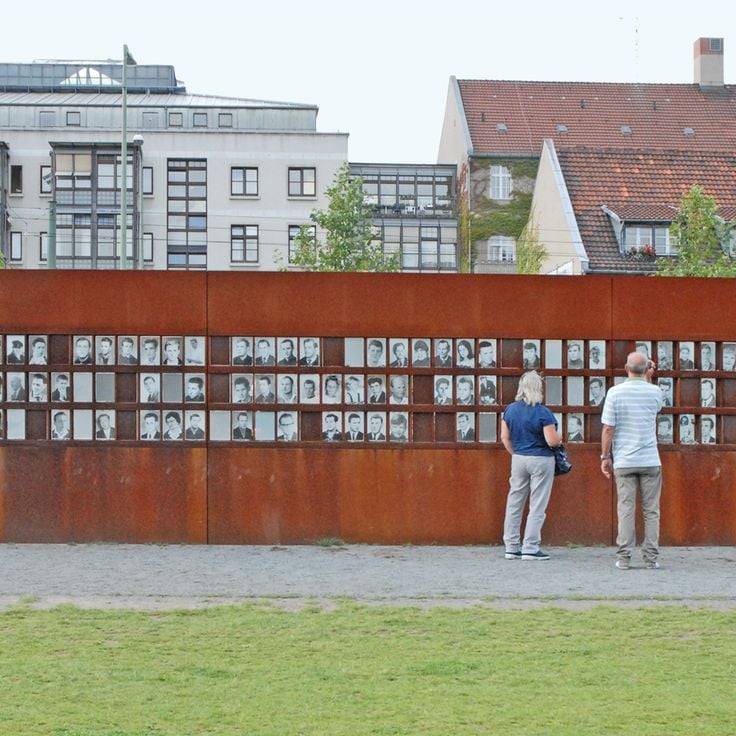
This memorial preserves a complete section of the inner and outer wall as it stood during the years of division. Photographs on the walls show people who lived on both sides, separated by concrete and barbed wire. Installations tell of escape attempts, of families who could not visit each other, of daily life under surveillance. The site lies quietly between residential buildings and a church whose ruin is still visible. You walk along the wall and feel how close history remains here.
This cemetery was cut through by the line of the wall and still holds fragments of the barrier. Among the old graves of Prussian soldiers, memorial stones recall people who died attempting to escape. Invalidenfriedhof sits in the border zone between Mitte and Moabit, where the death strip ran. Today trees grow over the foundations, and visitors find a quiet layer of history where military tradition and Berlin's division exist side by side.
This square was once a restricted zone and still shows individual wall segments that recall the border which ran right through here. After the fall, the area was completely rebuilt and now serves as a modern center with high-rises, shops and cinemas. Between the buildings, concrete blocks of the old wall stand scattered, showing where the division once ran and how radically this place has changed since then.
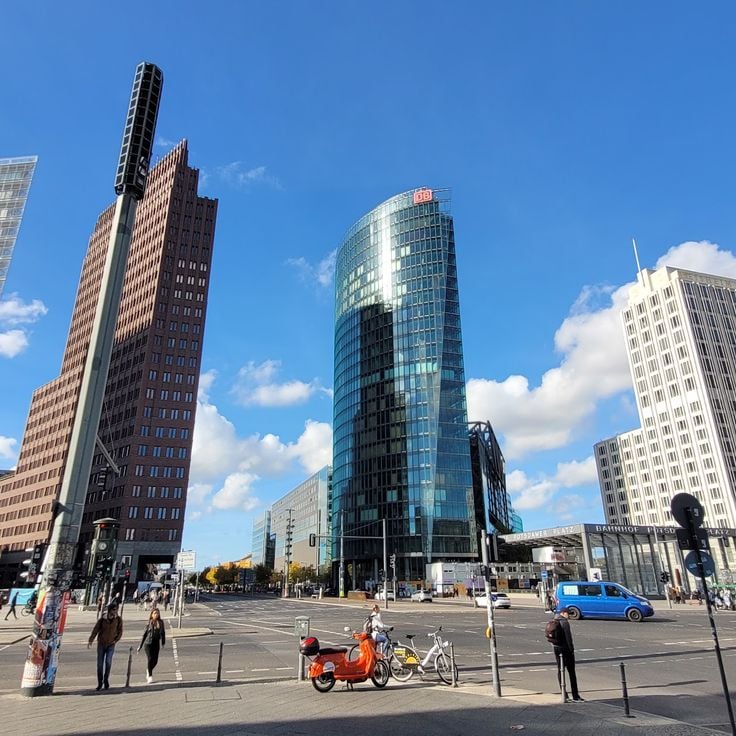
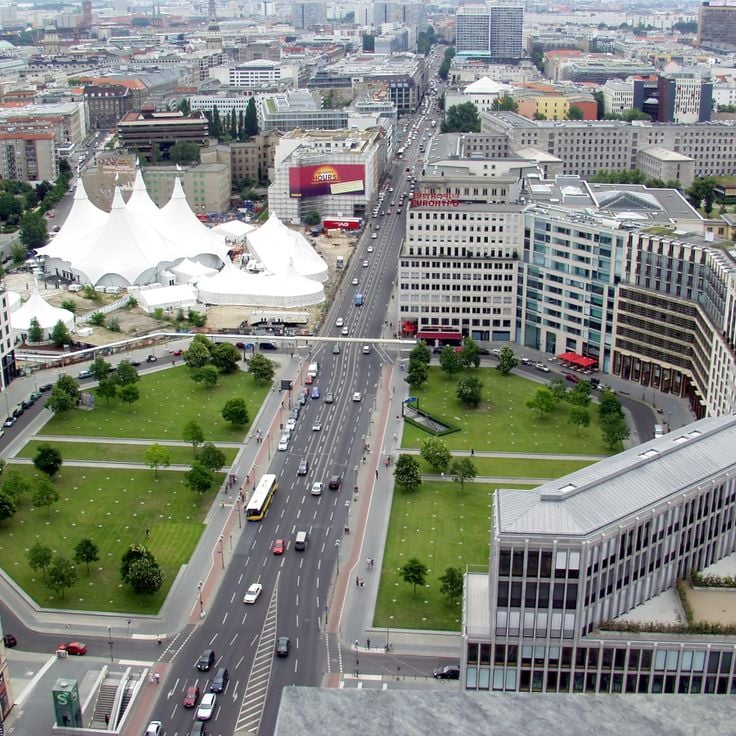
Leipziger Platz lies just a few steps from Potsdamer Platz and reconnects with its prewar energy after decades of division. The Wall ran directly through here, and its traces remain visible in the urban layout - in empty gaps between buildings, in the arrangement of streets, in small markers on the ground. Today shops, offices and steady pedestrian traffic define the scene, but anyone paying attention can still find reminders of when the square was split and the border crossed right over the pavement. Leipziger Platz shows how deeply the Wall once cut into the city's structure.
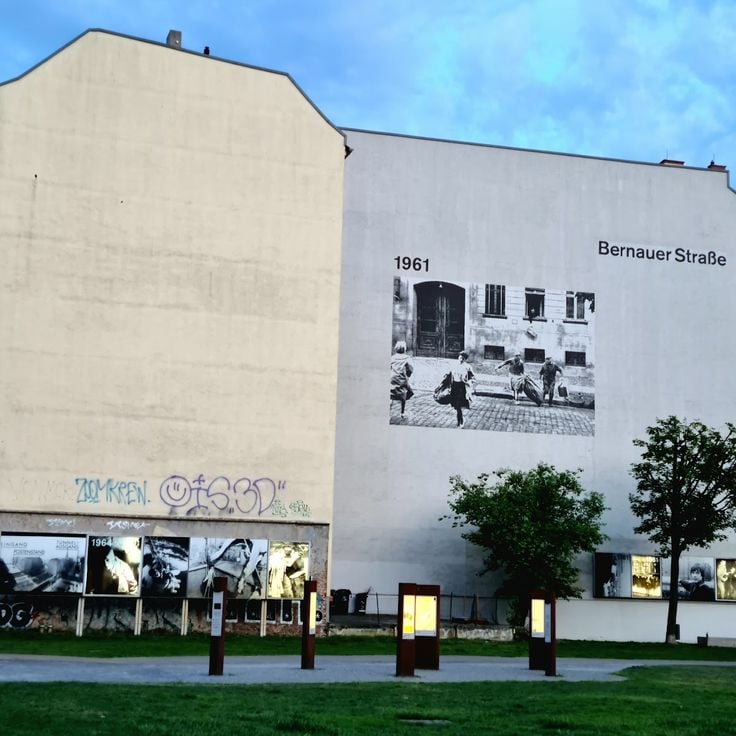
This street cut through an entire neighborhood when the wall went up overnight. Concrete remnants and old photographs show how families were split apart and people fled from windows. In some places the border is still visible, with metal posts that mark where it ran. The documentation center preserves stories of escape attempts and life in the shadow of the wall. Memorial steles remember those who died at this border. The place is quiet, almost empty sometimes, but the traces remain clearly readable.
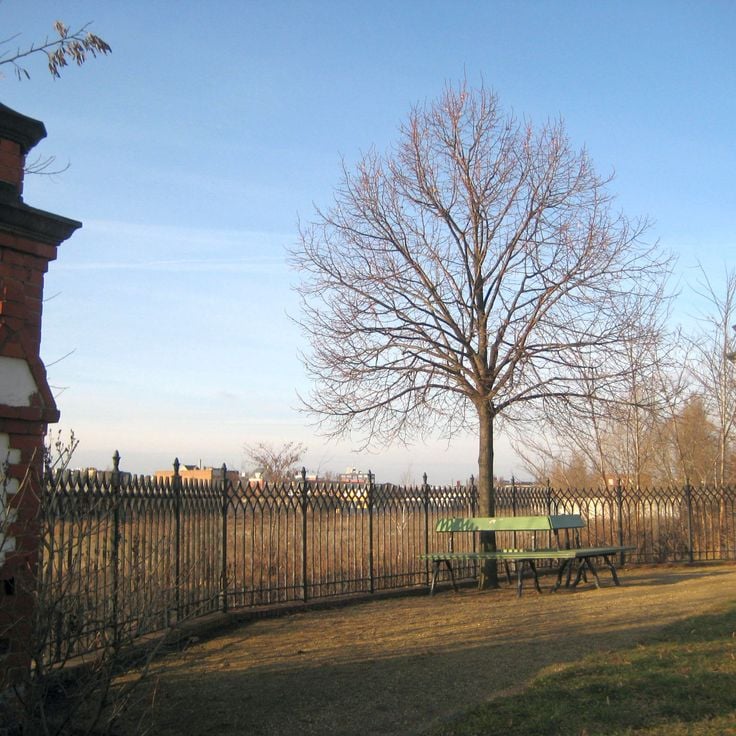
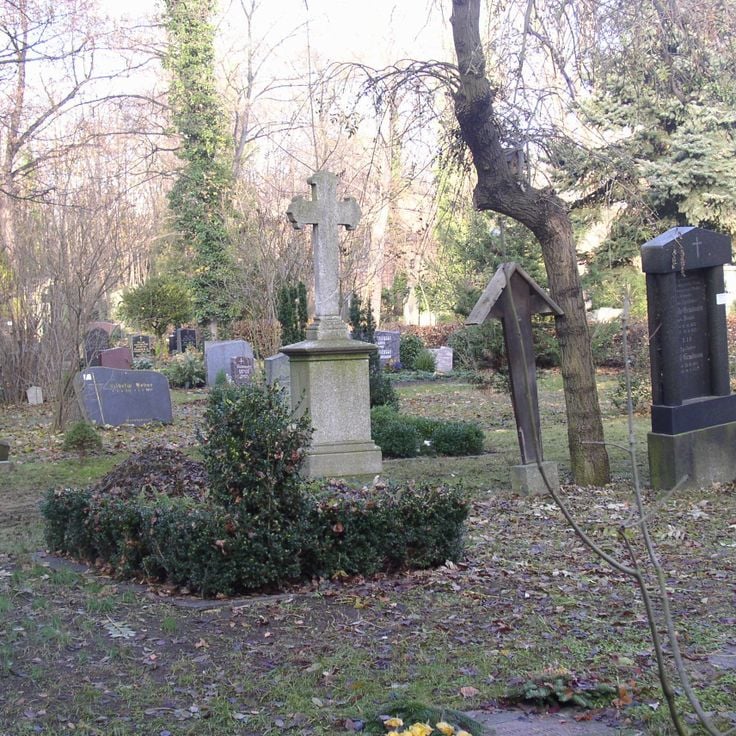
Behind the gates of this cemetery, a few meters of wall remain standing. The place sits quietly away from the main routes that organize remembrance of Berlin's division. People rarely enter, often by accident. The gravestones stand close to the concrete. Between the graves runs a short stretch of gray barrier, almost invisible among trees and hedges. It is a quiet spot, without an information panel or visitor flow. The wall here feels like a silent witness, embedded in the daily life of a cemetery that continues. The atmosphere is dense, sometimes heavy. Memory mixes with time passing.
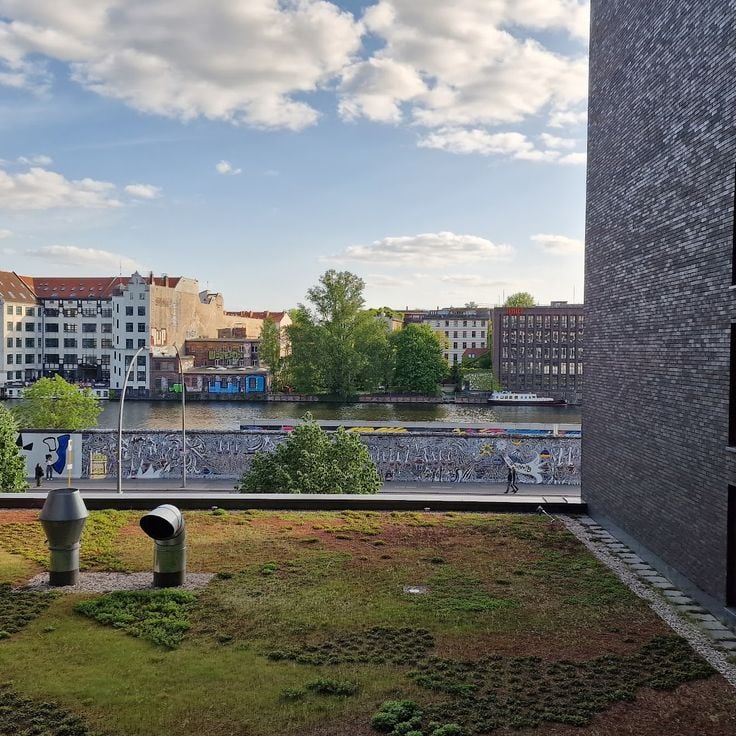
The East Side Gallery runs for more than a kilometer along the Spree and shows the longest remaining stretch of the original wall. Artists from different countries painted the concrete after 1990, and their works speak of hope, freedom and political change. Some images have faded today or been restored, others still carry the original paint. Visitors walk along the gallery and photograph the most recognized motifs, including the fraternal kiss and the Trabant breaking through the wall. On sunny days people gather on the grass by the river, while tourists examine the wall up close. The atmosphere is quiet and reflective, sometimes interrupted by street musicians or cyclists passing by.
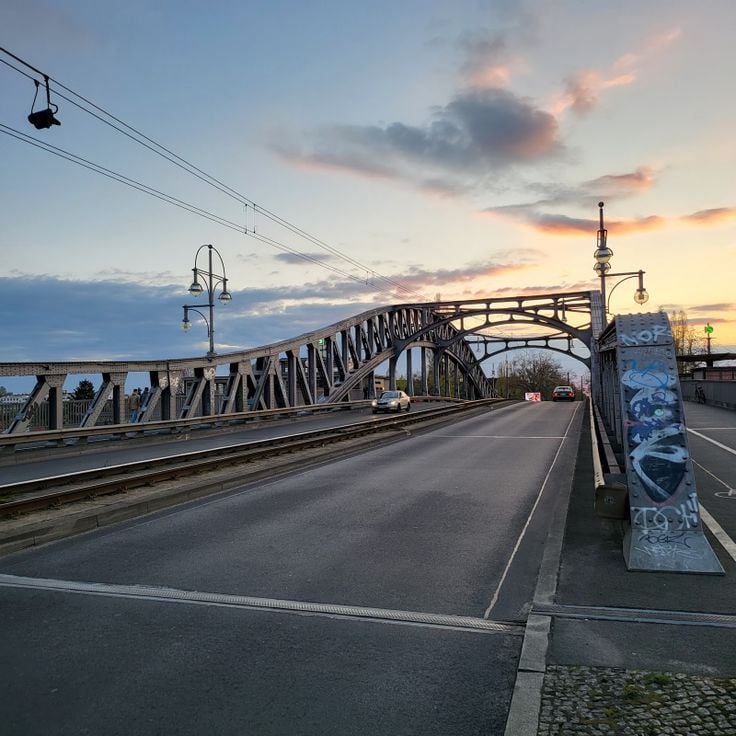
This border crossing opened first on November 9, 1989, when thousands of East Berliners pushed through to the West. A permanent exhibition shows photographs, documents, and eyewitness accounts from that night when the Wall lost its function. The barriers here were raised first, and the site marks the beginning of the end of Berlin's division. Visitors find information panels and can understand how this crossing became a symbol of reunification.
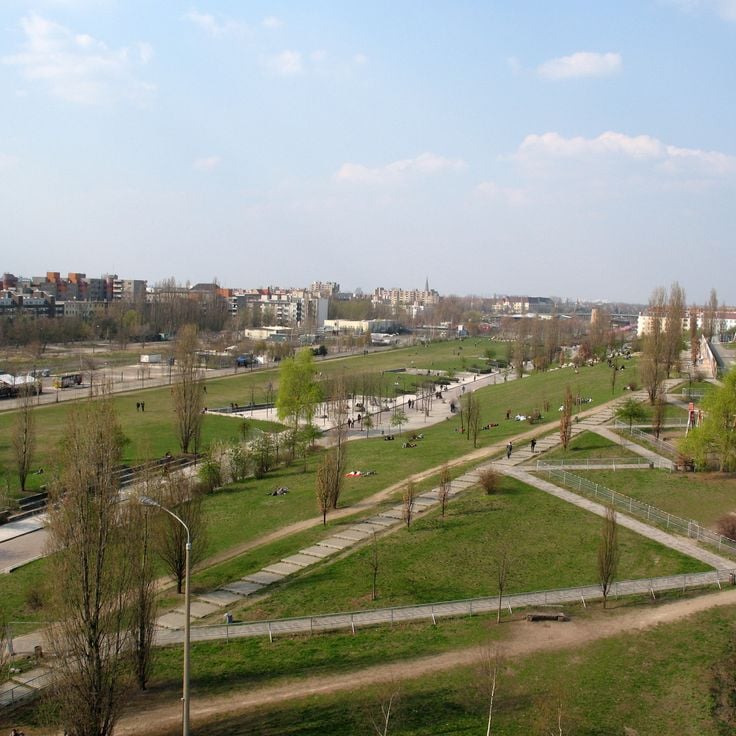
This park sits on a section where the border once cut through the city. Mauerpark draws young people and families, especially on weekends. There is a flea market, musicians performing, and an open-air karaoke that can be heard from afar. One wall displays layers of street art. The atmosphere feels relaxed, sometimes loud, always busy. People sit on the grass, eat, listen to music. The place has little in common with a traditional memorial. Here history is not exhibited but transformed into something lived, something everyday.
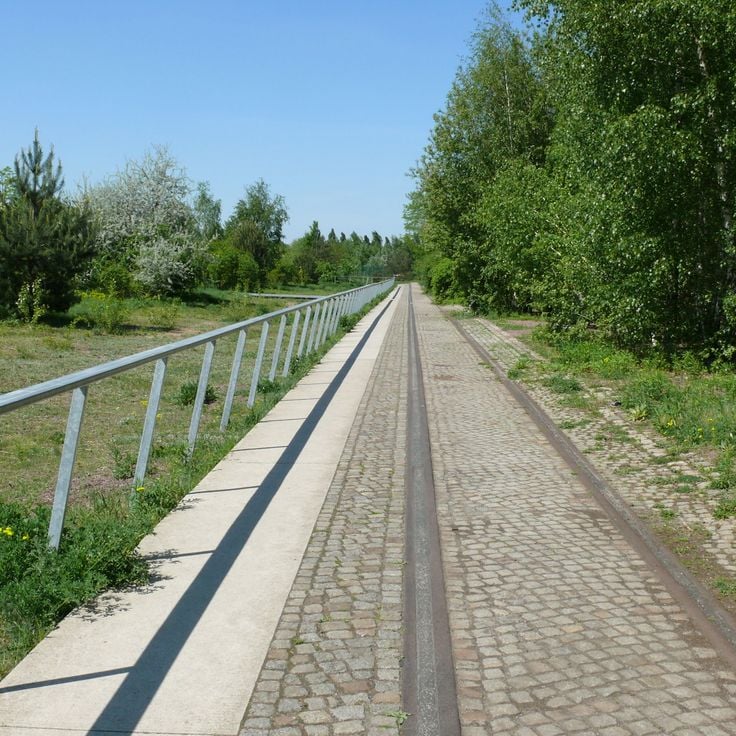
This park was built on the site of a closed train station and keeps pieces of the wall standing between trees and bike paths. Walking through Nordbahnhof, you still feel the border in the ground, in the concrete, in the rails that suddenly stop. The division ran right through daily life here. Today children play on the lawns, cyclists cross the old lines, but panels and fragments recall the time when this place was unreachable.
At the intersection with Gartenstraße, a section of the wall still stands. This remnant marks where the border ran straight through the city, dividing neighborhoods and daily life. The concrete slabs look weathered but solid, a physical trace of the barrier that once separated people. The area around it has changed completely, with new buildings and streets, yet this fragment remains. It belongs to the scattered pieces that Berlin keeps visible to show how division shaped the capital. You can walk right up to it and touch the surface. Liesenstraße was part of the border line between Mitte and Wedding. Today the spot feels quiet, almost ordinary, but the history is tangible.
This memorial remembers one of the first refugees who died attempting to escape across the Spree. It stands near a preserved watchtower in northern Berlin, right along the old border strip. The place is quiet, rarely visited, and conveys the tragedy of the early division years. Plaques tell the story of the young man shot here in 1961, just days after the wall was built. You can feel the weight of memory at this site.
Rüdower Höhe holds a 350-meter section of the wall, protected by a fence and still showing its original white paint. This unchanged piece is part of the traces Berlin has not erased more than thirty years after the wall came down. The paint flakes in places, but the white remains visible, recalling the era of division. This park sits away from the well-known memorials, yet here the wall appears as it once stood - without commentary, without transformation. For those tracing the historical remnants of the inner border, this site offers an authentic witness made of concrete and paint.
This forgotten piece of the Wall sits in a small grove near Schönholz S-Bahn station and was rediscovered in 2018. Nature has reclaimed the area, with trees and bushes surrounding the concrete as if trying to hide it. You have to look closely to spot the traces. The site feels quiet, almost untouched, and reminds you how time and plants slowly wear away at memory. Few visitors wander here, and the fragment seems to belong more to the birds and the wind than to people.
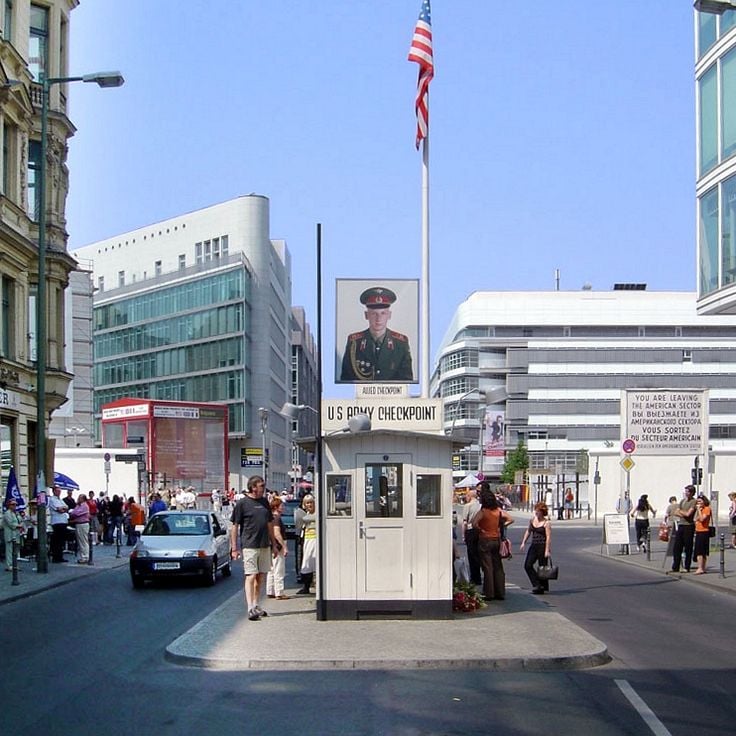
This former crossing point between East and West Berlin remains one of the most important sites of the Berlin Wall. Today a replica guardhouse stands here, reminding visitors of the division. The nearby museum tells the story of life at the border through documents, escape stories, and everyday objects. People from all over the world come here each day to understand how the border worked and how people tried to cross it.
This tower at Schlesischer Busch houses artworks that were banned in East Germany. Inside a former watchtower from the border installations, paintings, sculptures and installations appear that the regime considered dangerous. The rooms are small and bare, the atmosphere focused. You climb narrow stairs and find yourself among works that remained hidden for decades. The museum connects art with political history and reminds how closely power and expression were linked. The place itself, a remnant of the division, gives the exhibited works additional weight.
This canal runs where a waterway once passed through Berlin and later became part of the border between East and West. Before the wall was built, Saint Michael's Church could be seen from here. Today, the site remains marked by the separation it symbolized for so long, and it stands as one of the quiet witnesses to that period that Berlin continues to face.
This memorial site stands on the grounds of the former Gestapo headquarters, where a section of the outer wall remains as a reminder. The place shows how the Nazi terror institutions operated and what role the wall played, later bordering these buildings. You walk between foundations and see historical documents mounted along the walls. The atmosphere stays sober, almost cool. Visitors move slowly, read the panels, look at the gray remnants. This section belongs to Berlin's history, which is not hidden but openly displayed.
This former watchtower in Schlesischer Busch belongs to the few remaining border installations still standing. It was part of the security system along the Wall and served to monitor the border strip. Today it is listed as a historic monument and allows visitors to understand the architecture and function of these control structures. From here, border guards watched movements in the no-man's-land day and night. The tower shows how dense the network of observation posts was and how systematically the division was enforced. Unlike many other towers, this one was not demolished but preserved as a silent witness of those years.
This memorial preserves a complete section of the inner and outer wall as it stood during the years of division. Photographs on the walls show people who lived on both sides, separated by concrete and barbed wire. Installations tell of escape attempts, of families who could not visit each other, of daily life under surveillance. The site lies quietly between residential buildings and a church whose ruin is still visible. You walk along the wall and feel how close history remains here.
This cemetery was cut through by the line of the wall and still holds fragments of the barrier. Among the old graves of Prussian soldiers, memorial stones recall people who died attempting to escape. Invalidenfriedhof sits in the border zone between Mitte and Moabit, where the death strip ran. Today trees grow over the foundations, and visitors find a quiet layer of history where military tradition and Berlin's division exist side by side.
This square was once a restricted zone and still shows individual wall segments that recall the border which ran right through here. After the fall, the area was completely rebuilt and now serves as a modern center with high-rises, shops and cinemas. Between the buildings, concrete blocks of the old wall stand scattered, showing where the division once ran and how radically this place has changed since then.
Leipziger Platz lies just a few steps from Potsdamer Platz and reconnects with its prewar energy after decades of division. The Wall ran directly through here, and its traces remain visible in the urban layout - in empty gaps between buildings, in the arrangement of streets, in small markers on the ground. Today shops, offices and steady pedestrian traffic define the scene, but anyone paying attention can still find reminders of when the square was split and the border crossed right over the pavement. Leipziger Platz shows how deeply the Wall once cut into the city's structure.
This street cut through an entire neighborhood when the wall went up overnight. Concrete remnants and old photographs show how families were split apart and people fled from windows. In some places the border is still visible, with metal posts that mark where it ran. The documentation center preserves stories of escape attempts and life in the shadow of the wall. Memorial steles remember those who died at this border. The place is quiet, almost empty sometimes, but the traces remain clearly readable.
Behind the gates of this cemetery, a few meters of wall remain standing. The place sits quietly away from the main routes that organize remembrance of Berlin's division. People rarely enter, often by accident. The gravestones stand close to the concrete. Between the graves runs a short stretch of gray barrier, almost invisible among trees and hedges. It is a quiet spot, without an information panel or visitor flow. The wall here feels like a silent witness, embedded in the daily life of a cemetery that continues. The atmosphere is dense, sometimes heavy. Memory mixes with time passing.
The East Side Gallery runs for more than a kilometer along the Spree and shows the longest remaining stretch of the original wall. Artists from different countries painted the concrete after 1990, and their works speak of hope, freedom and political change. Some images have faded today or been restored, others still carry the original paint. Visitors walk along the gallery and photograph the most recognized motifs, including the fraternal kiss and the Trabant breaking through the wall. On sunny days people gather on the grass by the river, while tourists examine the wall up close. The atmosphere is quiet and reflective, sometimes interrupted by street musicians or cyclists passing by.
This border crossing opened first on November 9, 1989, when thousands of East Berliners pushed through to the West. A permanent exhibition shows photographs, documents, and eyewitness accounts from that night when the Wall lost its function. The barriers here were raised first, and the site marks the beginning of the end of Berlin's division. Visitors find information panels and can understand how this crossing became a symbol of reunification.
This park sits on a section where the border once cut through the city. Mauerpark draws young people and families, especially on weekends. There is a flea market, musicians performing, and an open-air karaoke that can be heard from afar. One wall displays layers of street art. The atmosphere feels relaxed, sometimes loud, always busy. People sit on the grass, eat, listen to music. The place has little in common with a traditional memorial. Here history is not exhibited but transformed into something lived, something everyday.
This park was built on the site of a closed train station and keeps pieces of the wall standing between trees and bike paths. Walking through Nordbahnhof, you still feel the border in the ground, in the concrete, in the rails that suddenly stop. The division ran right through daily life here. Today children play on the lawns, cyclists cross the old lines, but panels and fragments recall the time when this place was unreachable.
At the intersection with Gartenstraße, a section of the wall still stands. This remnant marks where the border ran straight through the city, dividing neighborhoods and daily life. The concrete slabs look weathered but solid, a physical trace of the barrier that once separated people. The area around it has changed completely, with new buildings and streets, yet this fragment remains. It belongs to the scattered pieces that Berlin keeps visible to show how division shaped the capital. You can walk right up to it and touch the surface. Liesenstraße was part of the border line between Mitte and Wedding. Today the spot feels quiet, almost ordinary, but the history is tangible.
This memorial remembers one of the first refugees who died attempting to escape across the Spree. It stands near a preserved watchtower in northern Berlin, right along the old border strip. The place is quiet, rarely visited, and conveys the tragedy of the early division years. Plaques tell the story of the young man shot here in 1961, just days after the wall was built. You can feel the weight of memory at this site.
Rüdower Höhe holds a 350-meter section of the wall, protected by a fence and still showing its original white paint. This unchanged piece is part of the traces Berlin has not erased more than thirty years after the wall came down. The paint flakes in places, but the white remains visible, recalling the era of division. This park sits away from the well-known memorials, yet here the wall appears as it once stood - without commentary, without transformation. For those tracing the historical remnants of the inner border, this site offers an authentic witness made of concrete and paint.
This forgotten piece of the Wall sits in a small grove near Schönholz S-Bahn station and was rediscovered in 2018. Nature has reclaimed the area, with trees and bushes surrounding the concrete as if trying to hide it. You have to look closely to spot the traces. The site feels quiet, almost untouched, and reminds you how time and plants slowly wear away at memory. Few visitors wander here, and the fragment seems to belong more to the birds and the wind than to people.
This former crossing point between East and West Berlin remains one of the most important sites of the Berlin Wall. Today a replica guardhouse stands here, reminding visitors of the division. The nearby museum tells the story of life at the border through documents, escape stories, and everyday objects. People from all over the world come here each day to understand how the border worked and how people tried to cross it.
This tower at Schlesischer Busch houses artworks that were banned in East Germany. Inside a former watchtower from the border installations, paintings, sculptures and installations appear that the regime considered dangerous. The rooms are small and bare, the atmosphere focused. You climb narrow stairs and find yourself among works that remained hidden for decades. The museum connects art with political history and reminds how closely power and expression were linked. The place itself, a remnant of the division, gives the exhibited works additional weight.
This canal runs where a waterway once passed through Berlin and later became part of the border between East and West. Before the wall was built, Saint Michael's Church could be seen from here. Today, the site remains marked by the separation it symbolized for so long, and it stands as one of the quiet witnesses to that period that Berlin continues to face.
This memorial site stands on the grounds of the former Gestapo headquarters, where a section of the outer wall remains as a reminder. The place shows how the Nazi terror institutions operated and what role the wall played, later bordering these buildings. You walk between foundations and see historical documents mounted along the walls. The atmosphere stays sober, almost cool. Visitors move slowly, read the panels, look at the gray remnants. This section belongs to Berlin's history, which is not hidden but openly displayed.
This former watchtower in Schlesischer Busch belongs to the few remaining border installations still standing. It was part of the security system along the Wall and served to monitor the border strip. Today it is listed as a historic monument and allows visitors to understand the architecture and function of these control structures. From here, border guards watched movements in the no-man's-land day and night. The tower shows how dense the network of observation posts was and how systematically the division was enforced. Unlike many other towers, this one was not demolished but preserved as a silent witness of those years.
This memorial preserves a complete section of the inner and outer wall as it stood during the years of division. Photographs on the walls show people who lived on both sides, separated by concrete and barbed wire. Installations tell of escape attempts, of families who could not visit each other, of daily life under surveillance. The site lies quietly between residential buildings and a church whose ruin is still visible. You walk along the wall and feel how close history remains here.
This cemetery was cut through by the line of the wall and still holds fragments of the barrier. Among the old graves of Prussian soldiers, memorial stones recall people who died attempting to escape. Invalidenfriedhof sits in the border zone between Mitte and Moabit, where the death strip ran. Today trees grow over the foundations, and visitors find a quiet layer of history where military tradition and Berlin's division exist side by side.
This square was once a restricted zone and still shows individual wall segments that recall the border which ran right through here. After the fall, the area was completely rebuilt and now serves as a modern center with high-rises, shops and cinemas. Between the buildings, concrete blocks of the old wall stand scattered, showing where the division once ran and how radically this place has changed since then.
Leipziger Platz lies just a few steps from Potsdamer Platz and reconnects with its prewar energy after decades of division. The Wall ran directly through here, and its traces remain visible in the urban layout - in empty gaps between buildings, in the arrangement of streets, in small markers on the ground. Today shops, offices and steady pedestrian traffic define the scene, but anyone paying attention can still find reminders of when the square was split and the border crossed right over the pavement. Leipziger Platz shows how deeply the Wall once cut into the city's structure.
This street cut through an entire neighborhood when the wall went up overnight. Concrete remnants and old photographs show how families were split apart and people fled from windows. In some places the border is still visible, with metal posts that mark where it ran. The documentation center preserves stories of escape attempts and life in the shadow of the wall. Memorial steles remember those who died at this border. The place is quiet, almost empty sometimes, but the traces remain clearly readable.
Behind the gates of this cemetery, a few meters of wall remain standing. The place sits quietly away from the main routes that organize remembrance of Berlin's division. People rarely enter, often by accident. The gravestones stand close to the concrete. Between the graves runs a short stretch of gray barrier, almost invisible among trees and hedges. It is a quiet spot, without an information panel or visitor flow. The wall here feels like a silent witness, embedded in the daily life of a cemetery that continues. The atmosphere is dense, sometimes heavy. Memory mixes with time passing.
The East Side Gallery runs for more than a kilometer along the Spree and shows the longest remaining stretch of the original wall. Artists from different countries painted the concrete after 1990, and their works speak of hope, freedom and political change. Some images have faded today or been restored, others still carry the original paint. Visitors walk along the gallery and photograph the most recognized motifs, including the fraternal kiss and the Trabant breaking through the wall. On sunny days people gather on the grass by the river, while tourists examine the wall up close. The atmosphere is quiet and reflective, sometimes interrupted by street musicians or cyclists passing by.
This border crossing opened first on November 9, 1989, when thousands of East Berliners pushed through to the West. A permanent exhibition shows photographs, documents, and eyewitness accounts from that night when the Wall lost its function. The barriers here were raised first, and the site marks the beginning of the end of Berlin's division. Visitors find information panels and can understand how this crossing became a symbol of reunification.
This park sits on a section where the border once cut through the city. Mauerpark draws young people and families, especially on weekends. There is a flea market, musicians performing, and an open-air karaoke that can be heard from afar. One wall displays layers of street art. The atmosphere feels relaxed, sometimes loud, always busy. People sit on the grass, eat, listen to music. The place has little in common with a traditional memorial. Here history is not exhibited but transformed into something lived, something everyday.
This park was built on the site of a closed train station and keeps pieces of the wall standing between trees and bike paths. Walking through Nordbahnhof, you still feel the border in the ground, in the concrete, in the rails that suddenly stop. The division ran right through daily life here. Today children play on the lawns, cyclists cross the old lines, but panels and fragments recall the time when this place was unreachable.
At the intersection with Gartenstraße, a section of the wall still stands. This remnant marks where the border ran straight through the city, dividing neighborhoods and daily life. The concrete slabs look weathered but solid, a physical trace of the barrier that once separated people. The area around it has changed completely, with new buildings and streets, yet this fragment remains. It belongs to the scattered pieces that Berlin keeps visible to show how division shaped the capital. You can walk right up to it and touch the surface. Liesenstraße was part of the border line between Mitte and Wedding. Today the spot feels quiet, almost ordinary, but the history is tangible.
This memorial remembers one of the first refugees who died attempting to escape across the Spree. It stands near a preserved watchtower in northern Berlin, right along the old border strip. The place is quiet, rarely visited, and conveys the tragedy of the early division years. Plaques tell the story of the young man shot here in 1961, just days after the wall was built. You can feel the weight of memory at this site.
Rüdower Höhe holds a 350-meter section of the wall, protected by a fence and still showing its original white paint. This unchanged piece is part of the traces Berlin has not erased more than thirty years after the wall came down. The paint flakes in places, but the white remains visible, recalling the era of division. This park sits away from the well-known memorials, yet here the wall appears as it once stood - without commentary, without transformation. For those tracing the historical remnants of the inner border, this site offers an authentic witness made of concrete and paint.
This forgotten piece of the Wall sits in a small grove near Schönholz S-Bahn station and was rediscovered in 2018. Nature has reclaimed the area, with trees and bushes surrounding the concrete as if trying to hide it. You have to look closely to spot the traces. The site feels quiet, almost untouched, and reminds you how time and plants slowly wear away at memory. Few visitors wander here, and the fragment seems to belong more to the birds and the wind than to people.
This former crossing point between East and West Berlin remains one of the most important sites of the Berlin Wall. Today a replica guardhouse stands here, reminding visitors of the division. The nearby museum tells the story of life at the border through documents, escape stories, and everyday objects. People from all over the world come here each day to understand how the border worked and how people tried to cross it.
This tower at Schlesischer Busch houses artworks that were banned in East Germany. Inside a former watchtower from the border installations, paintings, sculptures and installations appear that the regime considered dangerous. The rooms are small and bare, the atmosphere focused. You climb narrow stairs and find yourself among works that remained hidden for decades. The museum connects art with political history and reminds how closely power and expression were linked. The place itself, a remnant of the division, gives the exhibited works additional weight.
This canal runs where a waterway once passed through Berlin and later became part of the border between East and West. Before the wall was built, Saint Michael's Church could be seen from here. Today, the site remains marked by the separation it symbolized for so long, and it stands as one of the quiet witnesses to that period that Berlin continues to face.