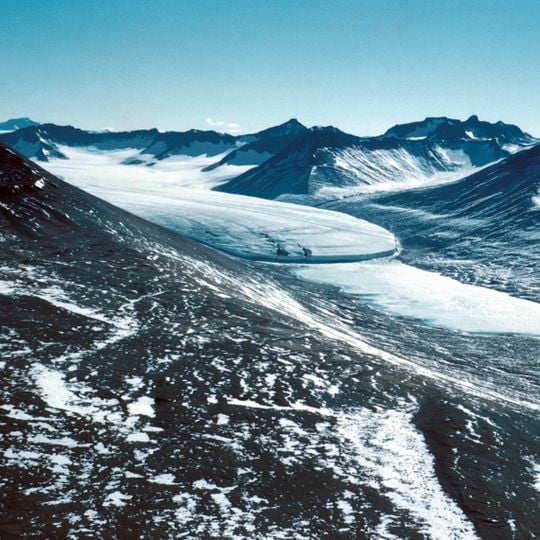
Victoria Valley, Ice-free valley in the McMurdo Dry Valleys, Antarctica
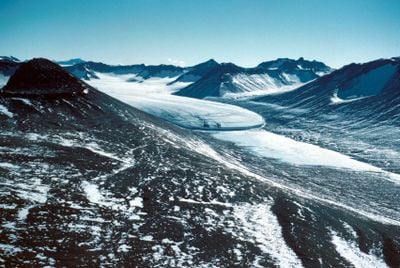
Victoria Valley extends approximately 18 miles (30 kilometers) from west to east, bordered by the Olympus Range to the south and the St John's Mountains to the north, featuring sandy desert terrain, braided stream channels, and extensive barchan sand dunes shaped by persistent katabatic winds.
The valley was named by the Victoria University of Wellington Antarctic Expedition during 1958 and 1959, honoring their sponsoring institution, and has served as an important site for scientific research on glacial history, climate change, and extremophile microbial life since the early expeditions.
Victoria Valley serves primarily as a research site for international scientific teams conducting studies in glaciology, geology, and climate science, with the Antarctic Treaty ensuring the region remains dedicated exclusively to peaceful scientific investigation and environmental protection.
Access to Victoria Valley is typically arranged through Antarctic research programs operating from McMurdo Station, with travel conducted by helicopter or specialized over-snow vehicles during the austral summer months from December through February, and visitors must follow strict environmental protocols.
The valley hosts Lake Vida, one of the coldest and most saline lakes on Earth, which never freezes completely due to its high salt content and provides a natural laboratory for studying extremophile organisms and potential analogs for extraterrestrial life.
The community of curious travelers
AroundUs brings together thousands of curated places, local tips, and hidden gems, enriched daily by 60,000 contributors worldwide.