McMurdo Station, Research station in Ross Island, Antarctica.
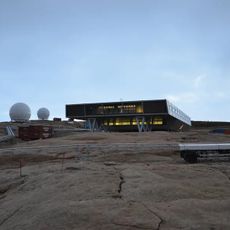
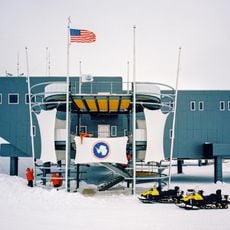
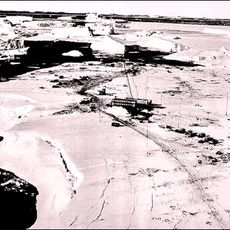
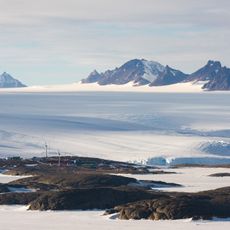
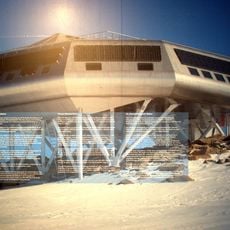
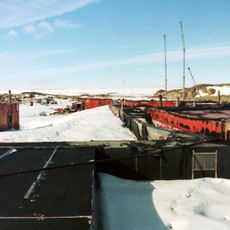
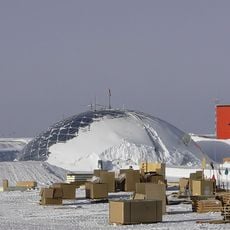
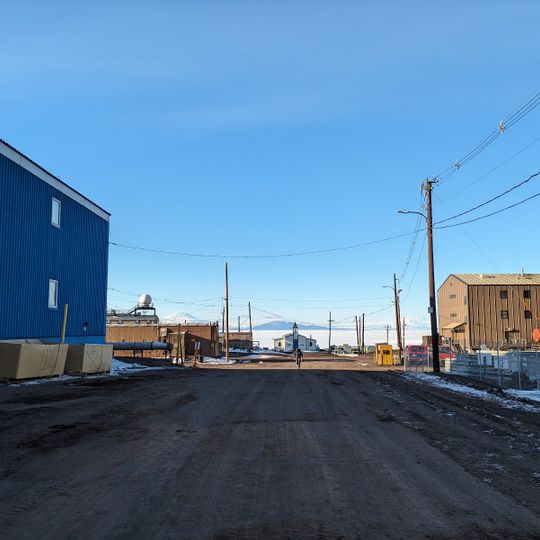
McMurdo Station is a research facility on Ross Island featuring laboratories, dormitories, and support structures connected by elevated utility lines across rocky terrain. The facility functions as the primary hub for American science and logistics operations across the Antarctic continent.
The United States founded the station in 1956 as part of Operation Deep Freeze, naming it after a 19th-century British naval officer. Over the decades it grew into the primary American foothold for Antarctic science and exploration.
The station's name honors a 19th-century naval officer, reflecting the long tradition of polar exploration by sea. Life here revolves around research schedules that shift dramatically between winter isolation and summer activity.
Access is by aircraft or ship only, with operations governed by extreme weather and extended winter darkness. Visitors should know this is an active research facility operating under strict safety protocols.
The facility operated on nuclear power between 1962 and 1972, making it one of the few atomic installations on the southern continent. This era shaped how polar science and energy technology evolved in extreme environments.
Location: McMurdo Station
Address: 5M39+F6G, Beaker St, McMurdo Station, Antarctica
GPS coordinates: -77.84631,166.66806
Latest update: December 6, 2025 19:05
Some places on Earth feel so far removed from the rest of the world that reaching them requires real commitment. This collection brings together research stations in Antarctica, villages in Siberia where winter temperatures drop to brutal lows, communities tucked deep inside canyons, and islands separated from any mainland by thousands of miles of open ocean. Each location shows how people manage to live and work where nature pushes against the limits of human presence. You will find weather stations near the North Pole, remote Greenlandic settlements reachable only by boat or helicopter, and secret military facilities hidden in desert expanses. Some of these places host scientists studying glaciers and wildlife in the southern seas. Others are home to indigenous communities who have adapted their way of life to freezing temperatures and months of darkness. Whether it is a research base on a subantarctic island or a Siberian village that holds the record for the coldest inhabited spot in the Northern Hemisphere, these locations offer a glimpse into how humans establish roots in the most challenging corners of the planet.
Macquarie Island
2602.6 km
Blood Falls
104.4 km
Bharati Station
2656.5 km
Amundsen–Scott South Pole Station
1352.7 km
Mirny Station
2561.4 km
New Zealand Subantarctic Islands
3016.4 km
Mawson Station
3092.9 km
Princess Elisabeth Antarctica
3194.7 km
Kunlun Station
1711.3 km
Chapel of Our Lady of the Snows
2656.3 km
Rakiura National Park
3445.5 km
Wilkes Station
2181.6 km
Rakiura Track
3449.6 km
Waipapa Point Lighthouse
3472.9 km
Mount Honey
2815.4 km
Moturau Moana
3446.7 km
Moutere Mahue / Antipodes Island Marine Reserve
3175.9 km
Moutere Hauriri / Reserva Marina de las Islas Bounty
3390.9 km
Auckland Islands Nature Reserve
3030 km
Whenua Hou Nature Reserve
3459.3 km
German Glacier
627 km
Amundsen-Scott South Pole Station
1887.8 km
Stewart Island Library
3445.6 km
Travellers Rest
3445.9 km
Snares Islands Nature Reserve
3319.8 km
Rakiura Museum
3445.7 km
Campbell Island/Motu Ihupuku Historic Area
2817.7 km
Halfmoon Bay war memorial
3445.7 kmVisited this place? Tap the stars to rate it and share your experience / photos with the community! Try now! You can cancel it anytime.
Discover hidden gems everywhere you go!
From secret cafés to breathtaking viewpoints, skip the crowded tourist spots and find places that match your style. Our app makes it easy with voice search, smart filtering, route optimization, and insider tips from travelers worldwide. Download now for the complete mobile experience.
A unique approach to discovering new places❞
— Le Figaro
All the places worth exploring❞
— France Info
A tailor-made excursion in just a few clicks❞
— 20 Minutes