Mawson Station, Research facility at Holme Bay, Antarctica
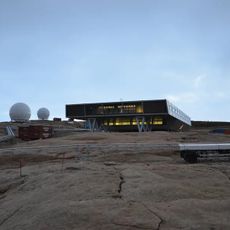
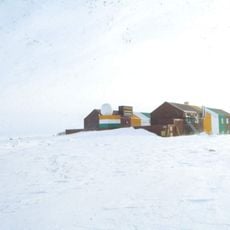
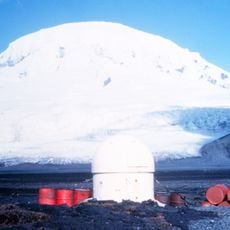
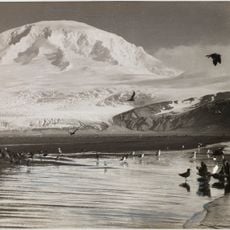
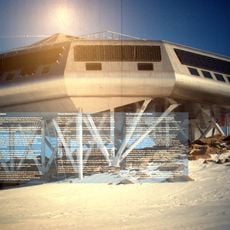
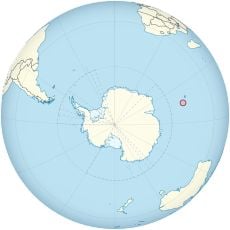
Mawson Station stands on exposed rock behind the docking area of Horseshoe Harbour, a deep natural harbour in Holme Bay, Mac. Robertson Land. Small prefabricated huts from the first years remain, but large steel-framed modular buildings from a rebuilding programme begun in the late 1970s dominate the sloping site. The station houses about 20 over winter and up to 53 in summer.
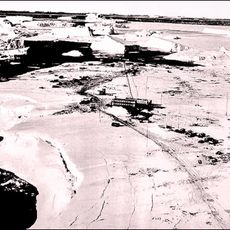
Phillip Law, director of the Australian Antarctic Division, chose the Horseshoe Harbour site in 1953 from aerial photographs of the U.S. Operation Highjump, and the Kista Dan reached the coast on 13 February 1954. Law raised the flag and named the station after Sir Douglas Mawson; ten men under Robert Dovers stayed to overwinter. A hangar built in 1956, the continent's first, allowed aerial survey of the Lambert Glacier and Prince Charles Mountains.
The station's name honours Sir Douglas Mawson, who led the first Australian Antarctic expedition from 1911 to 1914 and went ashore at Cape Bruce on 18 February 1931. Nearby Auster rookery, a breeding ground for emperor and Adélie penguins, is the subject of long-running conservation biology studies. In 2018 expeditioners used VR headsets showing Australian beaches and European and North American forests, research intended to inform support for long-duration spaceflight.
Access to the station is highly restricted and typically requires government authorization, as it remains an active research facility. The extreme polar conditions and remote location mean that only specialized personnel work and stay there.
The station harnesses power from two large wind turbines driven by the intense katabatic winds common to this region, operating since 2003 to generate renewable energy. This was a pioneering approach to sustainable electricity in Antarctica.
The community of curious travelers
AroundUs brings together thousands of curated places, local tips, and hidden gems, enriched daily by 94,105 contributors worldwide.