Bharati Station, Research station in Larsemann Hills, Antarctica
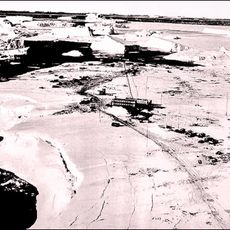
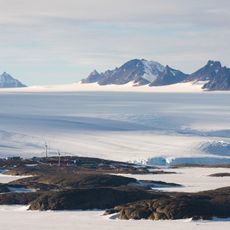
Bharati Station is an Indian research facility in the Larsemann Hills area of East Antarctica, where it sits surrounded by glaciers and the Indian Ocean shoreline. The compound consists of several interconnected modules including living quarters, laboratories, a power plant, and external facilities for fuel storage.
India commissioned Bharati on 18 March 2012 as its third Antarctic research station, after Dakshin Gangotri and Maitri. The Electronics Corporation of India Limited built it for the National Remote Sensing Centre under a ₹230 crore contract, and the 2,162 square metre main building went up in 127 days. India was the first nation to use shipping containers as an integral part of construction, which kept the build fast and cheap.
The station's name is rendered variously in news reports as Bharathi, Bharti and Bharati. In January 2017, scientist Felix Bast, on the 36th Indian Antarctic expedition, found a new moss species in the Larsemann Hills near the station and named it Bryum bharatiense.
The station accommodates up to 47 people at once, with crews rotating depending on the research season and additional scientists arriving during the brief Antarctic summer. Visits are only possible for accredited researchers or expedition groups with Antarctic clearance, as regular tourists cannot access the site.
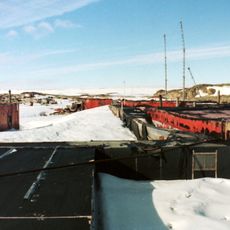
The entire compound was assembled from 134 prefabricated shipping containers, which significantly shortened construction time in extreme cold. This modular design also allows individual sections to be replaced or expanded when needed without affecting the whole building.
The community of curious travelers
AroundUs brings together thousands of curated places, local tips, and hidden gems, enriched daily by 92,883 contributors worldwide.