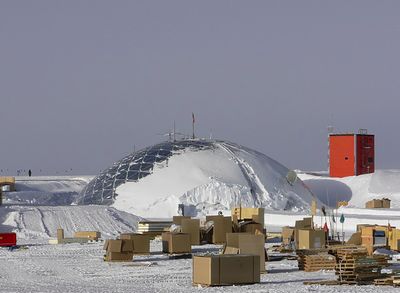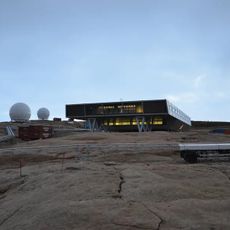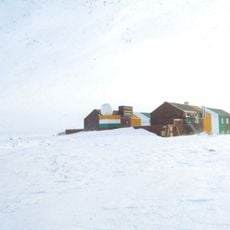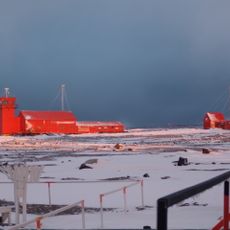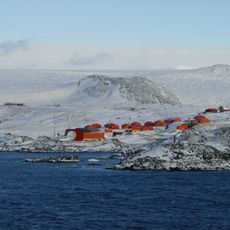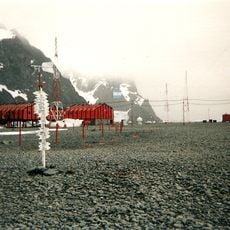
Amundsen-Scott South Pole Station, Research station at geographic South Pole, Antarctica.
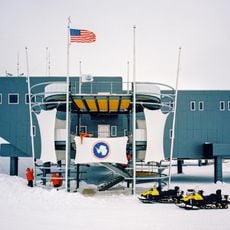
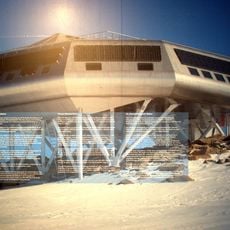
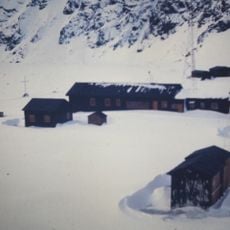
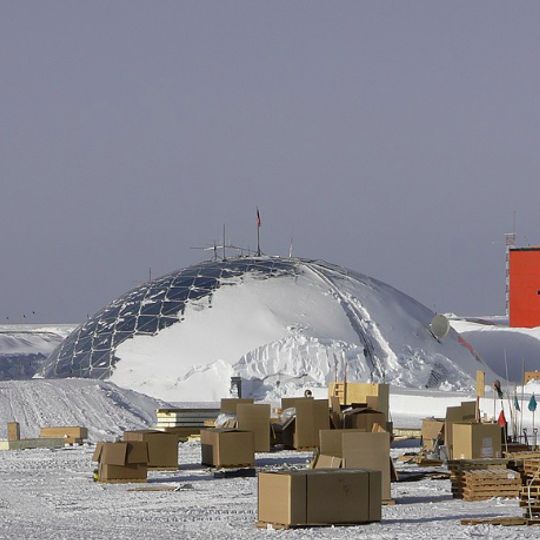
The Amundsen-Scott South Pole Station is a research facility located at the geographic South Pole on the Antarctic plateau. The buildings rest on stilts over 9,300 feet high to allow snow to blow beneath them rather than pile up around the structures.
The facility was established in 1956 by the National Science Foundation as part of the International Geophysical Year research initiative. It emerged during an era of increased international scientific cooperation focused on understanding Antarctica.
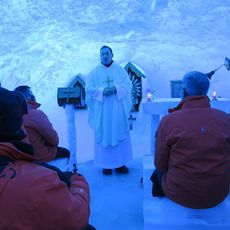
Scientists and staff members celebrate the midwinter solstice with traditional dinners and ceremonies during the long polar night period.
The station hosts around 150 people during summer months from October through February, with staff numbers dropping significantly during winter. Access is limited to those with scientific or support roles, and visits depend on seasonal accessibility and organizational needs.
The IceCube Neutrino Observatory beneath the station's ice detects subatomic particles from space, revealing insights into cosmic events. This underground detector uses the ice itself as an instrument for observing astrophysical phenomena from distant galaxies.
The community of curious travelers
AroundUs brings together thousands of curated places, local tips, and hidden gems, enriched daily by 91,656 contributors worldwide.