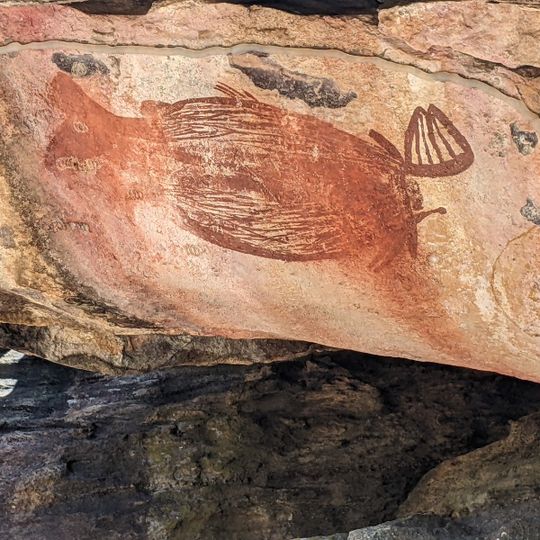
Ubirr Rock Art Sites
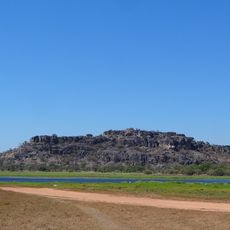
Ubirr Rock Art Sites are ancient paintings on rock formations within Kakadu National Park, depicting animals, people, and creation beings. The location features an easy one-kilometer circular walk with an additional rocky climb to an overlook that offers views across the surrounding wetlands and floodplains.
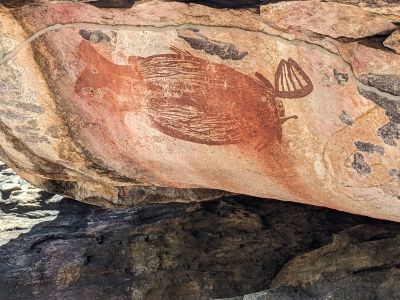
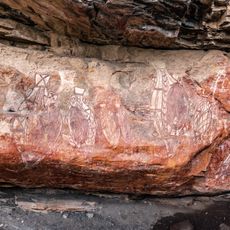
The rock paintings span different time periods, with some over 20,000 years old representing among the world's oldest artworks. Later additions show contact between Aboriginal people and European settlers from the late 1800s, documenting the cultural shifts of that era.
The rock paintings here tell stories that have held meaning for Aboriginal people across generations, including depictions of the Rainbow Serpent and other creation ancestors. These images reflect a deep connection between people and the land, with hunting scenes and encounters with early European settlers also recorded on the stone.
The site is easy to navigate with parking available and a marked trail taking about an hour for the main route. Visitors should bring comfortable shoes, sun protection, and plenty of water, as there is little shade and the area is quite open.
A special form of painting found here is x-ray art, showing the inside of animals including bones and organs to reflect the hunters' perspective. The site also contains images of an extinct animal, the thylacine or Tasmanian tiger, which disappeared from the mainland roughly 2,000 to 3,000 years ago.
The community of curious travelers
AroundUs brings together thousands of curated places, local tips, and hidden gems, enriched daily by 91,874 contributors worldwide.