Pasabag, Valley and tourist attraction in Cappadocia, Turkey
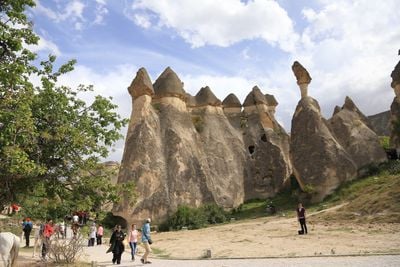
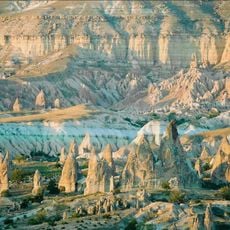
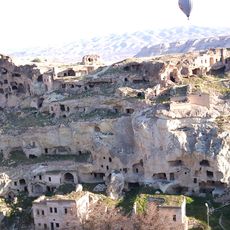
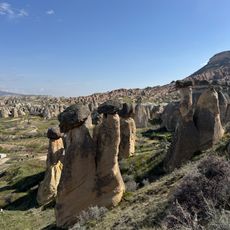
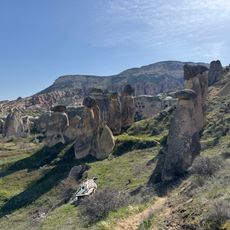
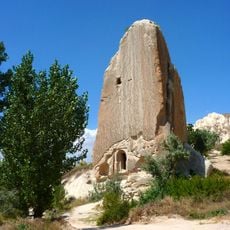
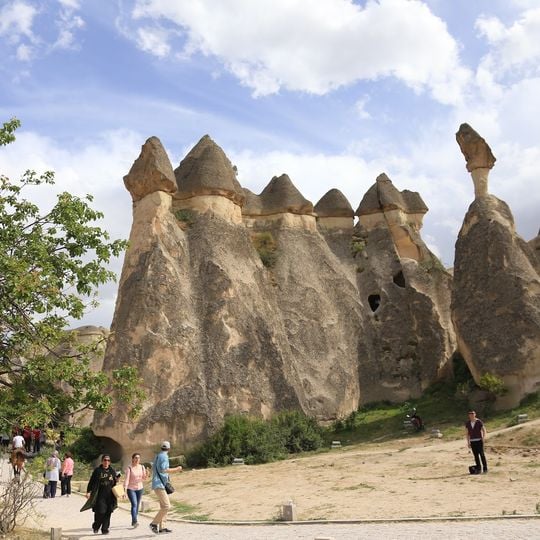
Paşabağ, also called Monk's Valley, is a valley and tourist attraction in Cappadocia, Turkey, known for its tall cone-shaped rock formations carved by wind and rain from soft volcanic stone. The formations stand in clusters along narrow walking paths, and several of them have small rooms or niches cut directly into the rock.
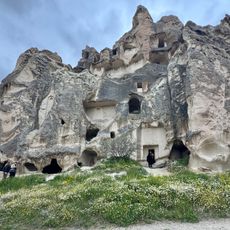
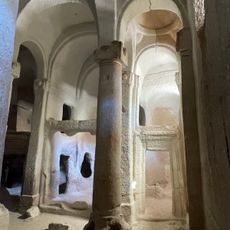
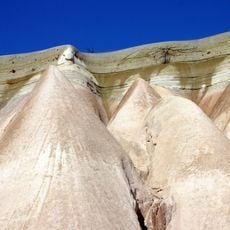
The rock formations at Paşabağ were created by ancient volcanic eruptions that covered the land with ash, which slowly hardened into soft stone shaped over centuries by erosion. In the early Middle Ages, Christian monks settled among the rocks, carving out small chapels and living spaces that can still be seen today.
The valley's Turkish name, Paşabağ, means "the Pasha's vineyard," a reminder that the land was once used for farming before it became a place for visitors. Today, travelers wander along the rocky paths between the formations, sometimes spotting the carved doorways and small niches that monks left behind in the stone.
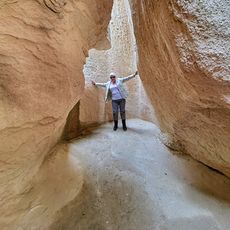
Visiting in the early morning or late afternoon is a good idea, as the light is softer and the temperature more comfortable, especially in summer. The paths are natural and uneven in places, so sturdy shoes, water, and sun protection are worth bringing.
Some of the rock formations here have two or even three stacked caps on top, a shape that forms only when layers of volcanic material have very different degrees of hardness, making them far rarer than typical single-cap formations. One of the formations is traditionally linked to Saint Simeon, an early Christian monk said to have lived there, which is part of why the valley earned its other name.
The community of curious travelers
AroundUs brings together thousands of curated places, local tips, and hidden gems, enriched daily by 91,622 contributors worldwide.