See the monuments around you in AROpen chests in the app
Around Us is built for your phone — point your camera at the streets and discover the monuments and places around you in augmented reality.Around Us is built for your phone — chests unlock when you walk, explore and capture nearby places.
From Cappadocia to Konya, Central Anatolia brings together major archaeological sites, underground cities, and rocky landscapes that tell the story of ancient empires.
Central Anatolia is a region where history is written on the landscape itself. From Cappadocia to Konya, you will find rock formations shaped by time, entire cities carved underground, and remains that go back to the Hittite and Phrygian empires. This collection brings together 35 sites that show how ancient civilizations adapted to this extraordinary terrain, turning rock into homes, churches, and monuments.
Cappadocia is the heart of this region. Its geological formations create a landscape that feels almost unreal, with stone towers rising from the ground and valleys carved by erosion. Underground, cities like Derinkuyu and Kaymaklı spread across several levels, with rooms, churches, and clever ventilation systems. Above ground, cave churches dot the valleys of Göreme, Ihlara, and Soğanlı, decorated with Byzantine frescoes that have lasted for centuries. Further south, Konya keeps mosques and madrasas from the Seljuk period, while Hattuşa and its sanctuaries recall the power of the Hittite Empire.
This selection invites you to explore natural lakes, pottery villages, archaeological museums, and historic complexes that tell how people lived in this region for thousands of years. Each site reveals a different layer of history, offering a deep understanding of how ancient civilizations shaped this landscape and left their marks on the stone.
From Cappadocia to Konya, Central Anatolia brings together major archaeological sites, underground cities, and rocky landscapes that tell the story of ancient empires.
Central Anatolia is a region where history is written on the landscape itself. From Cappadocia to Konya, you will find rock formations shaped by time, entire cities carved underground, and remains that go back to the Hittite and Phrygian empires. This collection brings together 35 sites that show how ancient civilizations adapted to this extraordinary terrain, turning rock into homes, churches, and monuments.
Cappadocia is the heart of this region. Its geological formations create a landscape that feels almost unreal, with stone towers rising from the ground and valleys carved by erosion. Underground, cities like Derinkuyu and Kaymaklı spread across several levels, with rooms, churches, and clever ventilation systems. Above ground, cave churches dot the valleys of Göreme, Ihlara, and Soğanlı, decorated with Byzantine frescoes that have lasted for centuries. Further south, Konya keeps mosques and madrasas from the Seljuk period, while Hattuşa and its sanctuaries recall the power of the Hittite Empire.
This selection invites you to explore natural lakes, pottery villages, archaeological museums, and historic complexes that tell how people lived in this region for thousands of years. Each site reveals a different layer of history, offering a deep understanding of how ancient civilizations shaped this landscape and left their marks on the stone.
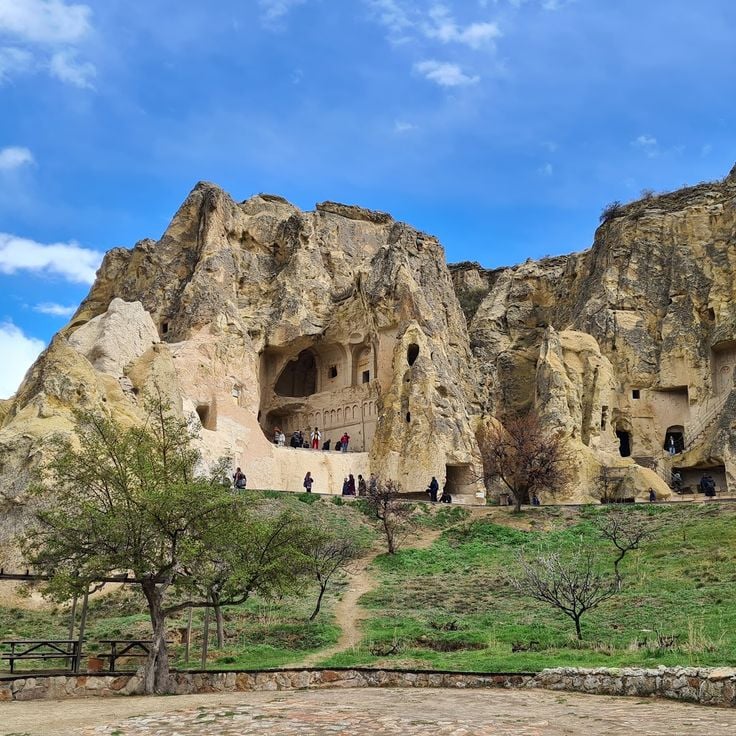
The Göreme Open-Air Museum sits in the heart of Cappadocia and brings together a cluster of rock-cut churches and monasteries carved into soft volcanic tuff. The Byzantine frescoes covering their walls and ceilings have survived for centuries in remarkably good condition. Walking through the site, you move from chapel to chapel, each decorated with scenes from Christian life painted by monks who once lived and prayed in these caves.
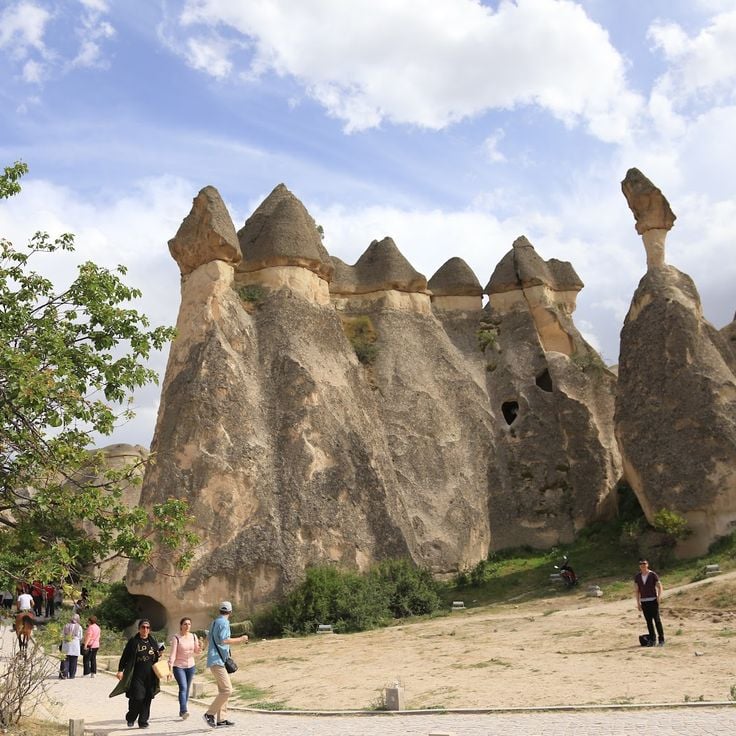
The fairy chimneys of Paşabağ are among the most recognizable rock formations in Cappadocia. Tall pillars of soft volcanic rock rise from the ground, and some of them carry two or even three stacked caps on top. This shape came from centuries of wind and rain wearing away the softer stone while harder rock above held its ground. Walking through Paşabağ feels like stepping into a landscape that does not quite follow the normal rules of geology.
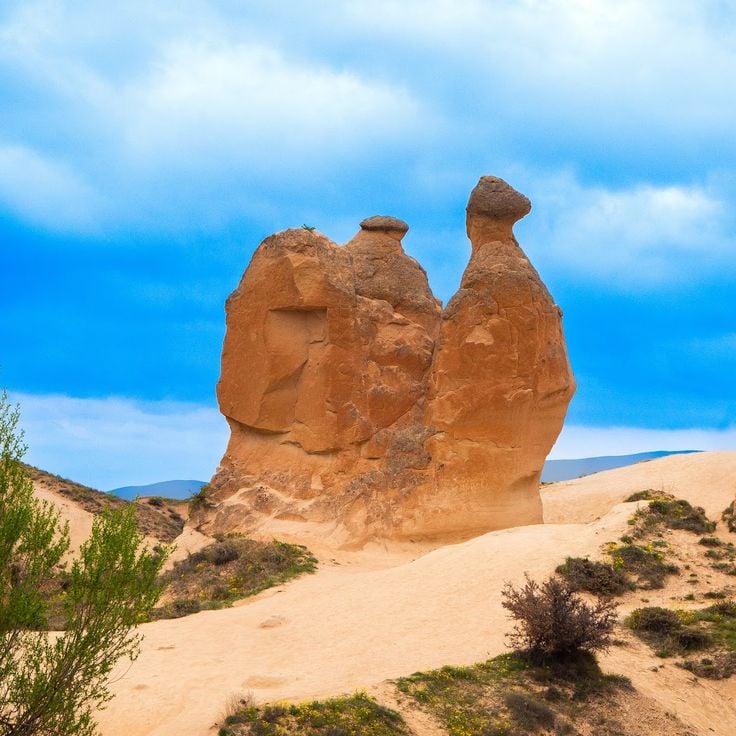
Devrent Valley sits in Cappadocia and is known for its rock formations shaped by wind and rain over thousands of years. The eroded stone towers look like animals or figures frozen in place, which is why visitors often try to spot familiar shapes as they walk through. The ground is pale and open, with no carved churches or underground rooms. It is one of the few spots in the region where nature alone did all the work.
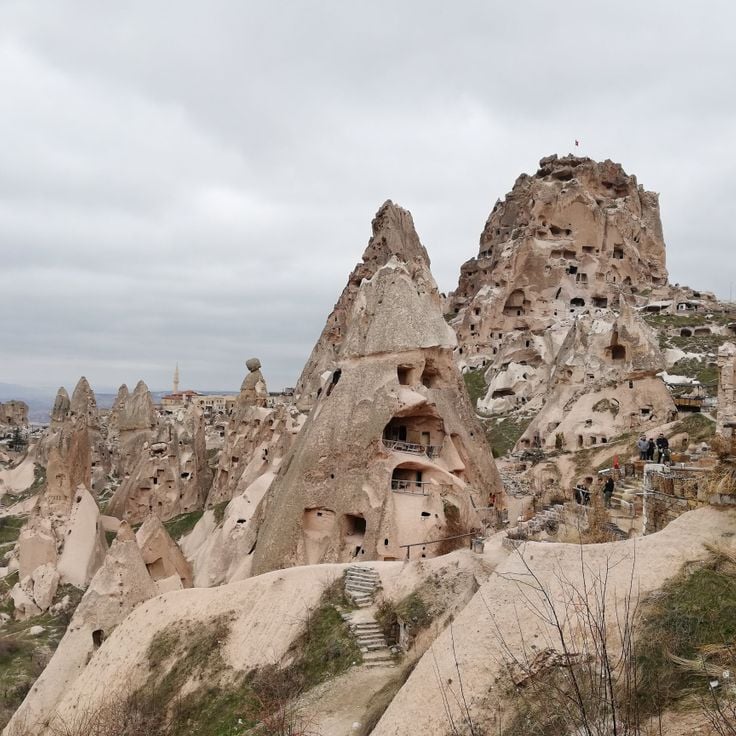
Uçhisar Castle rises above the rest of Cappadocia as a massive rock carved with galleries and tunnels on every level. From the top, you can see across valleys, rock formations, and villages stretching in every direction. People lived and took shelter here for centuries, using the rock as both home and fortress. Walking through its passages gives a real sense of how communities in this region adapted to the landscape around them.
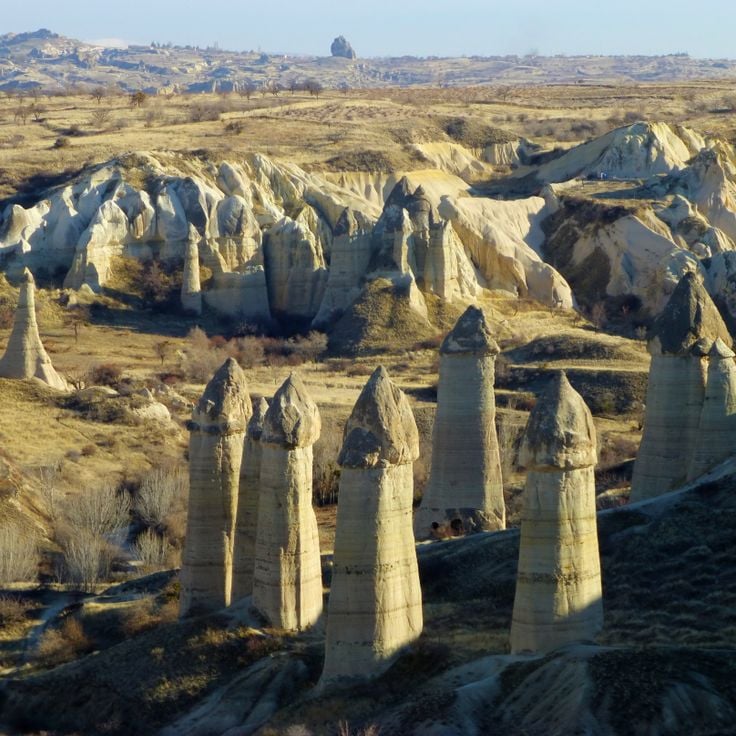
The Valley of Love sits near Göreme and is one of the most visited valleys in Cappadocia. Tall, narrow rock formations rise from the ground, shaped by centuries of wind and water erosion. The path through the valley is flat and easy to walk, drawing visitors of all ages. The stone shifts from ochre to pink depending on the light.
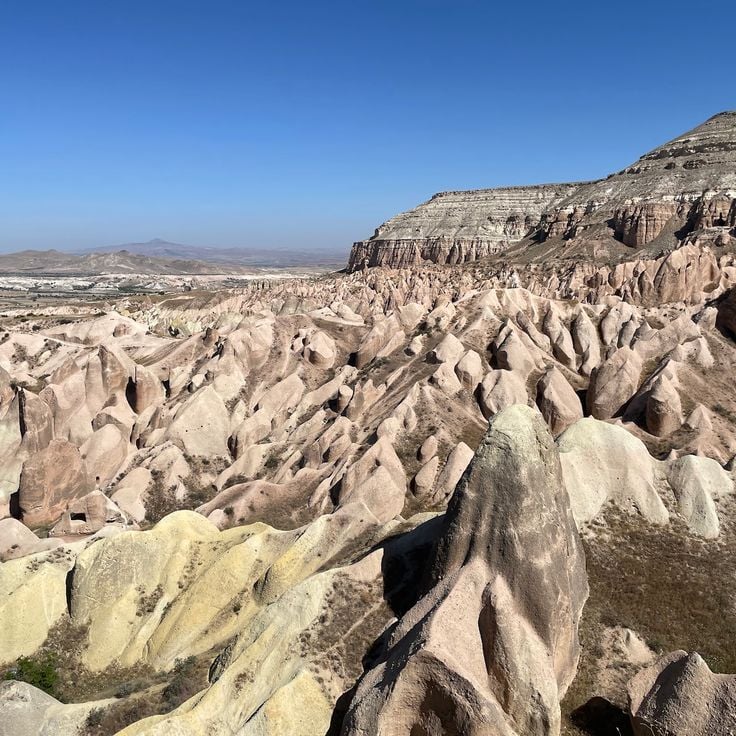
The Red Valley and Rose Valley are two connected valleys in Cappadocia that you explore on foot. The trail winds through rock formations carved by erosion, passing old cave churches and hollowed-out dwellings cut into the stone. The rock shifts between deep red and soft pink depending on the light, and late afternoon is when the colors are most vivid. The path is accessible to most walkers and gives a close look at the landscape that defines this part of central Anatolia.
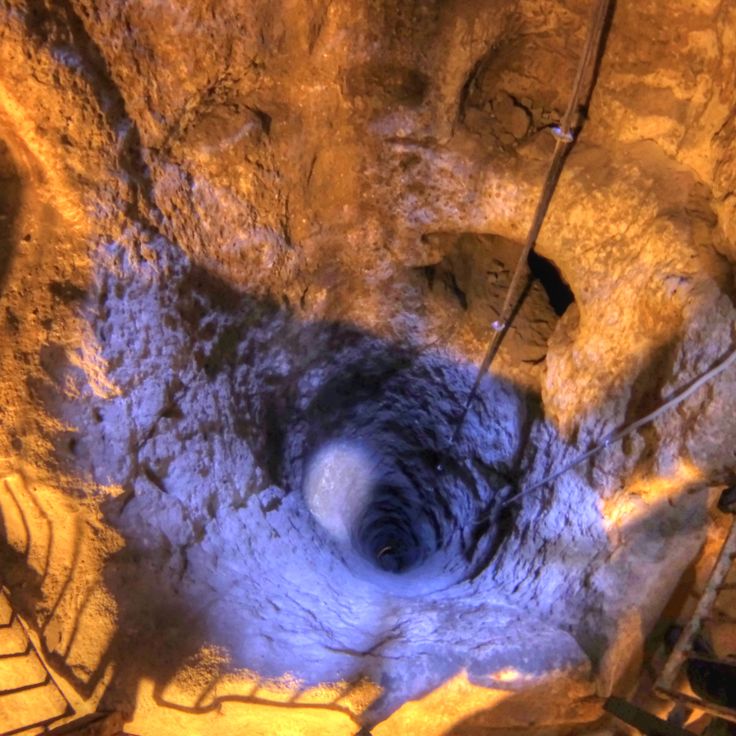
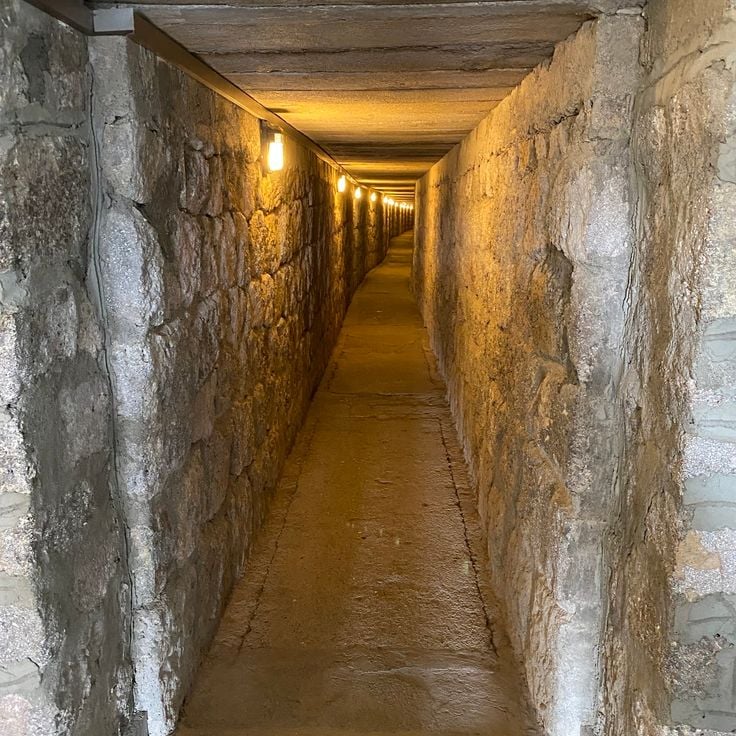
Derinkuyu is an underground city carved into the volcanic rock of Cappadocia. As you go down through its levels, you pass rooms used for sleeping, storing food, and gathering for worship, all connected by narrow corridors and ventilation shafts that kept the air moving. The people who dug this city built a self-contained world beneath the surface, able to shelter entire communities for long periods.
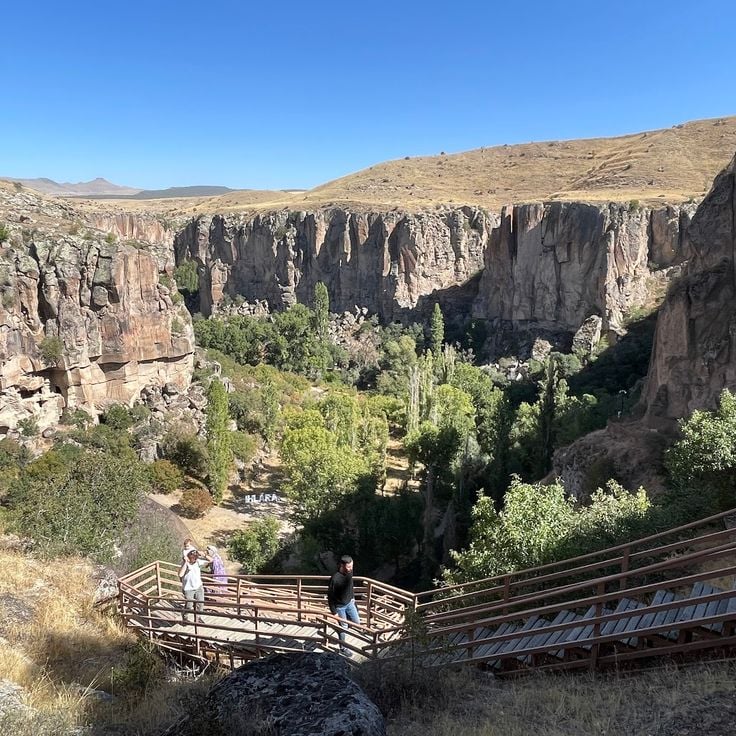
The Ihlara Valley is a deep canyon carved by the Melendiz River into volcanic rock. Its steep walls are dotted with dozens of cave churches built during the Byzantine period. Walking along the river at the bottom, you can spot frescoes painted directly onto the rock, and you get a strong sense of how people once lived and worshipped in this hidden corridor of stone.
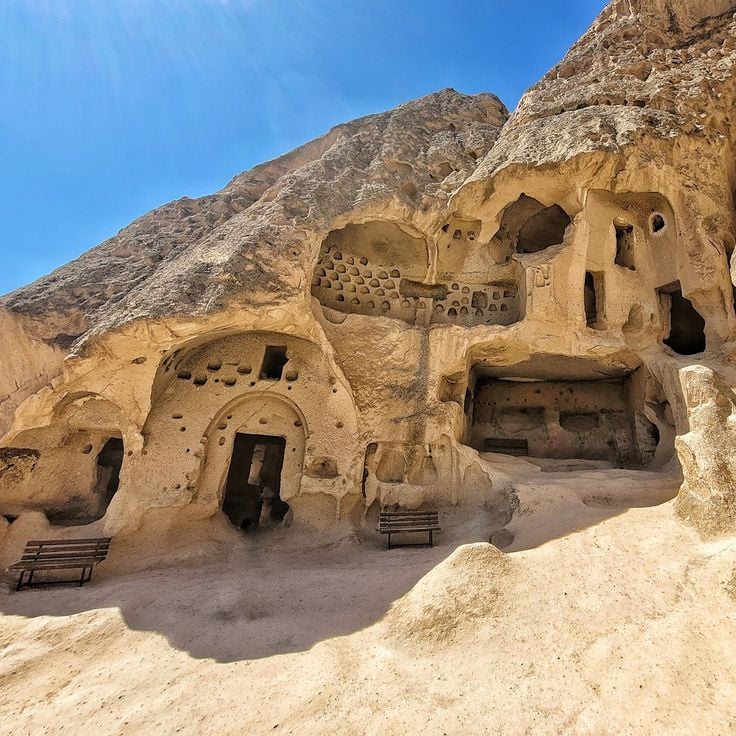
Selime Monastery is a large monastic complex carved directly into the rock at the end of the Ihlara Valley. Its rooms, churches and corridors were cut into the volcanic tuff, giving a sense of how monks lived here centuries ago. From the top, you get a wide view over the valley and the surrounding volcanic terrain.
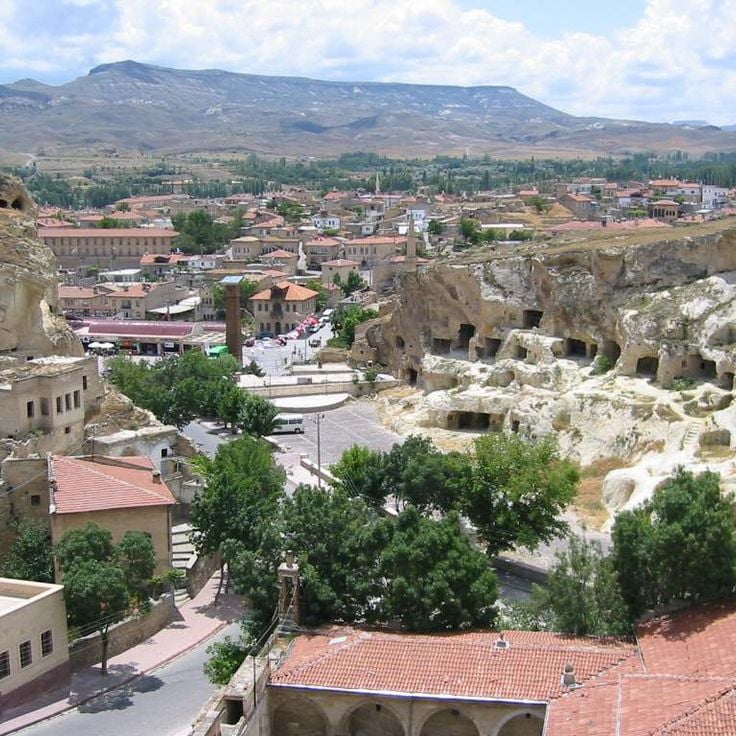
Ürgüp is a town in the heart of Cappadocia, in the province of Nevşehir. Its old center is made up of stone houses carved into or built against the rock. Vineyards and rock formations shaped by erosion surround the town on all sides. The narrow streets are lined with old caravanserais and houses built from yellow tuff. Ürgüp serves as a natural base for visiting the valleys and underground cities of Cappadocia.
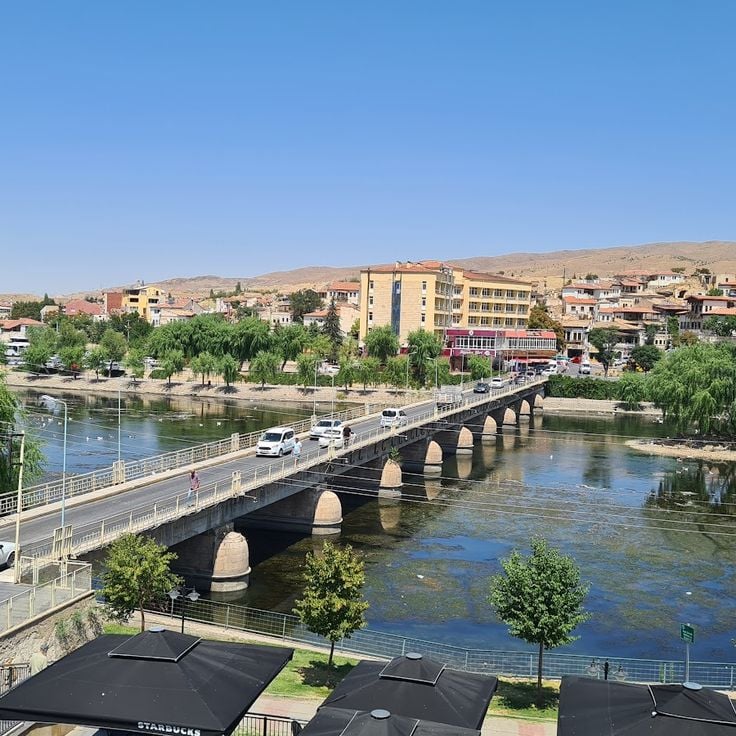
Avanos sits on the banks of the Kızılırmak River and has been a center for pottery making for centuries. The reddish clay drawn from the river is still shaped by local craftspeople whose workshops line the streets of the old town. Visitors can watch potters at the wheel or try working the clay themselves. The town moves at a slower pace than other spots in the region, giving it a more everyday feel.
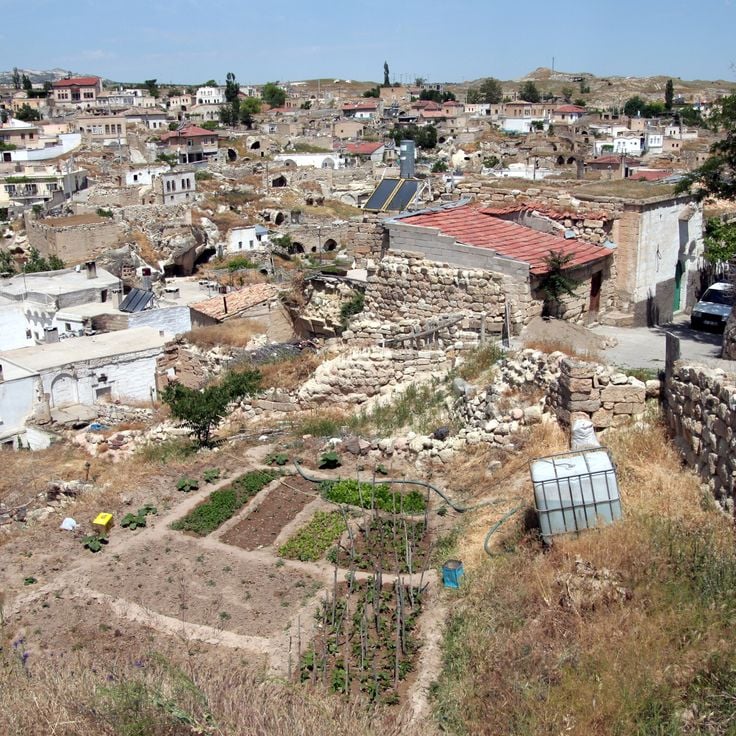
Mustafapaşa is a former Greek village near Ürgüp, in the heart of Cappadocia. The stone houses and churches that remain here date from a time when Greek-speaking Christians and Turkish Muslims lived side by side. Walking through the narrow streets, you notice carved facades, old archways and church buildings that now serve as guesthouses or simply sit empty. The village sees far fewer visitors than Göreme or Ürgüp, and that gives it a slower, more unguarded feeling.
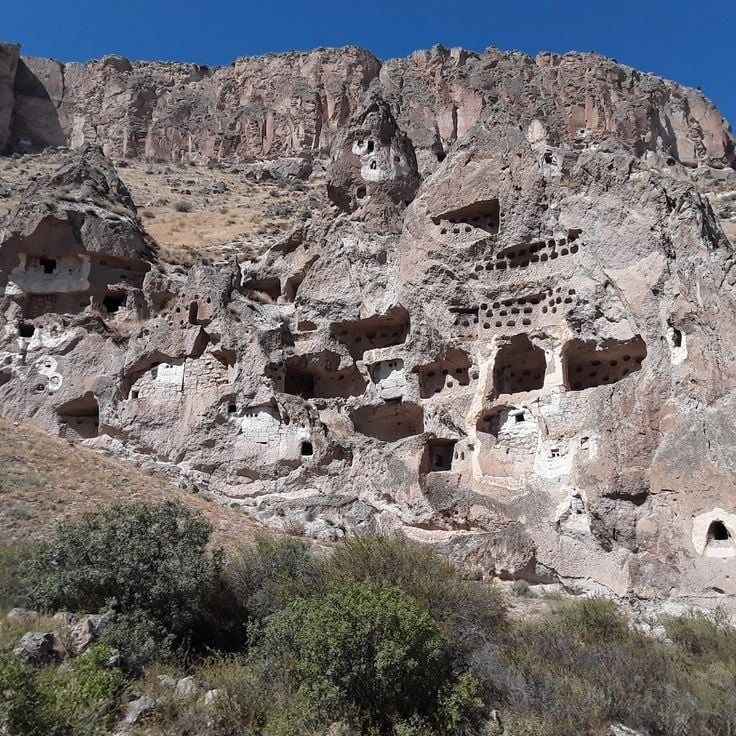
The Soğanlı Valley sits in Kayseri province and is one of the quieter corners of Cappadocia. Its rock faces are dotted with churches carved directly into the stone, many of which still hold Byzantine frescoes painted centuries ago. Just as noticeable are the pigeon houses cut into the cliffs, a tradition that goes back a long time since locals used pigeon droppings to fertilize their fields. The valley sees fewer visitors than Göreme, which gives it a more everyday feel.
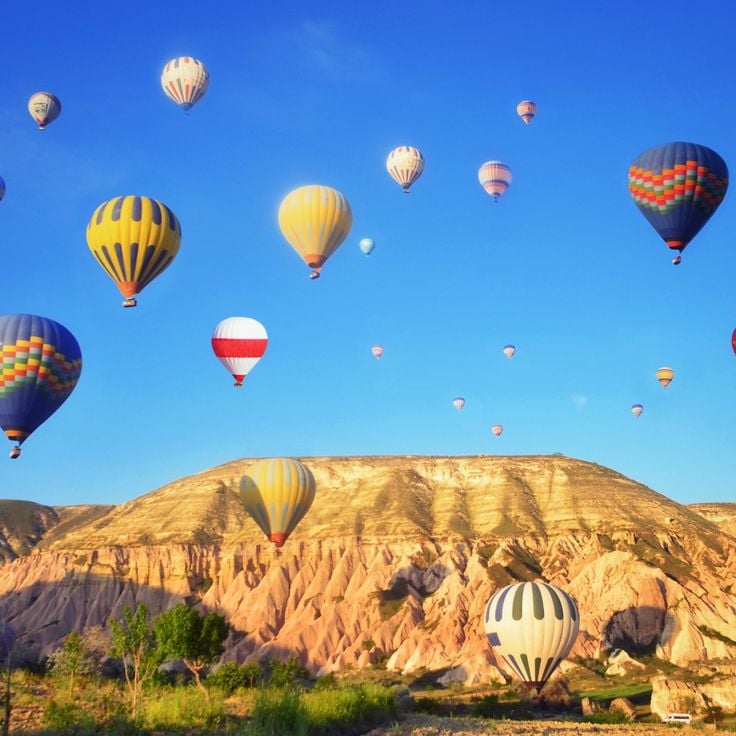
The hot air balloon over Cappadocia takes off in the early morning and offers a view of the valley that is hard to get any other way. From above, you can see the rock spires, the tufa cones, and the cave dwellings carved into the stone laid out below you. The landscape reads like a relief map shaped over thousands of years. Many travelers say this flight is the moment when Cappadocia finally made sense to them.
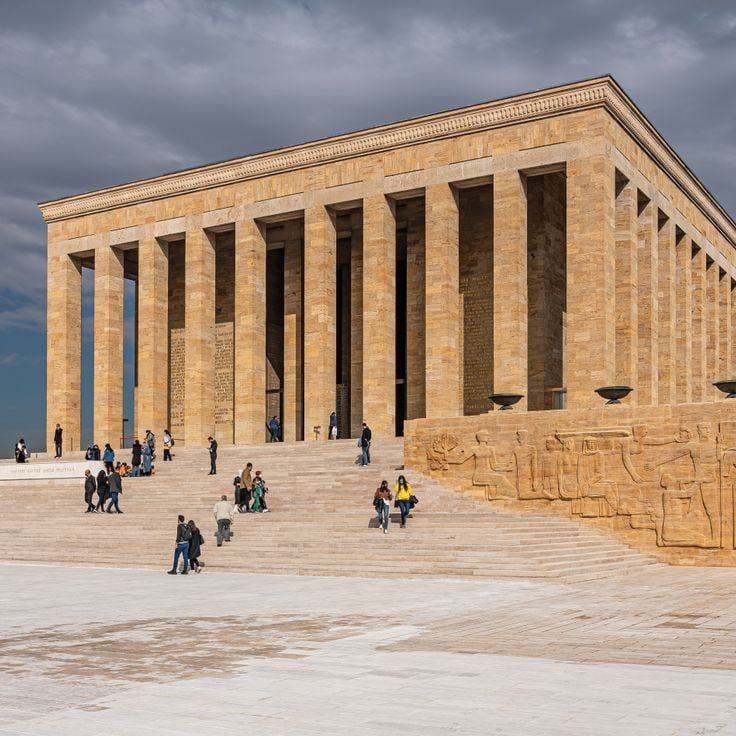
Anıtkabir is the mausoleum of Mustafa Kemal Atatürk, the founder of the Turkish Republic. It sits on a hill in Ankara, reached by a long stone avenue lined with lion statues. Visitors come from all over the country to pay their respects. The structure is built in light stone and feels open to the sky. A museum on the grounds displays personal objects and documents from Atatürk's life.
The Museum of Anatolian Civilizations in Ankara brings together artifacts from the Hittite, Phrygian, Urartian, and Neolithic periods. Walking through its rooms gives a clear sense of how the peoples who shaped central Anatolia lived, built, and left their mark on the region. It is a natural starting point for anyone exploring the sites gathered in this collection.
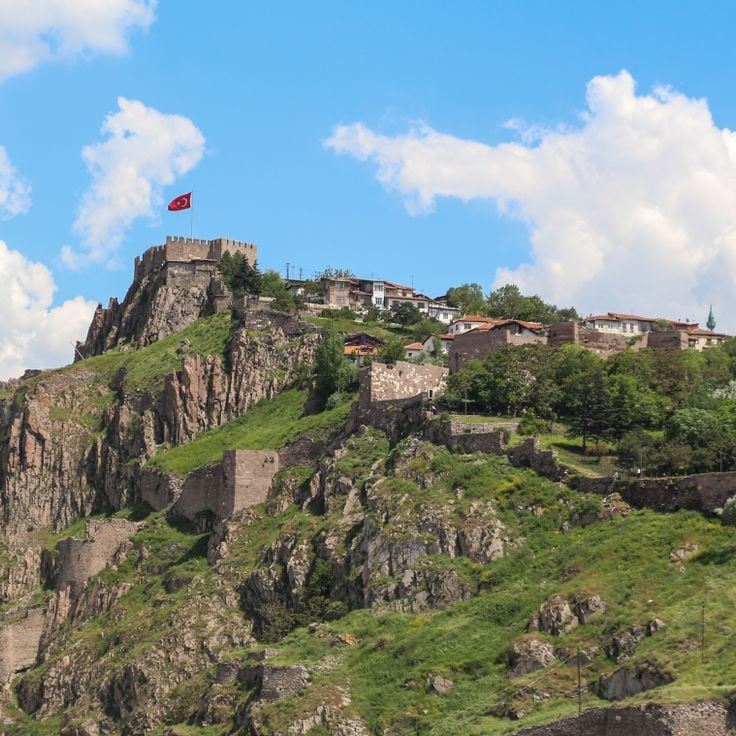
The Ankara Citadel sits on a rocky hill at the center of the city and is one of the oldest inhabited spots in the region. Inside its Byzantine and Seljuk-era walls, narrow lanes wind between old stone houses and small workshops. From the top, you can look out over modern Ankara, making the contrast between the ancient fortress and today's city easy to feel.
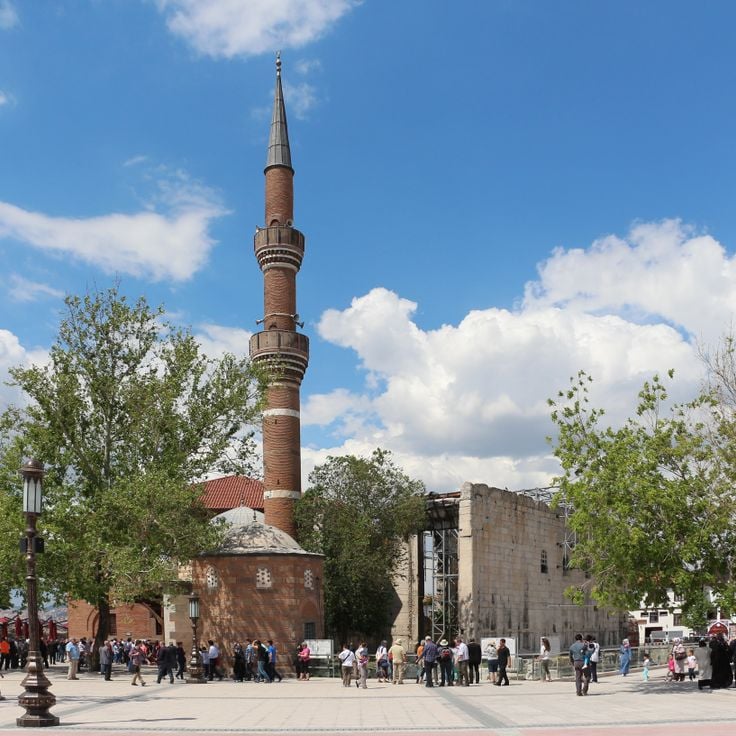
The Hacı Bayram Mosque and the Temple of Augustus stand side by side in the heart of Ankara. The mosque was built in the 15th century and is dedicated to one of the city's revered Muslim saints. Right next to it, the remains of a Roman temple from the 2nd century BC rise up, with a Latin inscription still visible on its walls listing the deeds of Emperor Augustus. People come here to pray, but also simply to look at this unusual spot where two very different eras exist directly next to each other.
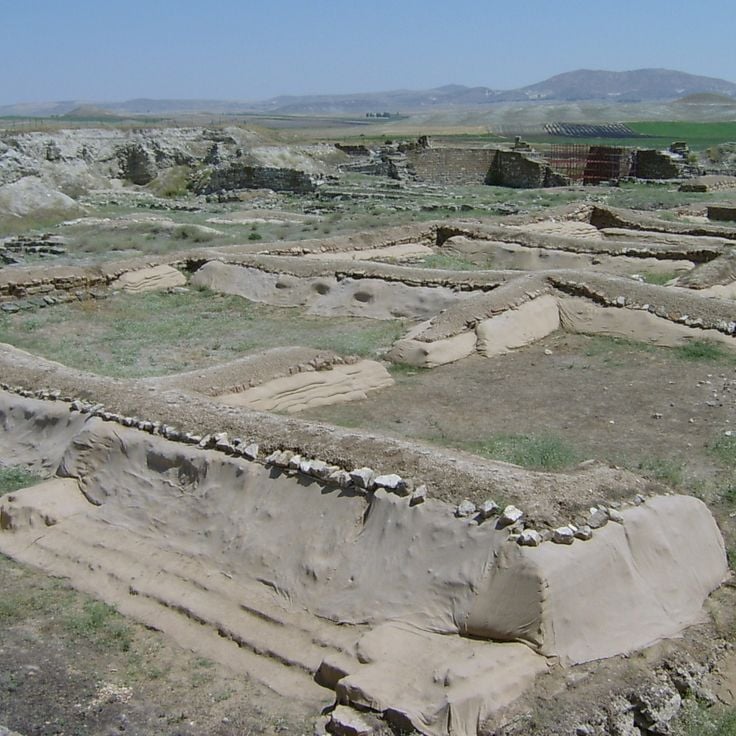
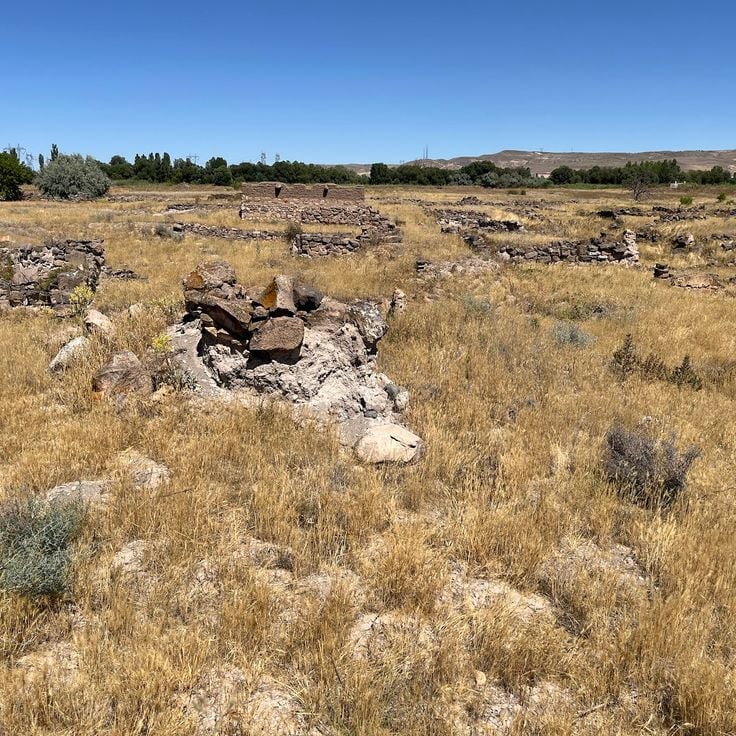
Gordion was once the capital of the Phrygian kingdom and sits near the modern town of Polatlı. The name of this city is closely tied to two famous legends: King Midas, said to have turned everything he touched into gold, and the Gordian Knot, which Alexander the Great reportedly cut through with a single sword stroke. Today, visitors can walk among burial mounds and ruins that speak to the power of the Phrygian civilization, one of the ancient cultures that shaped central Anatolia long before the Roman era.
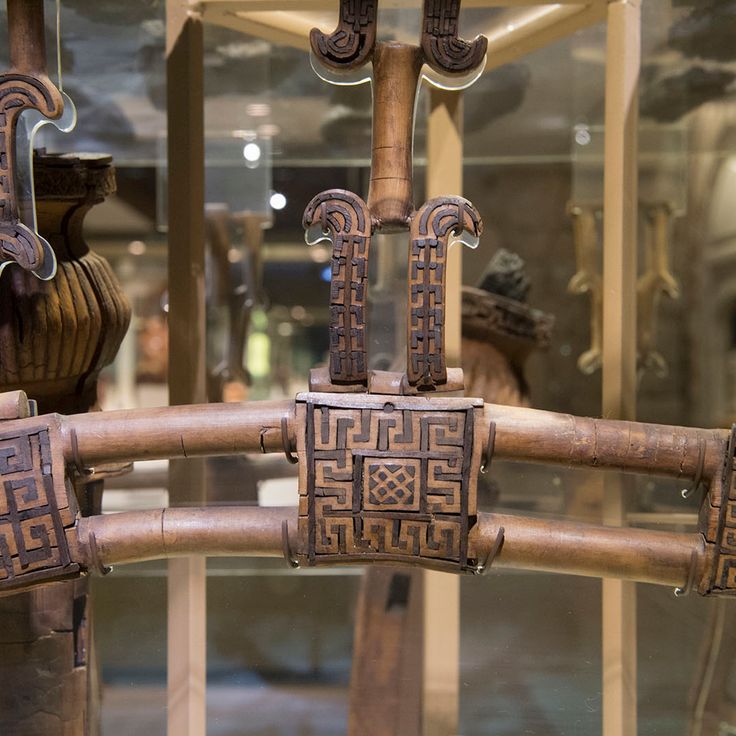
The Midas Tumulus in Gordion rises about 53 meters (174 feet) above the flat Anatolian plain and can be seen from a long distance. Inside, a wooden burial chamber dates to around 740 BC. When archaeologists opened it, they found furniture, bronze vessels, and objects that belonged to a phrygian ruler. Whether King Midas himself was buried here remains uncertain, but this mound is part of the royal necropolis of Gordion, the old capital of the Phrygian kingdom.
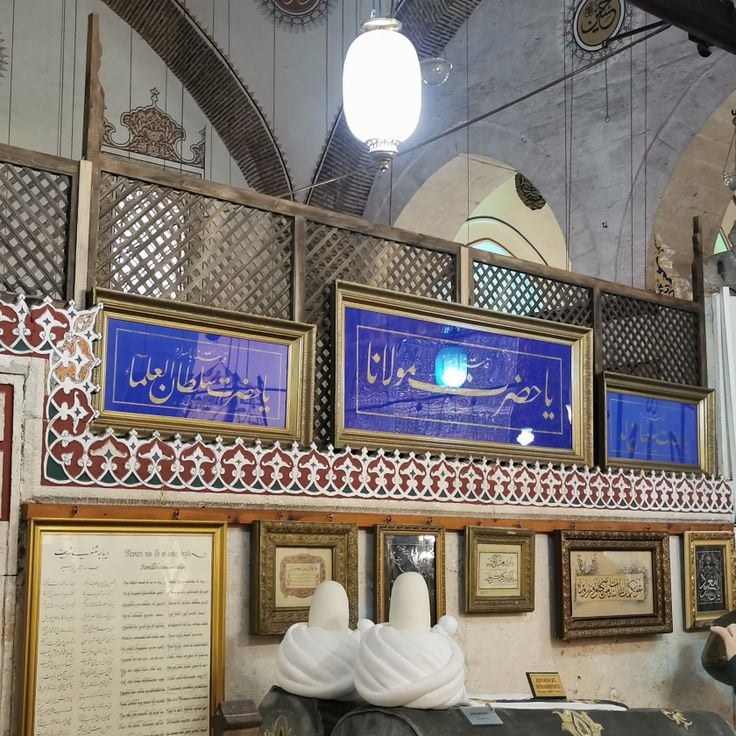
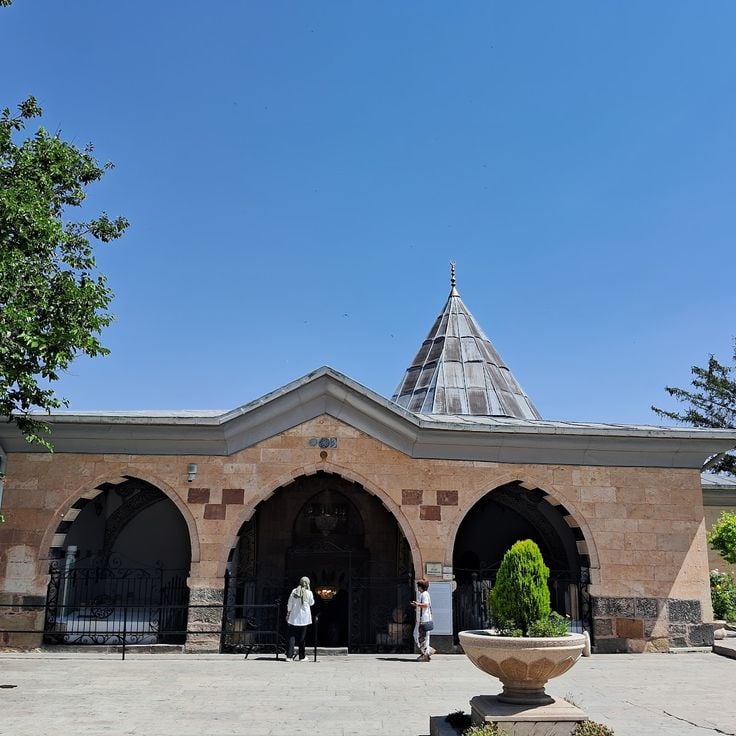
The Mevlana Museum in Konya is the mausoleum of Jalal ad-Din Rumi, the poet and mystic who founded the Mevlevi order in the 13th century. Its turquoise dome rises above the surrounding streets and is easy to spot from a distance. Inside, you will find Rumi's tomb, along with old manuscripts, musical instruments and garments worn by the whirling dervishes. For many visitors, this is a place of pilgrimage. For others, it is simply a place to pause and reflect on a long spiritual tradition.
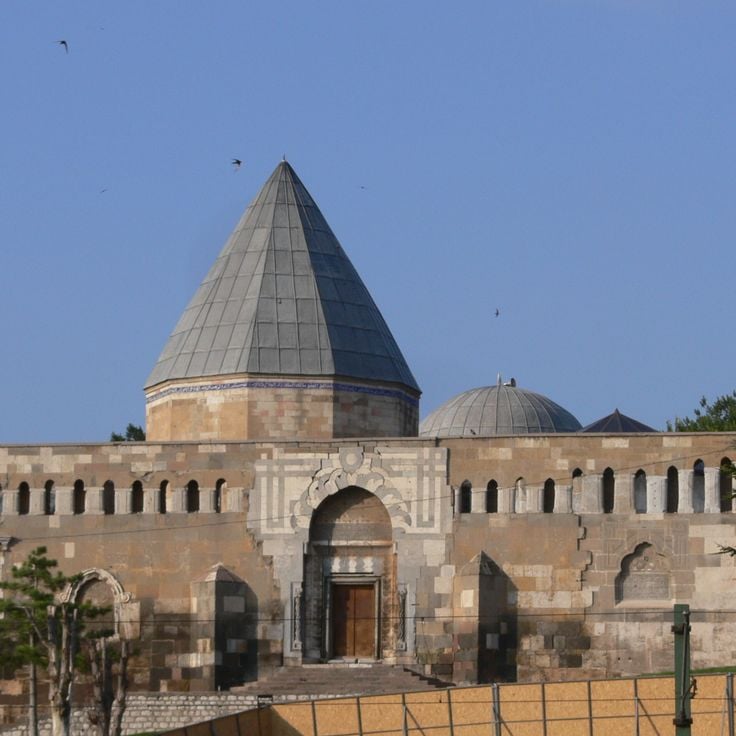
The Alaeddin Mosque sits on a hill at the center of Konya and is one of the oldest Seljuk buildings in the city. It was built when Konya served as the capital of the Sultanate of Rum, a period when the city was among the most important in all of Anatolia. Inside, old columns and carved wood carry the marks of that time, making this mosque one of the clearest traces of Seljuk rule left in the region.
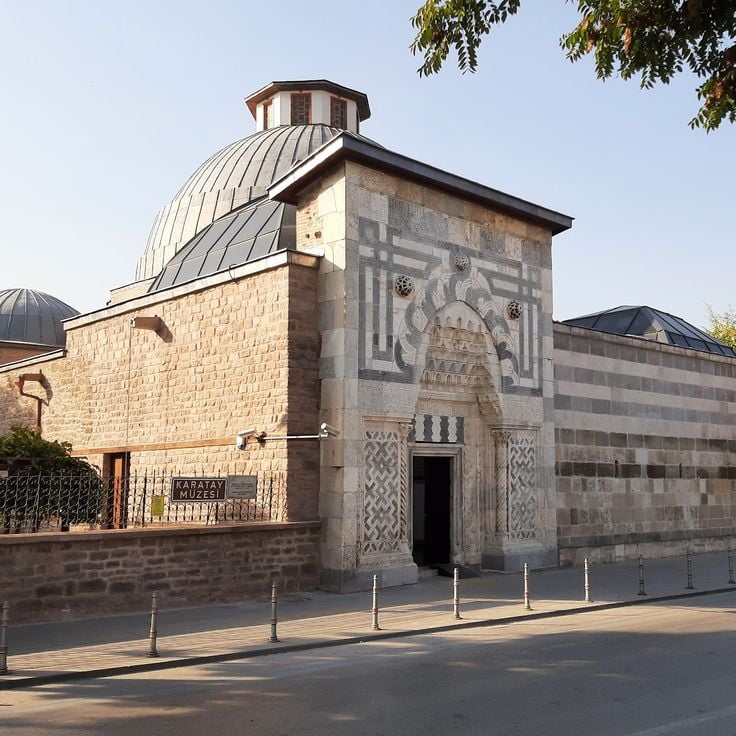
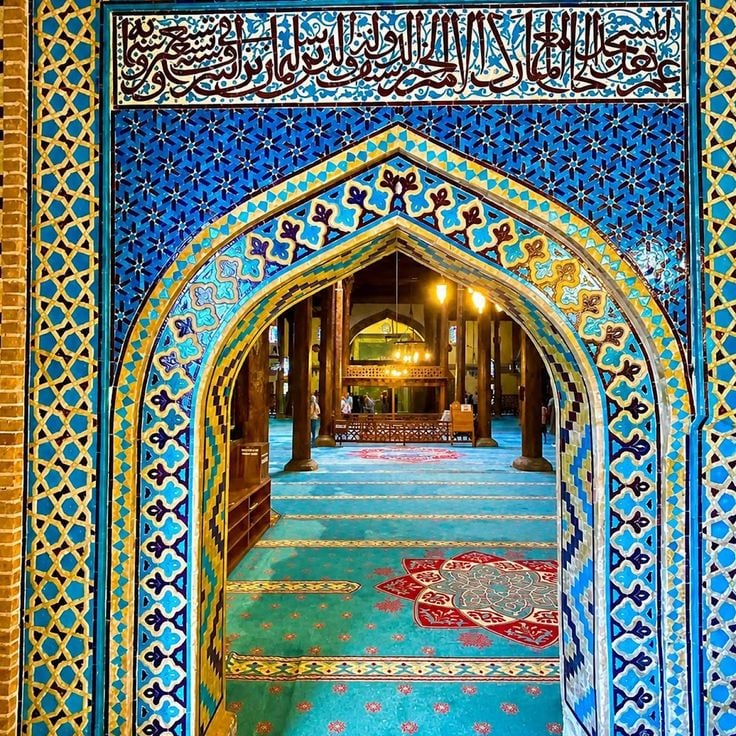
The Karatay Madrasa is an old Seljuk school that now works as a museum in the center of Konya. Inside, blue and black tiles with geometric patterns cover the dome and the walls. Light enters through an opening at the top of the dome and falls directly onto the tilework below. The building dates from the 13th century and gives a clear sense of how Seljuk craftsmen worked with ceramic surfaces.
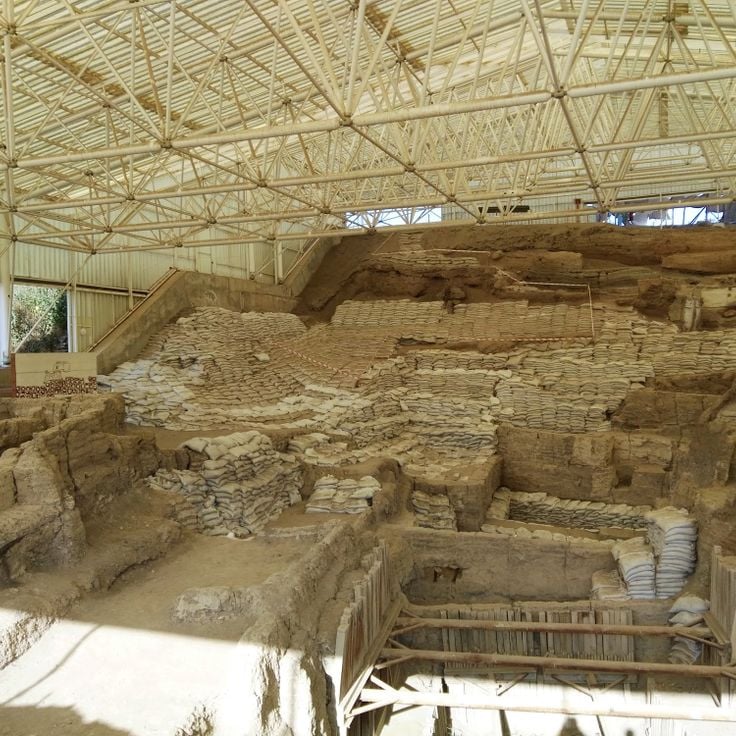
Çatalhöyük is one of the oldest known settlements in the world. People lived here as far back as the 8th millennium BCE, around 9,000 years ago. Excavations reveal mud-brick houses built side by side, with no streets between them. Residents entered their homes through openings in the roof. Wall paintings and animal figures found on site offer a rare look into daily life in one of humanity's earliest communities.
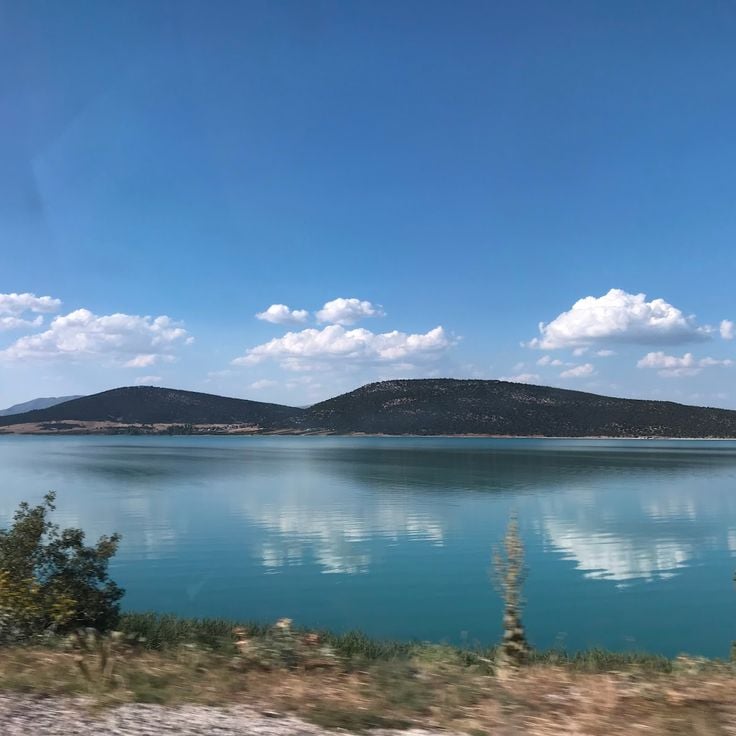
Lake Beyşehir sits southwest of Konya and is one of the largest freshwater lakes in Turkey. Its waters are shallow and calm, and its shores shift between reed beds, small fishing villages, and mountain views. After visiting the historical sites of central Anatolia, this lake offers something different: open space, natural light, and a slower pace. On the shore, the ruins of a Seljuk-era mosque are a reminder that people have gathered around this water for centuries.
The Eşrefoğlu Mosque in Beyşehir was built at the end of the 13th century and is one of the best-preserved wood-columned mosques in Turkey. Inside, dozens of carved wooden columns support the ceiling, and the soft light gives the space a very particular feel. The mosque stands on the shore of Lake Beyşehir and is part of a larger Seljuk complex with a mausoleum and a madrasa.
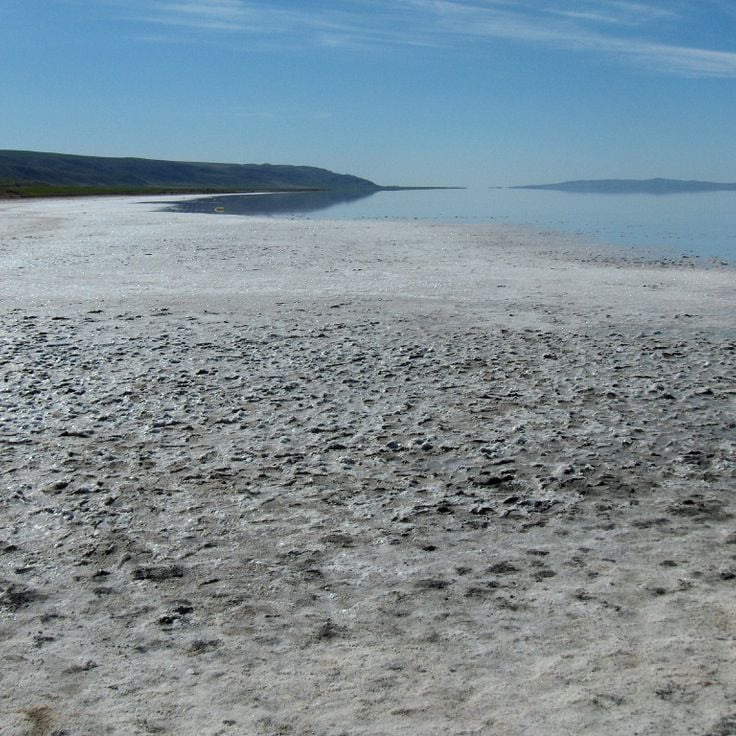
Lake Tuz is one of the largest salt lakes in Turkey, sitting between the provinces of Aksaray, Ankara, and Konya. In summer, the water nearly disappears, leaving behind a thick white crust of salt that reflects the sun. Depending on the light and the time of year, the water turns shades of pink or purple, colored by algae and bacteria that thrive in salty water. The landscape around it is flat and open, with a horizon that feels very far away. Flamingos come here to nest, and their silhouettes stand out against the pale surface.
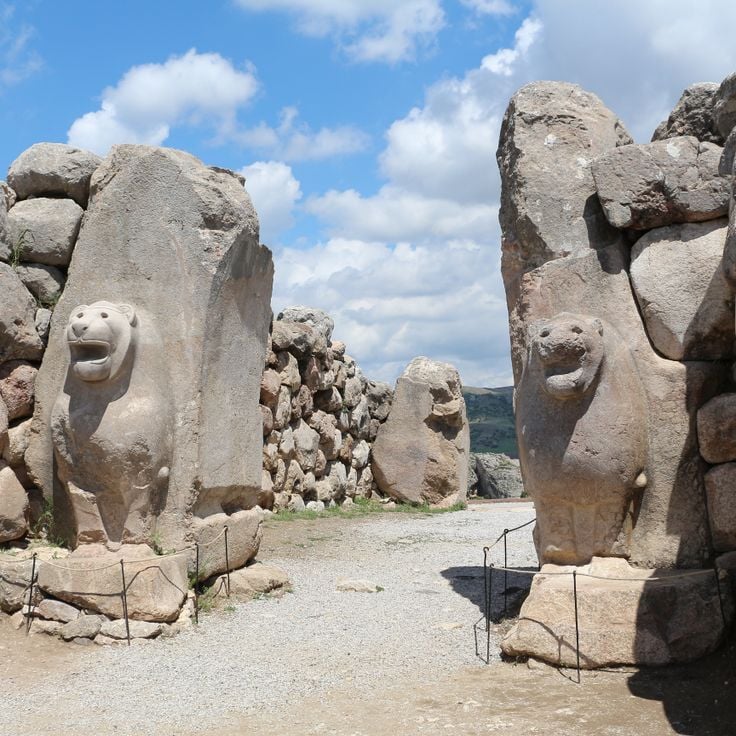
Hattuşa was the capital of the Hittite Empire, one of the most powerful states of the ancient Bronze Age Near East. The site sits on a rocky plateau near Boğazkale and covers a large area with stone walls, temples and monumental gates guarded by carved lions and sphinxes. Walking through the ruins gives a real sense of how this city once commanded the surrounding landscape. The Hittites who built it signed some of the earliest known peace treaties in history, including one with ancient Egypt, and their legacy is still visible in every stone here.
Alacahöyük is one of the oldest inhabited sites in Anatolia. Long before the Hittites, people buried their dead here with gold objects and bronze figures. The site is best known for its Sphinx Gate, a monumental entrance decorated with stone reliefs that once marked the threshold of a Hittite city. Walking through it today gives a real sense of how deep human presence goes in this part of Turkey.
Hacıbektaş is a small town in central Anatolia built around the memory of the mystic Hacı Bektaş Veli. The complex that bears his name was once a monastery of the Bektashi order and now operates as a museum. Visitors can walk through courtyards, prayer rooms, and tombs that reflect centuries of Sufi tradition. Every year, pilgrims and curious travelers come here to pay their respects and learn about a spiritual heritage that still shapes Turkish culture today.
Kültepe, also known as Kanesh, sits near Kayseri and was once a major trading hub in ancient Anatolia. Around 4,000 years ago, Assyrian merchants set up a trading colony here called a karum. Thousands of clay tablets written in cuneiform were found at this site, recording deals, debts and daily business between traders. These tablets are among the oldest written documents found in Anatolia and give a rare picture of commerce in the ancient world. The site is a tell, a mound built up over centuries of occupation, and excavations are still ongoing.
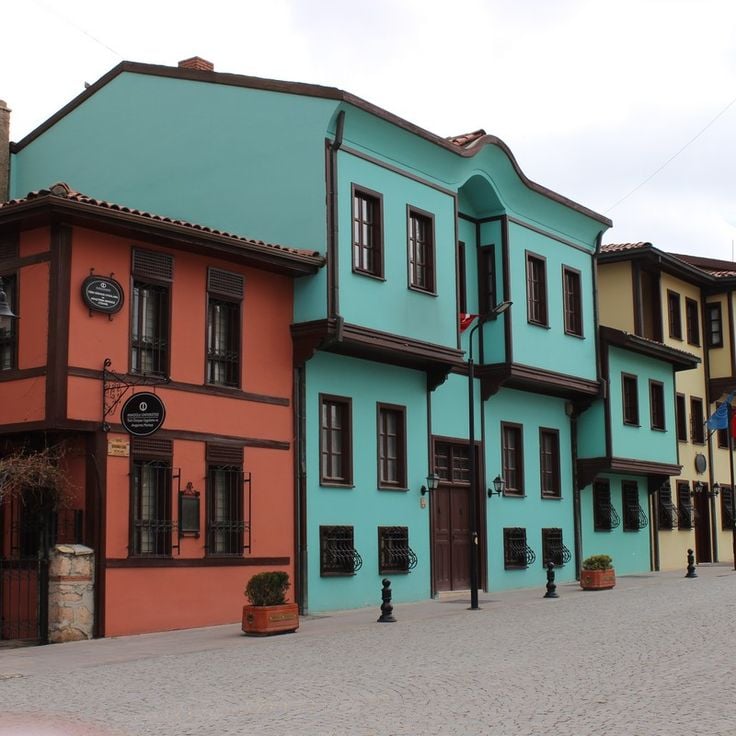
Odunpazarı is the historic quarter of Eskişehir, where rows of colorful Ottoman wooden houses line narrow streets. Local craftspeople work in small shops tucked between the buildings, selling pottery, textiles and handmade goods. Walking through this neighborhood feels like stepping back into a time when Ottoman daily life shaped every corner of the city. The streets are unhurried, and the architecture gives the place a warm, human scale.
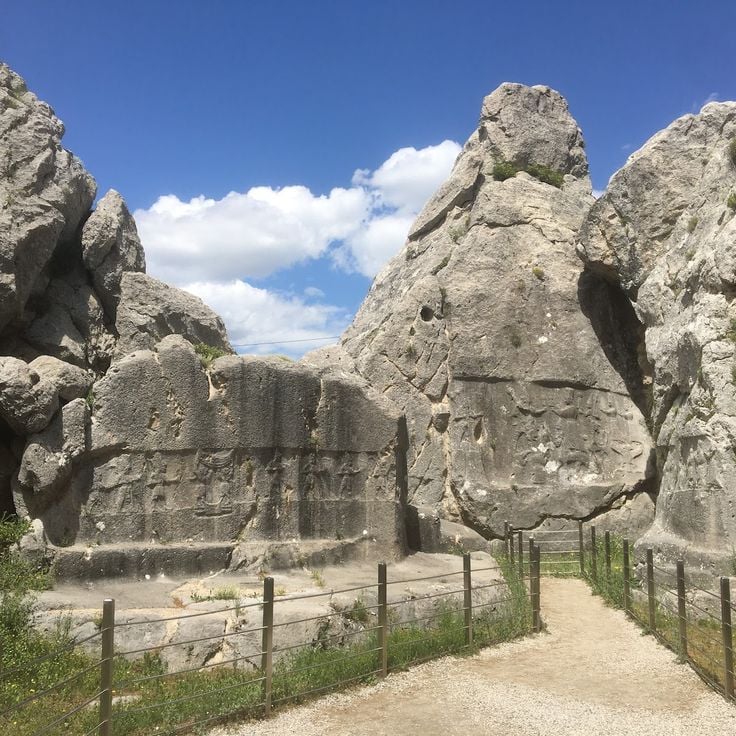
The rock sanctuary of Yazılıkaya sits just outside the ancient Hittite capital of Hattuša. Two open-air rock chambers served as a place of worship, their walls carved with long rows of gods and goddesses in procession. The figures wear pointed hats and layered robes typical of Hittite art. Cut into the stone around the 13th century BC, these carvings give a rare look at how the Hittites saw their own divine world.
The Göreme Open-Air Museum sits in the heart of Cappadocia and brings together a cluster of rock-cut churches and monasteries carved into soft volcanic tuff. The Byzantine frescoes covering their walls and ceilings have survived for centuries in remarkably good condition. Walking through the site, you move from chapel to chapel, each decorated with scenes from Christian life painted by monks who once lived and prayed in these caves.
The fairy chimneys of Paşabağ are among the most recognizable rock formations in Cappadocia. Tall pillars of soft volcanic rock rise from the ground, and some of them carry two or even three stacked caps on top. This shape came from centuries of wind and rain wearing away the softer stone while harder rock above held its ground. Walking through Paşabağ feels like stepping into a landscape that does not quite follow the normal rules of geology.
Devrent Valley sits in Cappadocia and is known for its rock formations shaped by wind and rain over thousands of years. The eroded stone towers look like animals or figures frozen in place, which is why visitors often try to spot familiar shapes as they walk through. The ground is pale and open, with no carved churches or underground rooms. It is one of the few spots in the region where nature alone did all the work.
Uçhisar Castle rises above the rest of Cappadocia as a massive rock carved with galleries and tunnels on every level. From the top, you can see across valleys, rock formations, and villages stretching in every direction. People lived and took shelter here for centuries, using the rock as both home and fortress. Walking through its passages gives a real sense of how communities in this region adapted to the landscape around them.
The Valley of Love sits near Göreme and is one of the most visited valleys in Cappadocia. Tall, narrow rock formations rise from the ground, shaped by centuries of wind and water erosion. The path through the valley is flat and easy to walk, drawing visitors of all ages. The stone shifts from ochre to pink depending on the light.
The Red Valley and Rose Valley are two connected valleys in Cappadocia that you explore on foot. The trail winds through rock formations carved by erosion, passing old cave churches and hollowed-out dwellings cut into the stone. The rock shifts between deep red and soft pink depending on the light, and late afternoon is when the colors are most vivid. The path is accessible to most walkers and gives a close look at the landscape that defines this part of central Anatolia.
Derinkuyu is an underground city carved into the volcanic rock of Cappadocia. As you go down through its levels, you pass rooms used for sleeping, storing food, and gathering for worship, all connected by narrow corridors and ventilation shafts that kept the air moving. The people who dug this city built a self-contained world beneath the surface, able to shelter entire communities for long periods.
The Ihlara Valley is a deep canyon carved by the Melendiz River into volcanic rock. Its steep walls are dotted with dozens of cave churches built during the Byzantine period. Walking along the river at the bottom, you can spot frescoes painted directly onto the rock, and you get a strong sense of how people once lived and worshipped in this hidden corridor of stone.
Selime Monastery is a large monastic complex carved directly into the rock at the end of the Ihlara Valley. Its rooms, churches and corridors were cut into the volcanic tuff, giving a sense of how monks lived here centuries ago. From the top, you get a wide view over the valley and the surrounding volcanic terrain.
Ürgüp is a town in the heart of Cappadocia, in the province of Nevşehir. Its old center is made up of stone houses carved into or built against the rock. Vineyards and rock formations shaped by erosion surround the town on all sides. The narrow streets are lined with old caravanserais and houses built from yellow tuff. Ürgüp serves as a natural base for visiting the valleys and underground cities of Cappadocia.
Avanos sits on the banks of the Kızılırmak River and has been a center for pottery making for centuries. The reddish clay drawn from the river is still shaped by local craftspeople whose workshops line the streets of the old town. Visitors can watch potters at the wheel or try working the clay themselves. The town moves at a slower pace than other spots in the region, giving it a more everyday feel.
Mustafapaşa is a former Greek village near Ürgüp, in the heart of Cappadocia. The stone houses and churches that remain here date from a time when Greek-speaking Christians and Turkish Muslims lived side by side. Walking through the narrow streets, you notice carved facades, old archways and church buildings that now serve as guesthouses or simply sit empty. The village sees far fewer visitors than Göreme or Ürgüp, and that gives it a slower, more unguarded feeling.
The Soğanlı Valley sits in Kayseri province and is one of the quieter corners of Cappadocia. Its rock faces are dotted with churches carved directly into the stone, many of which still hold Byzantine frescoes painted centuries ago. Just as noticeable are the pigeon houses cut into the cliffs, a tradition that goes back a long time since locals used pigeon droppings to fertilize their fields. The valley sees fewer visitors than Göreme, which gives it a more everyday feel.
The hot air balloon over Cappadocia takes off in the early morning and offers a view of the valley that is hard to get any other way. From above, you can see the rock spires, the tufa cones, and the cave dwellings carved into the stone laid out below you. The landscape reads like a relief map shaped over thousands of years. Many travelers say this flight is the moment when Cappadocia finally made sense to them.
Anıtkabir is the mausoleum of Mustafa Kemal Atatürk, the founder of the Turkish Republic. It sits on a hill in Ankara, reached by a long stone avenue lined with lion statues. Visitors come from all over the country to pay their respects. The structure is built in light stone and feels open to the sky. A museum on the grounds displays personal objects and documents from Atatürk's life.
The Museum of Anatolian Civilizations in Ankara brings together artifacts from the Hittite, Phrygian, Urartian, and Neolithic periods. Walking through its rooms gives a clear sense of how the peoples who shaped central Anatolia lived, built, and left their mark on the region. It is a natural starting point for anyone exploring the sites gathered in this collection.
The Ankara Citadel sits on a rocky hill at the center of the city and is one of the oldest inhabited spots in the region. Inside its Byzantine and Seljuk-era walls, narrow lanes wind between old stone houses and small workshops. From the top, you can look out over modern Ankara, making the contrast between the ancient fortress and today's city easy to feel.
The Hacı Bayram Mosque and the Temple of Augustus stand side by side in the heart of Ankara. The mosque was built in the 15th century and is dedicated to one of the city's revered Muslim saints. Right next to it, the remains of a Roman temple from the 2nd century BC rise up, with a Latin inscription still visible on its walls listing the deeds of Emperor Augustus. People come here to pray, but also simply to look at this unusual spot where two very different eras exist directly next to each other.
Gordion was once the capital of the Phrygian kingdom and sits near the modern town of Polatlı. The name of this city is closely tied to two famous legends: King Midas, said to have turned everything he touched into gold, and the Gordian Knot, which Alexander the Great reportedly cut through with a single sword stroke. Today, visitors can walk among burial mounds and ruins that speak to the power of the Phrygian civilization, one of the ancient cultures that shaped central Anatolia long before the Roman era.
The Midas Tumulus in Gordion rises about 53 meters (174 feet) above the flat Anatolian plain and can be seen from a long distance. Inside, a wooden burial chamber dates to around 740 BC. When archaeologists opened it, they found furniture, bronze vessels, and objects that belonged to a phrygian ruler. Whether King Midas himself was buried here remains uncertain, but this mound is part of the royal necropolis of Gordion, the old capital of the Phrygian kingdom.
The Mevlana Museum in Konya is the mausoleum of Jalal ad-Din Rumi, the poet and mystic who founded the Mevlevi order in the 13th century. Its turquoise dome rises above the surrounding streets and is easy to spot from a distance. Inside, you will find Rumi's tomb, along with old manuscripts, musical instruments and garments worn by the whirling dervishes. For many visitors, this is a place of pilgrimage. For others, it is simply a place to pause and reflect on a long spiritual tradition.
The Alaeddin Mosque sits on a hill at the center of Konya and is one of the oldest Seljuk buildings in the city. It was built when Konya served as the capital of the Sultanate of Rum, a period when the city was among the most important in all of Anatolia. Inside, old columns and carved wood carry the marks of that time, making this mosque one of the clearest traces of Seljuk rule left in the region.
The Karatay Madrasa is an old Seljuk school that now works as a museum in the center of Konya. Inside, blue and black tiles with geometric patterns cover the dome and the walls. Light enters through an opening at the top of the dome and falls directly onto the tilework below. The building dates from the 13th century and gives a clear sense of how Seljuk craftsmen worked with ceramic surfaces.
Çatalhöyük is one of the oldest known settlements in the world. People lived here as far back as the 8th millennium BCE, around 9,000 years ago. Excavations reveal mud-brick houses built side by side, with no streets between them. Residents entered their homes through openings in the roof. Wall paintings and animal figures found on site offer a rare look into daily life in one of humanity's earliest communities.
Lake Beyşehir sits southwest of Konya and is one of the largest freshwater lakes in Turkey. Its waters are shallow and calm, and its shores shift between reed beds, small fishing villages, and mountain views. After visiting the historical sites of central Anatolia, this lake offers something different: open space, natural light, and a slower pace. On the shore, the ruins of a Seljuk-era mosque are a reminder that people have gathered around this water for centuries.
The Eşrefoğlu Mosque in Beyşehir was built at the end of the 13th century and is one of the best-preserved wood-columned mosques in Turkey. Inside, dozens of carved wooden columns support the ceiling, and the soft light gives the space a very particular feel. The mosque stands on the shore of Lake Beyşehir and is part of a larger Seljuk complex with a mausoleum and a madrasa.
Lake Tuz is one of the largest salt lakes in Turkey, sitting between the provinces of Aksaray, Ankara, and Konya. In summer, the water nearly disappears, leaving behind a thick white crust of salt that reflects the sun. Depending on the light and the time of year, the water turns shades of pink or purple, colored by algae and bacteria that thrive in salty water. The landscape around it is flat and open, with a horizon that feels very far away. Flamingos come here to nest, and their silhouettes stand out against the pale surface.
Hattuşa was the capital of the Hittite Empire, one of the most powerful states of the ancient Bronze Age Near East. The site sits on a rocky plateau near Boğazkale and covers a large area with stone walls, temples and monumental gates guarded by carved lions and sphinxes. Walking through the ruins gives a real sense of how this city once commanded the surrounding landscape. The Hittites who built it signed some of the earliest known peace treaties in history, including one with ancient Egypt, and their legacy is still visible in every stone here.
Alacahöyük is one of the oldest inhabited sites in Anatolia. Long before the Hittites, people buried their dead here with gold objects and bronze figures. The site is best known for its Sphinx Gate, a monumental entrance decorated with stone reliefs that once marked the threshold of a Hittite city. Walking through it today gives a real sense of how deep human presence goes in this part of Turkey.
Hacıbektaş is a small town in central Anatolia built around the memory of the mystic Hacı Bektaş Veli. The complex that bears his name was once a monastery of the Bektashi order and now operates as a museum. Visitors can walk through courtyards, prayer rooms, and tombs that reflect centuries of Sufi tradition. Every year, pilgrims and curious travelers come here to pay their respects and learn about a spiritual heritage that still shapes Turkish culture today.
Kültepe, also known as Kanesh, sits near Kayseri and was once a major trading hub in ancient Anatolia. Around 4,000 years ago, Assyrian merchants set up a trading colony here called a karum. Thousands of clay tablets written in cuneiform were found at this site, recording deals, debts and daily business between traders. These tablets are among the oldest written documents found in Anatolia and give a rare picture of commerce in the ancient world. The site is a tell, a mound built up over centuries of occupation, and excavations are still ongoing.
Odunpazarı is the historic quarter of Eskişehir, where rows of colorful Ottoman wooden houses line narrow streets. Local craftspeople work in small shops tucked between the buildings, selling pottery, textiles and handmade goods. Walking through this neighborhood feels like stepping back into a time when Ottoman daily life shaped every corner of the city. The streets are unhurried, and the architecture gives the place a warm, human scale.
The rock sanctuary of Yazılıkaya sits just outside the ancient Hittite capital of Hattuša. Two open-air rock chambers served as a place of worship, their walls carved with long rows of gods and goddesses in procession. The figures wear pointed hats and layered robes typical of Hittite art. Cut into the stone around the 13th century BC, these carvings give a rare look at how the Hittites saw their own divine world.
The Göreme Open-Air Museum sits in the heart of Cappadocia and brings together a cluster of rock-cut churches and monasteries carved into soft volcanic tuff. The Byzantine frescoes covering their walls and ceilings have survived for centuries in remarkably good condition. Walking through the site, you move from chapel to chapel, each decorated with scenes from Christian life painted by monks who once lived and prayed in these caves.
The fairy chimneys of Paşabağ are among the most recognizable rock formations in Cappadocia. Tall pillars of soft volcanic rock rise from the ground, and some of them carry two or even three stacked caps on top. This shape came from centuries of wind and rain wearing away the softer stone while harder rock above held its ground. Walking through Paşabağ feels like stepping into a landscape that does not quite follow the normal rules of geology.
Devrent Valley sits in Cappadocia and is known for its rock formations shaped by wind and rain over thousands of years. The eroded stone towers look like animals or figures frozen in place, which is why visitors often try to spot familiar shapes as they walk through. The ground is pale and open, with no carved churches or underground rooms. It is one of the few spots in the region where nature alone did all the work.
Uçhisar Castle rises above the rest of Cappadocia as a massive rock carved with galleries and tunnels on every level. From the top, you can see across valleys, rock formations, and villages stretching in every direction. People lived and took shelter here for centuries, using the rock as both home and fortress. Walking through its passages gives a real sense of how communities in this region adapted to the landscape around them.
The Valley of Love sits near Göreme and is one of the most visited valleys in Cappadocia. Tall, narrow rock formations rise from the ground, shaped by centuries of wind and water erosion. The path through the valley is flat and easy to walk, drawing visitors of all ages. The stone shifts from ochre to pink depending on the light.
The Red Valley and Rose Valley are two connected valleys in Cappadocia that you explore on foot. The trail winds through rock formations carved by erosion, passing old cave churches and hollowed-out dwellings cut into the stone. The rock shifts between deep red and soft pink depending on the light, and late afternoon is when the colors are most vivid. The path is accessible to most walkers and gives a close look at the landscape that defines this part of central Anatolia.
Derinkuyu is an underground city carved into the volcanic rock of Cappadocia. As you go down through its levels, you pass rooms used for sleeping, storing food, and gathering for worship, all connected by narrow corridors and ventilation shafts that kept the air moving. The people who dug this city built a self-contained world beneath the surface, able to shelter entire communities for long periods.
The Ihlara Valley is a deep canyon carved by the Melendiz River into volcanic rock. Its steep walls are dotted with dozens of cave churches built during the Byzantine period. Walking along the river at the bottom, you can spot frescoes painted directly onto the rock, and you get a strong sense of how people once lived and worshipped in this hidden corridor of stone.
Selime Monastery is a large monastic complex carved directly into the rock at the end of the Ihlara Valley. Its rooms, churches and corridors were cut into the volcanic tuff, giving a sense of how monks lived here centuries ago. From the top, you get a wide view over the valley and the surrounding volcanic terrain.
Ürgüp is a town in the heart of Cappadocia, in the province of Nevşehir. Its old center is made up of stone houses carved into or built against the rock. Vineyards and rock formations shaped by erosion surround the town on all sides. The narrow streets are lined with old caravanserais and houses built from yellow tuff. Ürgüp serves as a natural base for visiting the valleys and underground cities of Cappadocia.
Avanos sits on the banks of the Kızılırmak River and has been a center for pottery making for centuries. The reddish clay drawn from the river is still shaped by local craftspeople whose workshops line the streets of the old town. Visitors can watch potters at the wheel or try working the clay themselves. The town moves at a slower pace than other spots in the region, giving it a more everyday feel.
Mustafapaşa is a former Greek village near Ürgüp, in the heart of Cappadocia. The stone houses and churches that remain here date from a time when Greek-speaking Christians and Turkish Muslims lived side by side. Walking through the narrow streets, you notice carved facades, old archways and church buildings that now serve as guesthouses or simply sit empty. The village sees far fewer visitors than Göreme or Ürgüp, and that gives it a slower, more unguarded feeling.
The Soğanlı Valley sits in Kayseri province and is one of the quieter corners of Cappadocia. Its rock faces are dotted with churches carved directly into the stone, many of which still hold Byzantine frescoes painted centuries ago. Just as noticeable are the pigeon houses cut into the cliffs, a tradition that goes back a long time since locals used pigeon droppings to fertilize their fields. The valley sees fewer visitors than Göreme, which gives it a more everyday feel.
The hot air balloon over Cappadocia takes off in the early morning and offers a view of the valley that is hard to get any other way. From above, you can see the rock spires, the tufa cones, and the cave dwellings carved into the stone laid out below you. The landscape reads like a relief map shaped over thousands of years. Many travelers say this flight is the moment when Cappadocia finally made sense to them.
Anıtkabir is the mausoleum of Mustafa Kemal Atatürk, the founder of the Turkish Republic. It sits on a hill in Ankara, reached by a long stone avenue lined with lion statues. Visitors come from all over the country to pay their respects. The structure is built in light stone and feels open to the sky. A museum on the grounds displays personal objects and documents from Atatürk's life.
The Museum of Anatolian Civilizations in Ankara brings together artifacts from the Hittite, Phrygian, Urartian, and Neolithic periods. Walking through its rooms gives a clear sense of how the peoples who shaped central Anatolia lived, built, and left their mark on the region. It is a natural starting point for anyone exploring the sites gathered in this collection.
The Ankara Citadel sits on a rocky hill at the center of the city and is one of the oldest inhabited spots in the region. Inside its Byzantine and Seljuk-era walls, narrow lanes wind between old stone houses and small workshops. From the top, you can look out over modern Ankara, making the contrast between the ancient fortress and today's city easy to feel.
The Hacı Bayram Mosque and the Temple of Augustus stand side by side in the heart of Ankara. The mosque was built in the 15th century and is dedicated to one of the city's revered Muslim saints. Right next to it, the remains of a Roman temple from the 2nd century BC rise up, with a Latin inscription still visible on its walls listing the deeds of Emperor Augustus. People come here to pray, but also simply to look at this unusual spot where two very different eras exist directly next to each other.
Gordion was once the capital of the Phrygian kingdom and sits near the modern town of Polatlı. The name of this city is closely tied to two famous legends: King Midas, said to have turned everything he touched into gold, and the Gordian Knot, which Alexander the Great reportedly cut through with a single sword stroke. Today, visitors can walk among burial mounds and ruins that speak to the power of the Phrygian civilization, one of the ancient cultures that shaped central Anatolia long before the Roman era.
The Midas Tumulus in Gordion rises about 53 meters (174 feet) above the flat Anatolian plain and can be seen from a long distance. Inside, a wooden burial chamber dates to around 740 BC. When archaeologists opened it, they found furniture, bronze vessels, and objects that belonged to a phrygian ruler. Whether King Midas himself was buried here remains uncertain, but this mound is part of the royal necropolis of Gordion, the old capital of the Phrygian kingdom.
The Mevlana Museum in Konya is the mausoleum of Jalal ad-Din Rumi, the poet and mystic who founded the Mevlevi order in the 13th century. Its turquoise dome rises above the surrounding streets and is easy to spot from a distance. Inside, you will find Rumi's tomb, along with old manuscripts, musical instruments and garments worn by the whirling dervishes. For many visitors, this is a place of pilgrimage. For others, it is simply a place to pause and reflect on a long spiritual tradition.
The Alaeddin Mosque sits on a hill at the center of Konya and is one of the oldest Seljuk buildings in the city. It was built when Konya served as the capital of the Sultanate of Rum, a period when the city was among the most important in all of Anatolia. Inside, old columns and carved wood carry the marks of that time, making this mosque one of the clearest traces of Seljuk rule left in the region.
The Karatay Madrasa is an old Seljuk school that now works as a museum in the center of Konya. Inside, blue and black tiles with geometric patterns cover the dome and the walls. Light enters through an opening at the top of the dome and falls directly onto the tilework below. The building dates from the 13th century and gives a clear sense of how Seljuk craftsmen worked with ceramic surfaces.
Çatalhöyük is one of the oldest known settlements in the world. People lived here as far back as the 8th millennium BCE, around 9,000 years ago. Excavations reveal mud-brick houses built side by side, with no streets between them. Residents entered their homes through openings in the roof. Wall paintings and animal figures found on site offer a rare look into daily life in one of humanity's earliest communities.
Lake Beyşehir sits southwest of Konya and is one of the largest freshwater lakes in Turkey. Its waters are shallow and calm, and its shores shift between reed beds, small fishing villages, and mountain views. After visiting the historical sites of central Anatolia, this lake offers something different: open space, natural light, and a slower pace. On the shore, the ruins of a Seljuk-era mosque are a reminder that people have gathered around this water for centuries.
The Eşrefoğlu Mosque in Beyşehir was built at the end of the 13th century and is one of the best-preserved wood-columned mosques in Turkey. Inside, dozens of carved wooden columns support the ceiling, and the soft light gives the space a very particular feel. The mosque stands on the shore of Lake Beyşehir and is part of a larger Seljuk complex with a mausoleum and a madrasa.
Lake Tuz is one of the largest salt lakes in Turkey, sitting between the provinces of Aksaray, Ankara, and Konya. In summer, the water nearly disappears, leaving behind a thick white crust of salt that reflects the sun. Depending on the light and the time of year, the water turns shades of pink or purple, colored by algae and bacteria that thrive in salty water. The landscape around it is flat and open, with a horizon that feels very far away. Flamingos come here to nest, and their silhouettes stand out against the pale surface.
Hattuşa was the capital of the Hittite Empire, one of the most powerful states of the ancient Bronze Age Near East. The site sits on a rocky plateau near Boğazkale and covers a large area with stone walls, temples and monumental gates guarded by carved lions and sphinxes. Walking through the ruins gives a real sense of how this city once commanded the surrounding landscape. The Hittites who built it signed some of the earliest known peace treaties in history, including one with ancient Egypt, and their legacy is still visible in every stone here.
Alacahöyük is one of the oldest inhabited sites in Anatolia. Long before the Hittites, people buried their dead here with gold objects and bronze figures. The site is best known for its Sphinx Gate, a monumental entrance decorated with stone reliefs that once marked the threshold of a Hittite city. Walking through it today gives a real sense of how deep human presence goes in this part of Turkey.
Hacıbektaş is a small town in central Anatolia built around the memory of the mystic Hacı Bektaş Veli. The complex that bears his name was once a monastery of the Bektashi order and now operates as a museum. Visitors can walk through courtyards, prayer rooms, and tombs that reflect centuries of Sufi tradition. Every year, pilgrims and curious travelers come here to pay their respects and learn about a spiritual heritage that still shapes Turkish culture today.
Kültepe, also known as Kanesh, sits near Kayseri and was once a major trading hub in ancient Anatolia. Around 4,000 years ago, Assyrian merchants set up a trading colony here called a karum. Thousands of clay tablets written in cuneiform were found at this site, recording deals, debts and daily business between traders. These tablets are among the oldest written documents found in Anatolia and give a rare picture of commerce in the ancient world. The site is a tell, a mound built up over centuries of occupation, and excavations are still ongoing.
Odunpazarı is the historic quarter of Eskişehir, where rows of colorful Ottoman wooden houses line narrow streets. Local craftspeople work in small shops tucked between the buildings, selling pottery, textiles and handmade goods. Walking through this neighborhood feels like stepping back into a time when Ottoman daily life shaped every corner of the city. The streets are unhurried, and the architecture gives the place a warm, human scale.
The rock sanctuary of Yazılıkaya sits just outside the ancient Hittite capital of Hattuša. Two open-air rock chambers served as a place of worship, their walls carved with long rows of gods and goddesses in procession. The figures wear pointed hats and layered robes typical of Hittite art. Cut into the stone around the 13th century BC, these carvings give a rare look at how the Hittites saw their own divine world.
When you explore Central Anatolia, take the time to get lost in the alleys of villages like Mustafapaşa or Belisırma. You will discover how people really live amid these ancient landscapes, away from the tourist bustle. These places offer a deeper understanding of the region than the major sites alone.