Bodhi Tree, Sacred fig tree in Bodh Gaya, India
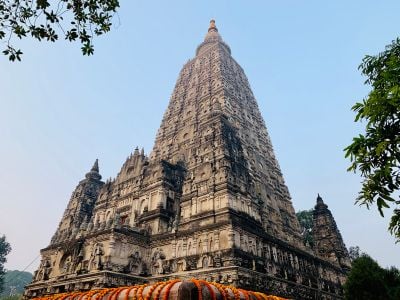
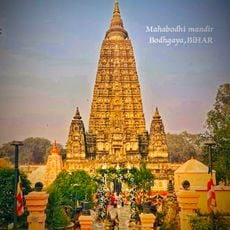
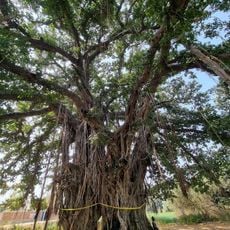
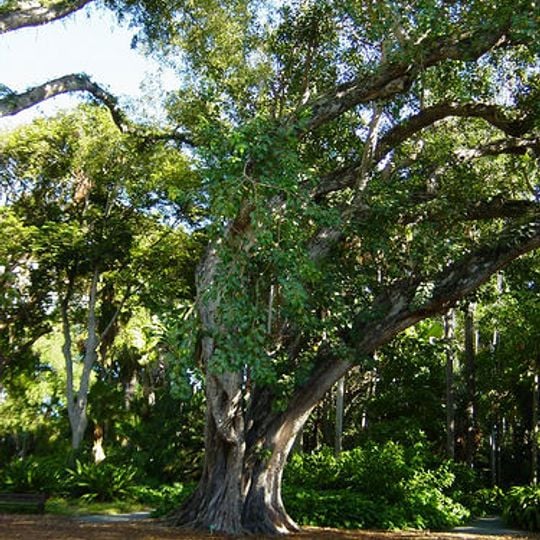
The Bodhi Tree is a sacred fig (Ficus religiosa) located in Bodh Gaya, India, within the Mahabodhi Temple complex. It has a thick, pale grey-brown trunk that splits near the ground into several vertical stems, and its gnarled branches spread outward and upward, with heart-shaped leaves growing in clusters and thin aerial roots hanging among the limbs.
According to Buddhist tradition, Siddhartha Gautama attained enlightenment under a tree at this site around the 5th century BCE. The original tree was destroyed several times, and the current one was planted in 1881 by archaeologist Alexander Cunningham from a cutting of the Sri Lankan tree.
Pilgrims often sit in meditation under the tree's branches, and many tie small prayer flags or leave offerings at its base. The heart-shaped leaves are a common motif in Buddhist art, and you will see them painted on temple walls and printed on prayer books.
The tree stands on a raised terrace within the temple grounds, so you will need to climb steps to reach it. The site can get crowded with pilgrims, especially during festivals, so visiting early in the morning or late in the afternoon offers a more comfortable experience.
A sapling from the original tree was sent to Sri Lanka in the 3rd century BCE and still grows there as the Jaya Sri Maha Bodhi, considered the oldest living human-planted tree with a known date. The present tree at Bodh Gaya is a descendant of that Sri Lankan tree, not a direct continuation of the original.
The community of curious travelers
AroundUs brings together thousands of curated places, local tips, and hidden gems, enriched daily by 94,695 contributors worldwide.