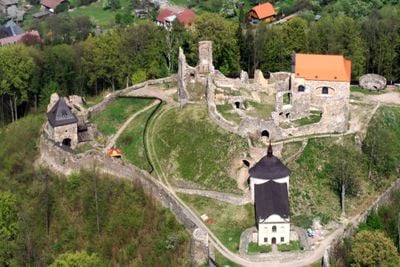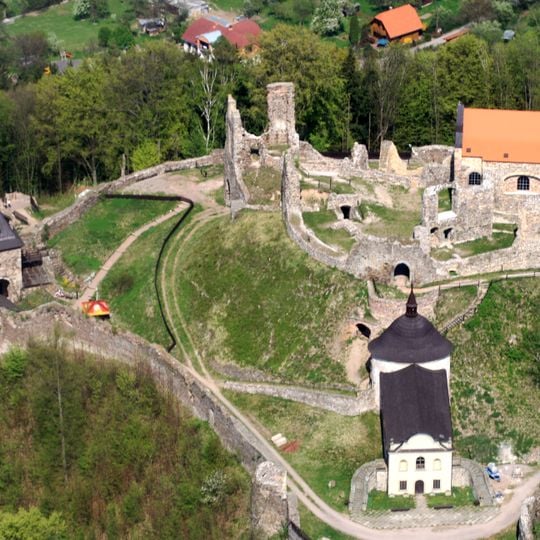
Potštejn, Medieval castle ruin in Eastern Bohemia, Czech Republic.
Potštejn is a stone castle ruin set on a rocky hilltop in eastern Bohemia, Czech Republic, showing architectural layers from the Gothic, Renaissance, and Baroque periods. Sections of fortification walls, gateway structures, palace remnants, and a chapel are still standing across the site.
The Gothic castle was founded at the end of the 13th century by Půta of the Drslavic family, who gave it its name. In 1339 Margrave Charles, not yet king, besieged it for nine weeks, captured and demolished it, killing the robber knight Mikuláš of Potštejn. Charles IV bought it in 1356 and began restoring it; later owners included the Pernštejns, who rebuilt it as a residence.
The ruins sit high above the village and draw walkers from the surrounding area who come for the view as much as for the stones themselves. On weekends, families and hikers often picnic near the old walls, making the site part of everyday local life.
The site is reached by a marked hiking trail and is open year-round, though paths can be icy in winter so sturdy footwear is a good idea. Allow enough time to walk through the standing structures and around the outer walls, as the grounds cover a good stretch of the hilltop.
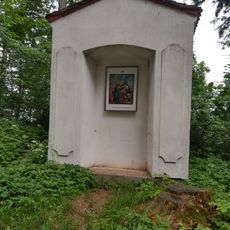
In 1746 the castle passed to Jan Ludvík Harbuval Chamaré, who had a new chateau built in the town below. His family's activities left two marks on the ruin: new religious buildings were erected within the castle grounds, while other structures were damaged by digging for the so-called Potštejn treasure.
The community of curious travelers
AroundUs brings together thousands of curated places, local tips, and hidden gems, enriched daily by 92,264 contributors worldwide.