Býčí skála Cave, Cave and archaeological site in Habrůvka, Czech Republic
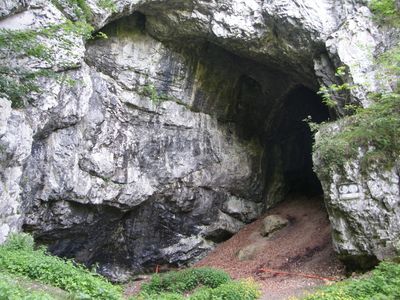
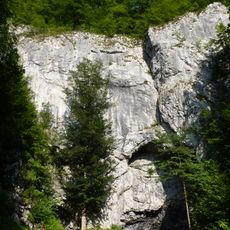
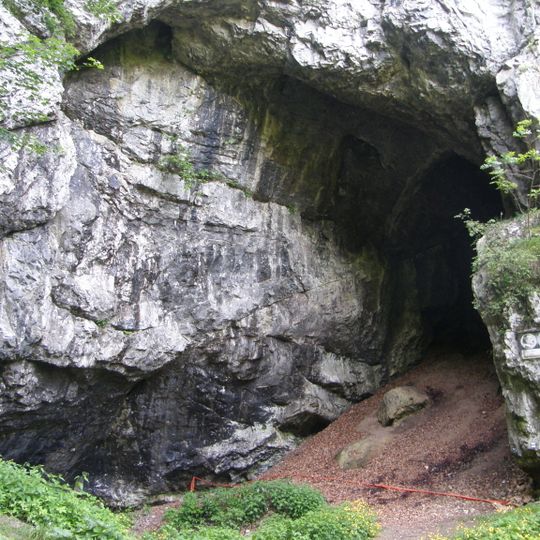
This cave stretches more than 13 kilometers through limestone formations and forms the second longest underground system in the country. The entrance area opens into a large hall with tall ceilings and narrow passages leading deeper into the rock.
The entrance area was used from the Paleolithic onward, and Jindřich Wankel excavated there from 1867, uncovering a Paleolithic settlement. In 1872 more than 40 skeletons and early Iron Age Hallstatt objects were found in the antechamber; a 2020 revision study led by Martin Golec dated this to a Hallstatt elite cemetery used from 575 to 450 BCE.
The name means "Bull Rock Cave", taken from the bronze bull statuette the Felkl cousins found here two years after Jindřich Wankel began digging in 1867. The cave also holds a charcoal drawing on the wall, a grill-like shape about 30 by 40 cm, dated by radiocarbon to roughly 5,200 years ago and resembling decoration on pottery of that period.
Guided visits take place on weekends in May and show the front section up to the large hall. Paths inside are uneven and require sturdy shoes and warm clothing, as the temperature stays cool throughout the year.
Concrete reinforcements at the entrance date from World War II when plans emerged for an aircraft engine factory that was never built. Some sections inside remain reserved for researchers because they contain delicate deposits and ongoing studies.
The community of curious travelers
AroundUs brings together thousands of curated places, local tips, and hidden gems, enriched daily by 92,307 contributors worldwide.