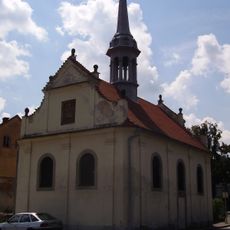
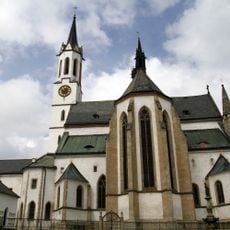
Vyšší Brod Cistercian Abbey, Cistercian monastery in Vyšší Brod, Czech Republic.
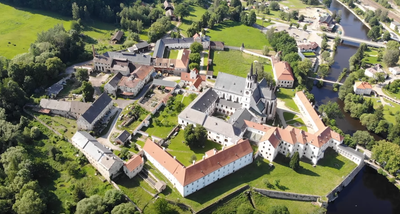
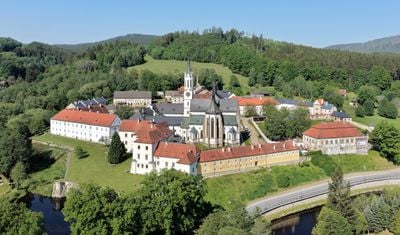
Vyšší Brod Cistercian Abbey is a Gothic monastery complex founded in 1259, with the Church of the Assumption of the Virgin Mary at its centre. The church has four chapels, one main altar and eight side altars, and its interior was renovated in 2011–2012. The grounds include a cloister around a grassy courtyard and a long two-storey white building with a red gabled roof.
Vok I of Rožmberk founded the monastery in 1259 after negotiations with the Cistercian General Chapter; the Prague bishop confirmed it on 1 June, the day the church was consecrated. The Rožmberks used it as a family necropolis from Vok's burial in 1262 until Peter Vok in 1611. In 1941 the Linz Gestapo dissolved it, and monks returned only in 1990.
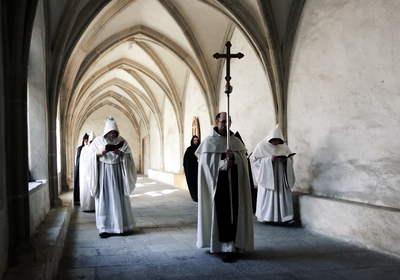
The monastery is a centre of traditional Czech Catholicism: Tridentine Mass is celebrated daily, and the community works with the Priestly Fraternity of St. Peter and the Institute of Christ the King. The name Hohenfurt comes from 'zu der hohen furt' (at the high ford); the Czech name Vyšší Brod is first recorded in 1394.
The monastery is open to the public during the season from April to September, and guides lead visitors through the complex. The monastery church was closed for interior renovation in 2011–2012 and reopened on 15 December 2012. The Rožmberk Oratory in the small church tower displays the Záviš Cross during the tourist season.
The monastery church's main altar holds four versions of its altarpiece. A system of winding ropes and pulleys once let monks turn cranks during services to swap the painting for the Easter Triduum and the Nativity; the practice was dropped because the historic canvases wore out, and the panels are now changed by hand between services.
The community of curious travelers
AroundUs brings together thousands of curated places, local tips, and hidden gems, enriched daily by 92,276 contributors worldwide.