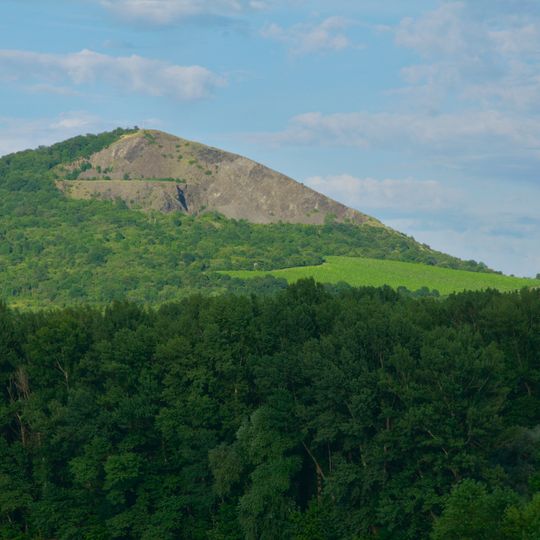
Radobýl, Protected natural monument in the České středohoří, Czech Republic
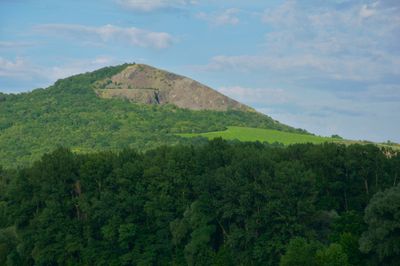
Radobýl is a volcanic hill near Litoměřice reaching 399 meters in height, with distinctive basalt columns on its western slopes. The site is covered with natural vegetation and offers broad views across the surrounding landscape from its peak.
The site formed through volcanic activity in ancient times and has shaped the region's landscape ever since. Its geological features received official protection in 1966 to preserve the valuable formations and native plant species.
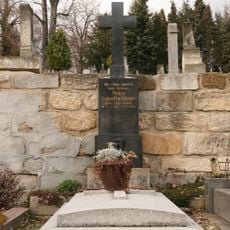
Karel Hynek Mácha often climbed to the summit; on 23 October 1836 he spotted a fire in Litoměřice from here, ran down to help extinguish it, drank from a well and died of typhus on 6 November. A cross has stood on the summit since 1622; the present iron cross, the eighth in succession, was erected in the early 1990s.
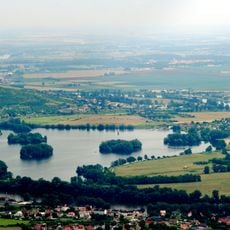
Several hiking trails lead to the summit and reward the effort with wide views over the Elbe River and the surrounding hills. The paths are well-marked, but the climb requires moderate physical effort.
The Richard mine lies north of Radobýl, beneath the neighbouring Bídnice ridge, not under the hill itself. Opened in 1864 for limestone, it became a Nazi underground aircraft-parts factory in World War II, a Flossenbürg subcamp where some 18,000 prisoners were deployed. Since 1964 part of it has stored low-level radioactive waste.
The community of curious travelers
AroundUs brings together thousands of curated places, local tips, and hidden gems, enriched daily by 94,483 contributors worldwide.