Holštejn Castle, Medieval castle ruins in Moravian Karst, Czech Republic
Holštejn Castle is a ruin on a limestone spur in the Moravian Karst, with a ground plan of about 85 by 52 metres. Its buildings stood around the perimeter; what remains includes a rounded corner fragment once mistaken for a bergfried, a wall section with a sally gate, and low foundations. A platform southwest of the core held a small outer bailey reached by a drawbridge over a deep ditch.
Hartmann of Čeblovice founded the castle in 1268 (German sources say 1278) on the Hohlen Stein; the Hrut family bought it before 1321 and founded the lords of Holštejn. Hussite wars damaged it, and after Hynek of Popůvek let it decay, it was recorded as deserted in 1531.
The castle's name comes from the cave in its rock, originally Hohlenstein ("hollow stone"), later Holstein and Czech Holštejn. German settlers colonised the surrounding Drahaner Bergland forests under the lords of Čeblovice, but by 1371 their villages had Czech names.
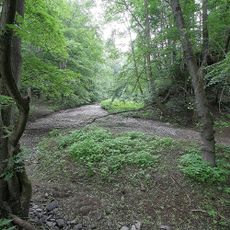
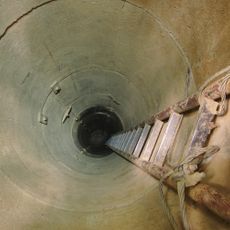
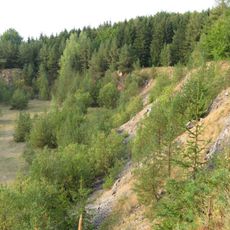
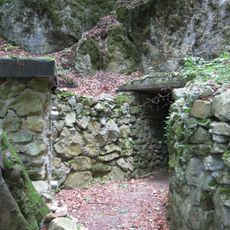
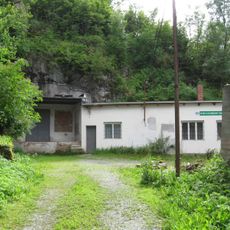
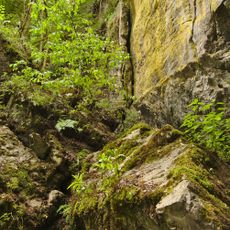
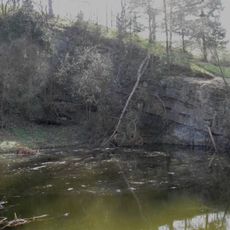
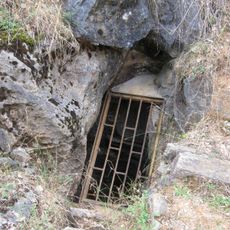
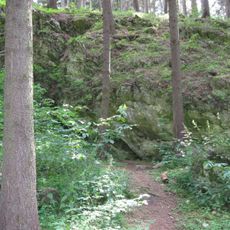
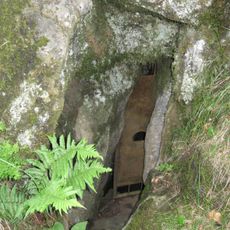
The ruins stand on a limestone spur above the Holštejn valley, where the Bílá voda stream drops into the Nová Rasovna sinkhole. The cave Hladomorna opens directly beneath the castle rock, and its chimney was restored in 2011. The path over the spur is rocky, so wear sturdy footwear.
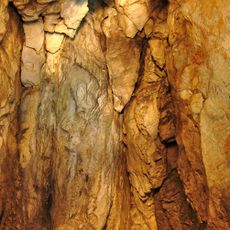
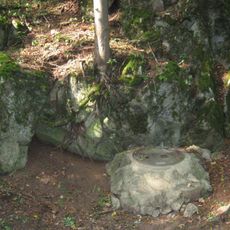
The cave in the castle rock, Hladomorna, was walled up in the Middle Ages and used as a prison; during the Moravian Margrave Wars, Vok III and Vok IV raided travellers and held them there for ransom. A man-made shaft connecting the cave to the castle was restored in 2011.
The community of curious travelers
AroundUs brings together thousands of curated places, local tips, and hidden gems, enriched daily by 92,374 contributors worldwide.