Western European broadleaf forests, Temperate forest ecoregion in Western Europe
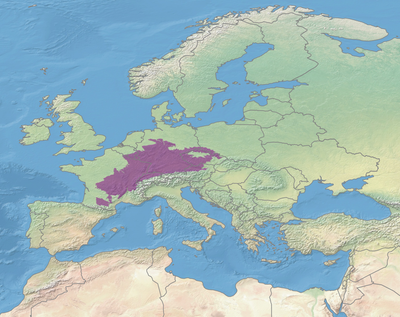
The Western European broadleaf forests form a WWF ecoregion of 492,357 km2 across France, Germany, the Czech Republic, Poland, Austria, Switzerland, Belgium, South Limburg and Luxembourg. Its lowland and alti-montane mixed beech woods, with oaks, spruce, alder and sycamore, cover the Massif Central, the Jura, the Central German Uplands, the Bavarian Plateau and the Bohemian Massif.
Most of the original forest of this ecoregion was cleared over the last 200 years, and the remaining woodlands are largely second-growth and heavily fragmented. Larger patches survive mainly in non-arable montane areas that fall within national parks or protected zones. Luxembourg's Upper Sûre lake, an artificial dam created in 1959, is an important bird area.
These forests provided essential resources for local communities, including timber for construction, firewood for heating, and diverse plants for traditional medicine.
The ecoregion covers 492,357 km² across France, Germany, the Czech Republic, Poland, Austria, Switzerland, Belgium, South Limburg and Luxembourg. Most of the plains are farmland, so the larger forest patches lie in non-arable montane areas within national parks. Luxembourg's Upper Sûre Natural Park is mostly the 1959 reservoir lake, an important bird area, with little forested land.
The ecoregion's woodlands are mostly second-growth and heavily fragmented, since most of the original forest was cleared in the last 200 years. Larger patches survive mainly in non-arable montane areas within national parks. Luxembourg's Upper Sûre Natural Park, built around a dam created in 1959, covers mostly the lake and is an important bird area.
The community of curious travelers
AroundUs brings together thousands of curated places, local tips, and hidden gems, enriched daily by 93,921 contributors worldwide.