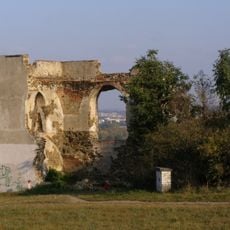
Osada Baba, Nature reserve in Prague, Czech Republic
Osada Baba is a functionalist villa colony built in 1932 on the southeastern slope of the Baba hill in Dejvice, Prague. It consists of 33 individually designed houses by architects such as Pavel Janák and Ladislav Sutnar, arranged in a checkerboard pattern along streets that follow the contour lines. Most houses have flat roofs and terraces facing south toward Prague.
The Baba villa colony was built from 1932 as one of six European Werkbund model housing estates. The Union of Czechoslovak Art bought the three-hectare site between Fišerka and the Baba ruins, and Pavel Janák's grid plan was approved in 1931. Construction began on 25 April 1932; the first 20 houses were finished by autumn, and the last villas followed in 1935–36.
The colony takes its name from the Baba hill and the nearby ruins above it. The houses were financed directly by their builders, mostly artists and architects from the Union of Czechoslovak Work, including painter Cyril Bouda, architect Pavel Janák and graphic designer Ladislav Sutnar, who each had a house built here.
Access to the reserve is free year-round, with paths crossing rocky terrain that require sturdy footwear. Plan time to explore at your own pace, as the uneven ground and slopes need careful attention while walking.
The Baba colony was the only one of the six Werkbund model housing estates made up entirely of individually designed detached houses, each tailored to its builder. All construction was financed directly by the future owners, which is why no two floor plans match and why the winning competition entries were never built.
The community of curious travelers
AroundUs brings together thousands of curated places, local tips, and hidden gems, enriched daily by 92,146 contributors worldwide.